What Apopka’s housing pattern tells us—and what it does not
The ACS counted an estimated 20,183 housing units in Apopka for its 2020–2024 period, with 16,409 classified as detached homes and another 897 as attached single-unit structures. This is a housing description, not a pool count. A detached house can have a private pool, no pool or access to a separate community amenity; the building category alone cannot determine that.
For a pool owner, the practical question is what belongs to this property and who maintains it. Explain whether the requested work is at your own backyard pool or a shared facility, and identify the person authorized to approve it. The city’s 2002 median construction-year estimate also leaves plenty of room for older and newer properties. We use that context to ask better questions about past work, rather than treat every Apopka installation as one generation of equipment.
Count pool properties using the right boundary and denominator
A defensible pool-prevalence figure needs property records that actually identify pools and a consistent residential property group to compare them with. It should also distinguish the municipal boundary from an Apopka mailing address. A percentage of homes advertised for sale with pools is not the percentage of all homes with pools, and the number of licensed shared facilities would answer a different question again.
This distinction keeps the repair recommendation tied to your property. We do not infer your pool’s dimensions, motor size or repair needs from the detached-home share above. A pool with a spa, a small swimming area and a larger pool with several water features can all sit behind similar houses. For an estimate, give the service address, describe those features and include any original plan or later alteration record. That information is more useful than a broad regional ownership statistic.
Apopka’s 2000s housing needs a timeline of actual pool changes
Some pools may have been installed alongside their houses; others were added later or substantially renewed. If a pool does date from an early-2000s property, the pump, filter and finish might have been changed at different times. Before comparing quotes, assemble the dates you know: original pool installation, the last pump or motor replacement, heater work and the last complete resurfacing.
That timeline can prevent an unnecessarily broad replacement. For example, a recently installed motor and an older filter connection should not automatically be priced as a complete equipment overhaul because the house is two decades old. The inspection still needs to determine which component is responsible for the symptoms. Conversely, repeated repairs to several worn parts can make a larger project worth discussing. We explain that choice using the current condition, compatibility and costs rather than a construction-year shortcut.
Use real dimensions rather than an assumed Apopka average
Published Central Florida pool packages give useful examples of scale, but they do not establish a measured average size for Apopka. Southern Pool Designs describes examples beginning around 12 by 24 feet, with larger package designs also available. A compact rectangle, an irregular outline and a pool with a connected spa can have very different water volumes even when they occupy similar yard space.
As a calculated illustration, a 12-by-24-foot rectangle at an assumed 4.5-foot average depth contains about 9,700 gallons. This uses length, width and average depth multiplied by 7.48 gallons per cubic foot; it is not a measurement of the pool at your house. Shelves, steps, slopes and a spa alter the result. For resurfacing, the quote must also consider walls and detailed interior surfaces. Send broad views and any plan dimensions so equipment and finish estimates can be based on the actual pool.
Motor selection starts with flow and the connected equipment
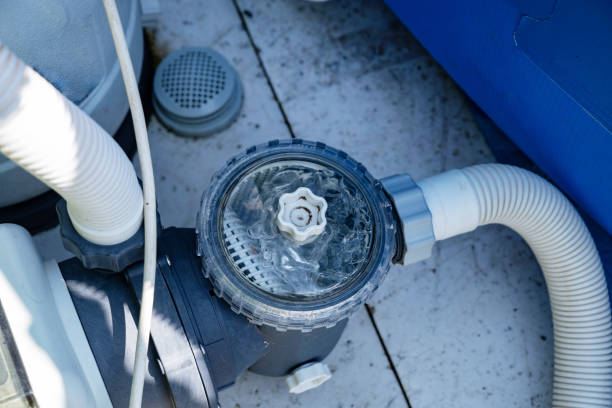
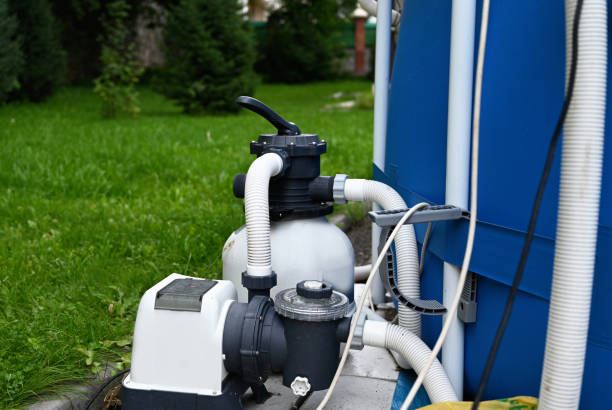
Available pump models span several capacities, but an Apopka address does not tell us which one is installed. Pentair’s IntelliFlo3 VSF includes 1.5 and 3.0 total-horsepower options; its SuperFlo VST is another variable-speed example with a 2.2 total-horsepower rating. These specifications show product choices, not a finding that one motor dominates local backyards. The existing model information remains the first useful reference.
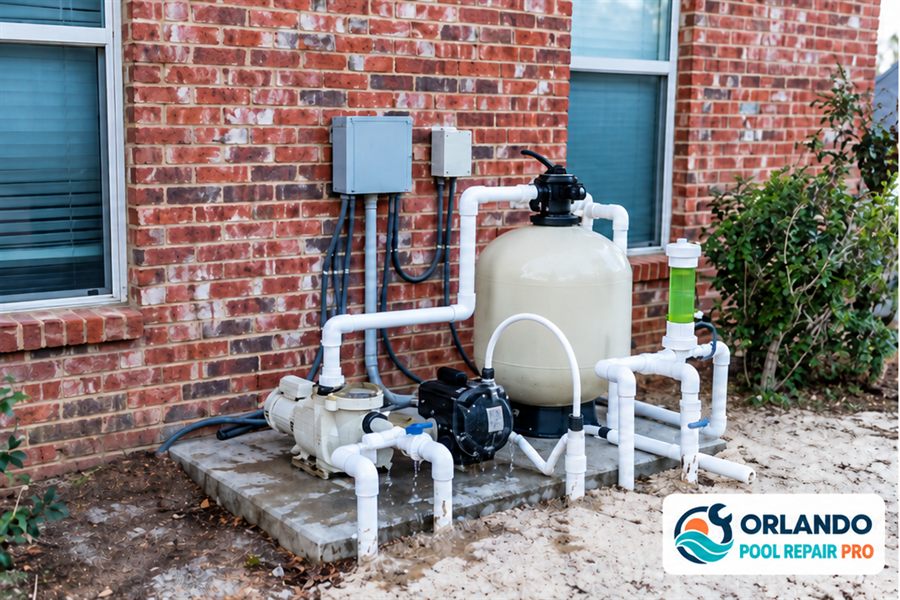
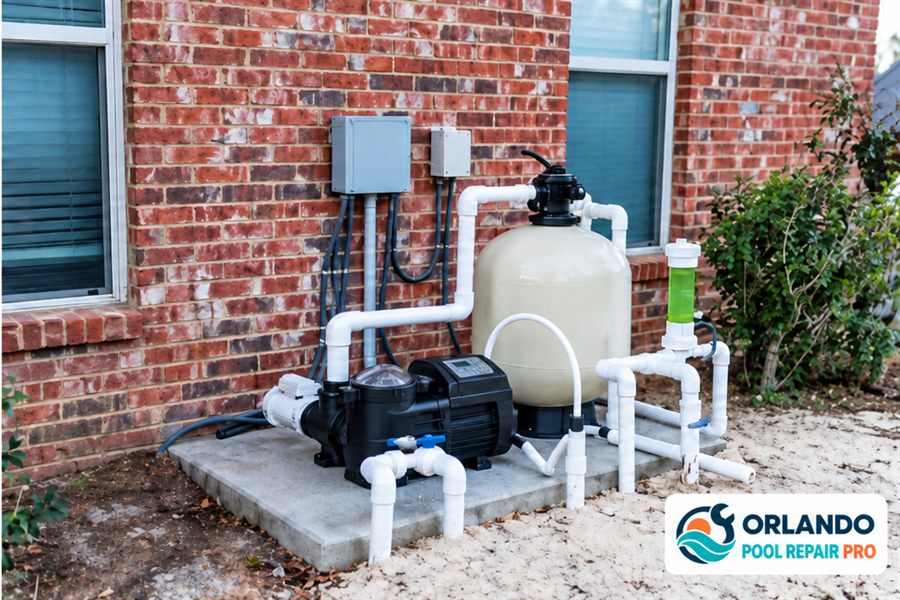
Required circulation, resistance through the system and the pump’s performance curve guide the match. Filter limits, pipework, heating and water features also matter, so simply buying more horsepower can create an unsuitable combination. If the current pump has poor flow, tell us whether that began after basket cleaning, a valve adjustment or other work. A blockage, air leak or setting problem needs a different answer from a failing motor. Inspecting that sequence can save the cost of replacing a pump that was not the cause.
Judge resurfacing by the finish and water-care history
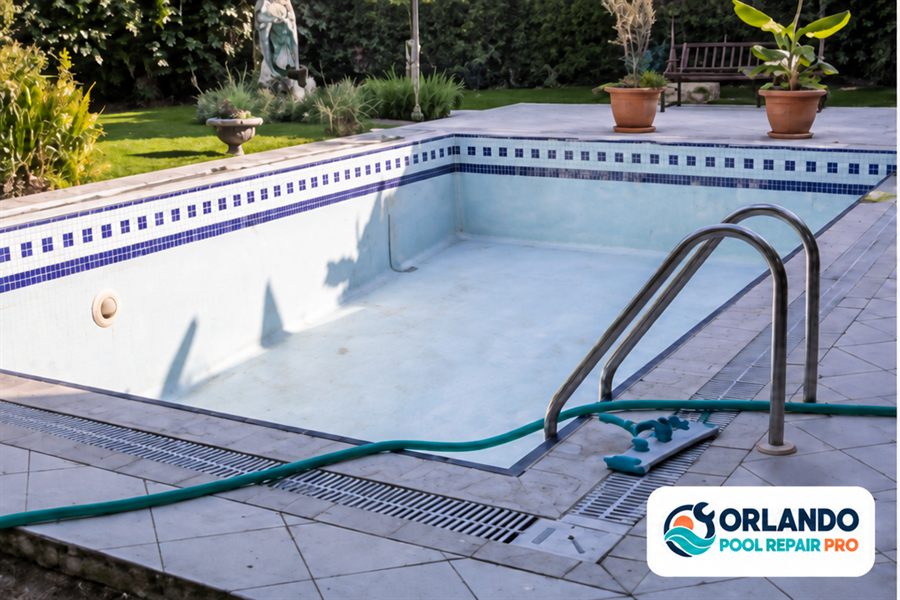
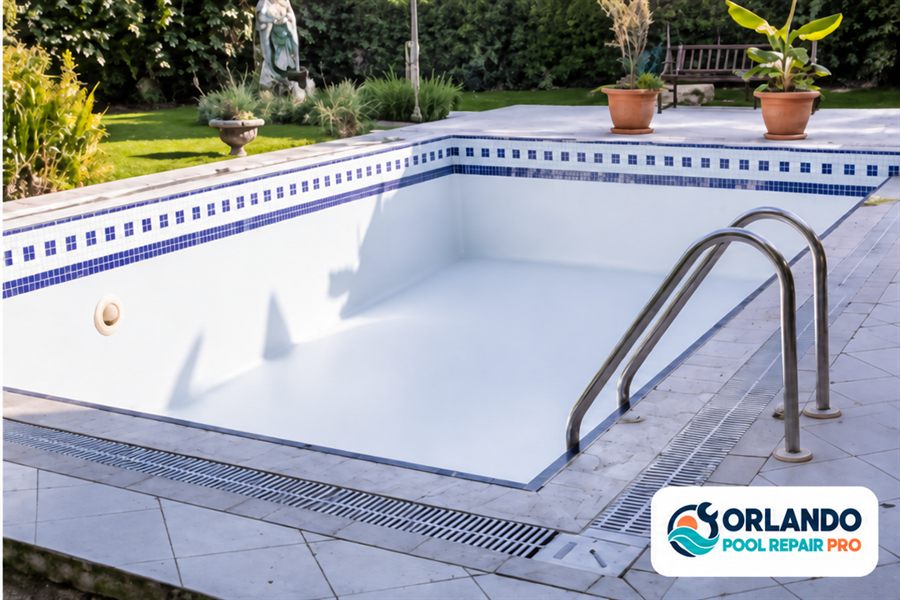
An Apopka house built around the city’s median year does not necessarily have a pool finish of the same age. Identify whether the interior is plain plaster, quartz or pebble, and when it was last renewed. A surface that feels rough, shows wear or has areas of previous repair deserves inspection, while continuing water loss should be investigated before a new coating is presented as the solution.
Manufacturer guidance illustrates why one resurfacing interval cannot fit every pool. PebbleTec compares plain plaster at roughly 5–10 years, quartz at about 7–15 years and properly installed and cared-for pebble at over 20 years. Chemistry, installation and use affect those expectations. The proposal should explain preparation and the selected material, then identify filling and startup care. Tile, coping and structural or fitting repairs should be clearly described so an attractive finish price is not mistaken for every part of a renovation.
Prepare the Apopka record check and repair visit
Apopka’s Community Development resources provide access to the city’s OpenGov application and record system. For an equipment alteration or larger project that may need review, confirm the property and proposed work through the appropriate route. Existing records can help explain how the installation was configured, but a permit record is not a substitute for checking the equipment now in place.
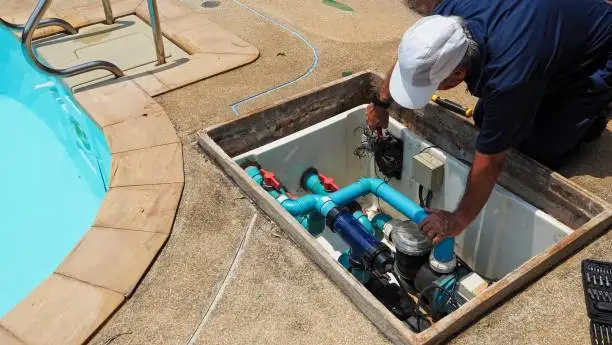
On the day of an assessment, useful information includes the fault code, a short history of the symptoms and safe access to the equipment. Photos can show labels and connections without opening a pressurized filter or electrical enclosure. If a previous repair did not solve the problem, keep its invoice available so the history is clear. That combination of address, records and observations supports a proposal for the actual Apopka pool, with testing, repair items and any larger changes separated for straightforward comparison.
Compare Apopka proposals by the pool scope, not the house style
Orange County’s municipal parcel records flagged 3,477 Apopka single-family-classified properties with pools among 20,126 in that classification, approximately 17.3%, in the snapshot retrieved October 24, 2026. The city’s detached-housing share of 81.3% is a separate Census measure. A neighborhood of similar-looking detached houses therefore does not establish that their pools or equipment are comparable.
When comparing repair proposals, ask each provider to describe the same reported problem and existing equipment. For example, one estimate might include diagnosis and a seal repair while another prices an entire pump without addressing the connection that is leaking. Those totals cannot be compared fairly until the included work is clear. The relevant questions are what fault was identified, which components remain and how the proposed change fits them.
For a larger alteration, keep the address and equipment description consistent with any applicable Apopka project record. If your request expands to include heater work or resurfacing, identify that addition explicitly instead of assuming it was part of the first price. This creates a practical comparison of options for your property, rather than a decision based on what another homeowner paid for a different pool. Keep the approved scope available for follow-up questions.
Sources for local pool planning