What Horizon West’s housing growth tells a pool owner
The 2020–2024 American Community Survey estimates a median housing construction year of 2014 for Horizon West. It also estimates 13,957 housing units built during the 2010s and 3,589 built from 2020 onward, within its survey categories. Those figures describe the community’s housing stock rather than a pool inventory. A home completed during that period may have an original pool, a later addition or no private pool at all. Even where the shell is recent, a replacement motor or altered controls can have a different installation date.
That distinction matters when a homeowner says the equipment cannot be old because the neighborhood is new. A recurring leak should be assessed on the part’s condition and compatibility, not dismissed because of a construction date. Conversely, replacing every component at once may be unnecessary when one seal or connection is the actual problem. Keep the builder’s pool paperwork if you have it, but add subsequent repair invoices and finish records. Together they tell a more useful story than a house age alone and help identify what has changed since the original installation.
Detached homes, attached homes and shared amenities need different coordination
ACS estimates put detached housing at about 64.3% of Horizon West housing units and attached single-family housing at 12.1%. About 65.7% of occupied homes were owner-occupied in that estimate. These categories do not tell us how many properties have pools or which residents use a shared amenity. They do explain why the booking conversation should identify ownership and responsibility. A homeowner can authorize work at an individually owned system; a resident reporting a shared-pool issue may need the association or property manager to arrange service.
Orange County describes Horizon West as five mixed-use villages and a town center, surrounded by greenbelts. We use the actual property and equipment location rather than assume that a village name describes one standard system. If a gate, maintenance room or community representative controls entry, arrange those details before the visit. For a shared pool, include the responsible operator’s records and any closure constraints. This is practical coordination, not a claim that every community has the same access rules or that an association’s approval replaces any review required by the relevant authority.
Read pool records without inventing a neighborhood pool percentage
A pool-ownership estimate for Horizon West needs a defined boundary and an appropriate property-record denominator. A count of houses, a list of neighborhoods with clubhouse amenities or a selection of real-estate listings cannot establish the share by itself. Public property information and permit records may help with an individual address, but they serve different purposes and may not include every repair or resurfacing event. Where a parcel-based pool indicator is available, it should not be confused with Census housing totals, the number of residents using pools or the equipment age at one property.
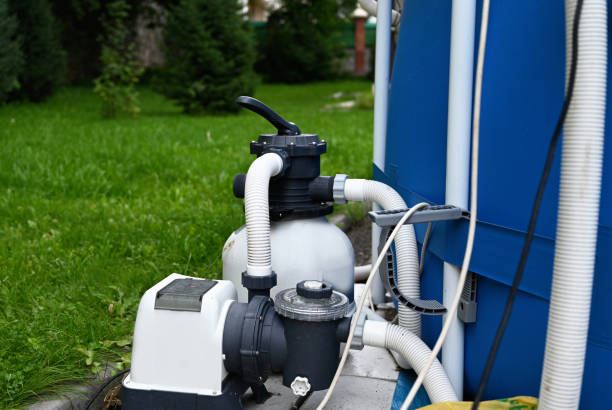
Owners can still build a useful equipment file. Photograph the pump and heater labels, note the filter model and keep the controller’s settings or error messages when readily accessible. Add the date of the last known motor replacement and the most recent finish application if documented. For an inherited system, ask the previous service company or seller for invoices rather than relying on a listing description such as updated pool. The goal is to understand the operating setup and repair history, not produce a paperwork requirement before a straightforward fault can be investigated.
Use pool measurements and pump performance together
Horizon West’s housing mix does not establish an average private-pool size or a preferred motor rating. As regional examples, Southern Pool Designs in Sanford advertises packages with dimensions from 12 by 24 to 15 by 30 feet and from 15 by 30 to 18 by 35 feet. Those examples show a possible range of residential footprints; they are not a survey of installed Horizon West pools. An attached spa, shallow shelf or water feature changes the useful description, so include those details even if the main rectangle seems easy to measure.
A 15-by-30-foot rectangle at an assumed average depth of 4.5 feet would contain approximately 15,100 gallons. That calculation is illustrative, not your pool’s measured capacity, and capacity alone does not select a pump. Required flow and system resistance must be considered with the plumbing, filter and heater. Modern variable-speed equipment can operate across a range rather than at only one or two fixed settings. For example, published residential models carry different total-horsepower ratings, but the largest number is not automatically the most appropriate choice. We check the performance match and intended operation before recommending equipment.
A recent installation can still develop a focused repair problem
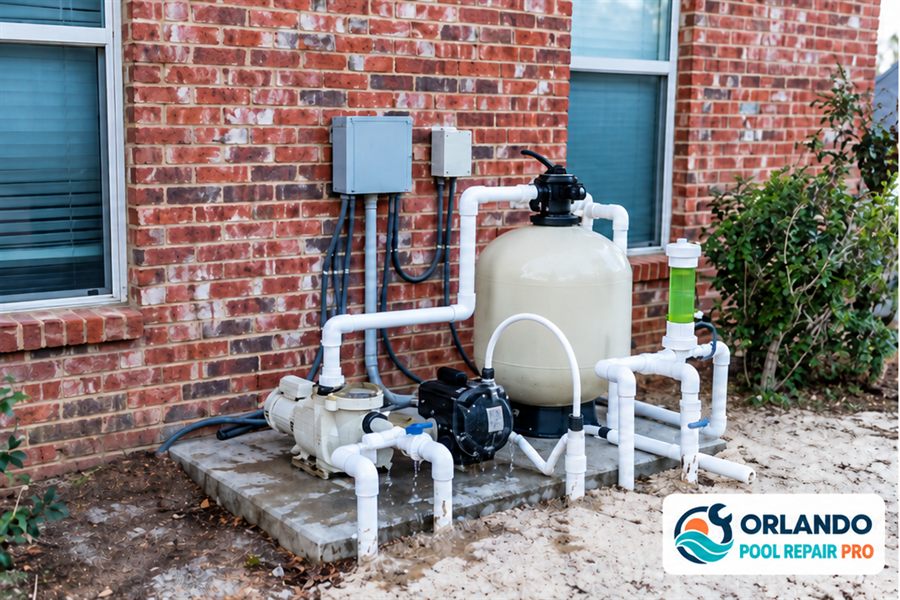
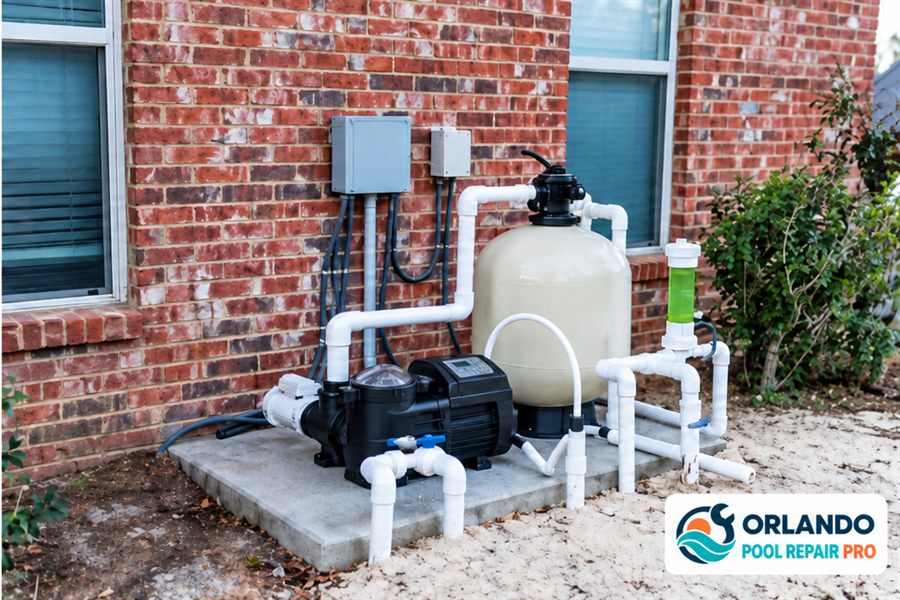
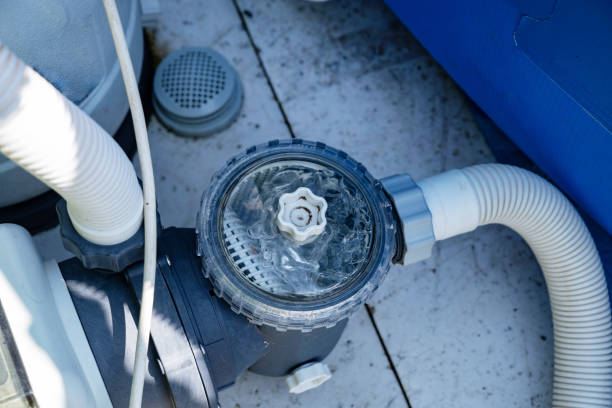
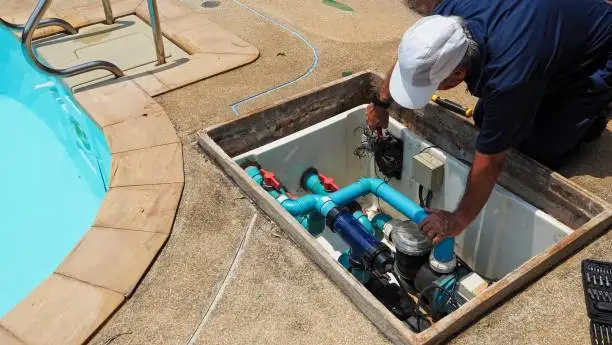
At a Horizon West equipment pad, visible water around a union deserves a different check from a motor that will not start. A lid O-ring can admit air, a mechanical seal can leak between pump and motor, and a blocked impeller can reduce flow. Noise may involve bearings or circulation conditions rather than one obvious broken part. The symptom timeline helps: tell us whether the problem began after cleaning, a setting change, a storm or other work, without treating any one event as proof of the cause.
Florida’s outdoor conditions make airflow and drainage relevant, but heat is not a complete diagnosis. A protective enclosure should not be assumed suitable just because it hides the equipment neatly; access and manufacturer clearances still matter. Do not remove electrical covers or open a pressurized filter to provide photographs. Accessible wide views and nameplates are enough to begin planning. If the pool has automation, include the controls alongside the pump and heater information. That lets the assessment consider a communication or flow issue before presenting a full equipment change as the only answer.
Plan the finish and the review route before setting dates
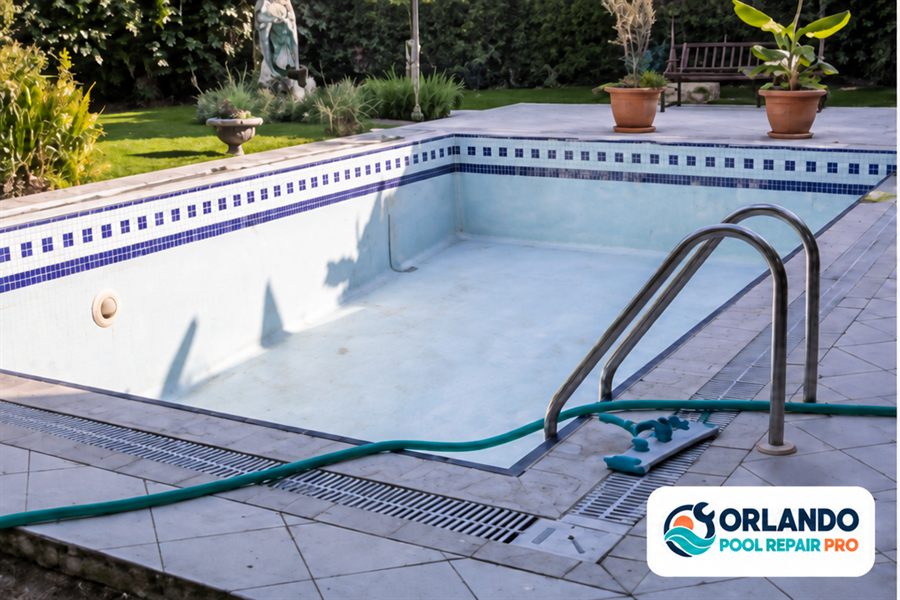
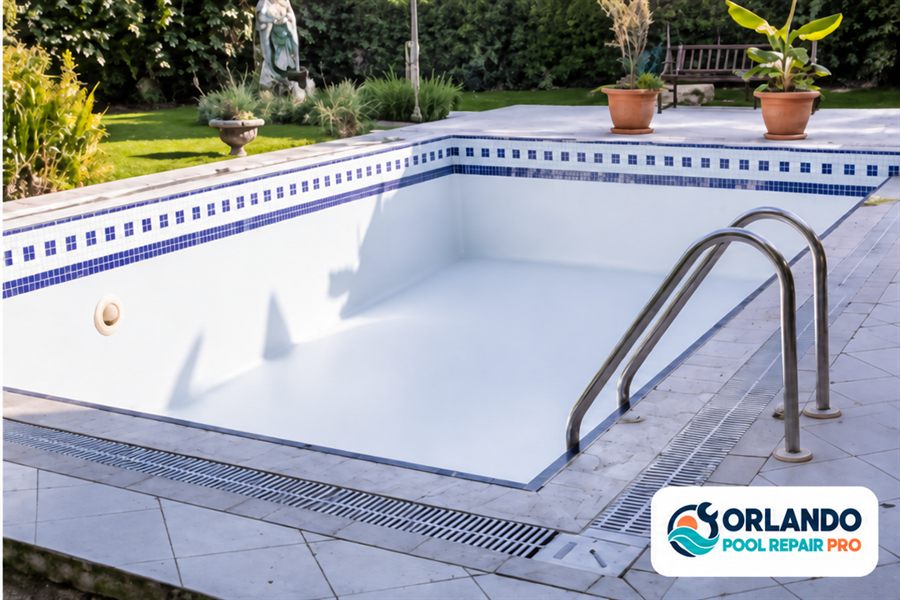
A Horizon West house from the 2010s may have an original finish, but that is a question to verify rather than a conclusion. Published PebbleTec comparisons describe shorter planning intervals for plain plaster than for quartz, with well-maintained pebble capable of more than two decades of service. None of those comparisons turns the housing median into a resurfacing deadline. Identify the current material and consider roughness, looseness, staining and any separate water loss. A new finish should not conceal an unresolved leak or structural issue.
Horizon West is unincorporated Orange County, so county resources are the starting point for jurisdiction rather than a separate Horizon West city office. Confirm the actual address and scope before scheduling work that needs review. For resurfacing, the written plan should distinguish surface preparation, tile or coping changes, filling and startup care. Agree who handles brushing and water-balance checks after filling, and allow project conditions to guide the schedule. Send your preferred timing with the estimate request, but keep an ordinary repair appointment separate from a larger finish project that involves preparation, curing care and coordinated access.
At a Horizon West home, a recent building date can make a repair recommendation feel surprising. Start by checking the actual installation paperwork rather than assuming everything is still the same age. A later heater, new control system or changed pump schedule can affect the way a fault appears. Write down when each change happened and when the problem began. If one function works but another does not, include that detail. For a shared amenity pool, pass the information to the person responsible for its operation instead of changing settings yourself. Ask the quote to identify the failed part, the parts being kept and any extra work needed to make them function together. That makes a small repair easier to compare with a full replacement.
Sources for local pool planning