Oak Ridge’s housing mix makes responsibility worth confirming
The 2020–2024 ACS estimates that about 38.2% of Oak Ridge housing units are detached and 2.8% are attached single-family units. Among occupied homes, the estimated owner-occupied share is 34.1%, so an owner, tenant and property manager may all have different roles in a service request. Those figures describe housing and tenure, not the proportion of residents with access to a pool. They do not establish how many properties have private installations or which residents use an amenity serving several units.
The useful booking question is therefore specific: who owns this pool and who can authorize the work? A resident can supply valuable observations without being the person who approves a motor change or a resurfacing contract. For a rented house, arrange the owner or authorized manager’s involvement. For a shared facility, include the responsible operator before proposing changes to circulation, heating or daily operation. That coordination is based on the actual property, not an assumption that all Oak Ridge homes are rented or all pools are commercial. It helps the visit produce a clear next step rather than an estimate waiting for an unidentified decision maker.
Read the housing timeline without guessing the pool’s age
Oak Ridge’s estimated median housing construction year is 1981 in the 2020–2024 ACS, with a margin of error of about three years. The survey also records later housing, including an estimated 352 units built in the 2010s. Neither figure tells us whether a particular pool was built with the house, added later or substantially renovated. An older address can have a recent motor and controls, while a finish described as updated may have a different application history from the equipment at the pad.
For a repair estimate, record the dates that can actually be established. A paid invoice naming a replacement pump is stronger evidence than the home’s construction year. A motor-only change should not be recorded as a whole-pump replacement, and new tile does not necessarily date the plaster below it. If you inherited the system without documents, photograph accessible model labels and identify the last known repair. We can assess a present fault while acknowledging missing records. Treating uncertainty honestly is more useful than assigning every component the same age and recommending a complete replacement on that basis.
Pool counts, property records and shared access need different denominators
A local pool statistic should identify the type of record and the properties included in its boundary. A parcel with a pool indicator is not equivalent to a Census housing unit, and a shared pool can serve many units without becoming many separate private pools. Housing tenure cannot fill that gap. Where parcel information is used, preserve its classification and coverage rather than describe it as the percentage of all Oak Ridge residents who own a pool. An individual property still needs its own equipment and service assessment.
Records can nevertheless help an owner or manager prepare. Keep the installed pump, filter and heater information together with any plans, permit history and service invoices available for the address. Those records have limits: they may omit small repairs, later substitutions or an unrecorded finish change. A missing document does not prove that no work happened. Ask for the most recent operating information and describe what is visible now. For a shared pool, the operator’s records can add the required circulation and recent fault history, which are more directly useful to diagnosis than a broad neighborhood estimate.
Use measurements that describe the actual pool
No measured Oak Ridge average pool size is claimed in this guide. A property’s dwelling type or age cannot provide the pool’s dimensions. Published regional offerings can provide a scale reference: Sanford-based Southern Pool Designs advertises residential package examples ranging from 12 by 24 to 15 by 30 feet and another package range from 15 by 30 to 18 by 35 feet. These are options sold by one builder, not evidence that any of those footprints predominates in Oak Ridge or that a shared installation uses residential dimensions.
An approximate volume also needs an explicit depth assumption. A 12-by-24-foot rectangular pool at a 4.5-foot average depth works out to about 9,700 gallons; a 15-by-30-foot rectangle at that depth is around 15,100 gallons. Your pool may have a different depth profile, curved walls, shelves or an attached spa, so these figures are examples only. Resurfacing needs the interior wall-and-floor area, while equipment matching needs flow and system-performance information. Send reliable plans or measurements when available and allow the relevant dimensions to be verified before using a simple calculation as a purchasing decision.
Match motor diagnosis to the connected installation
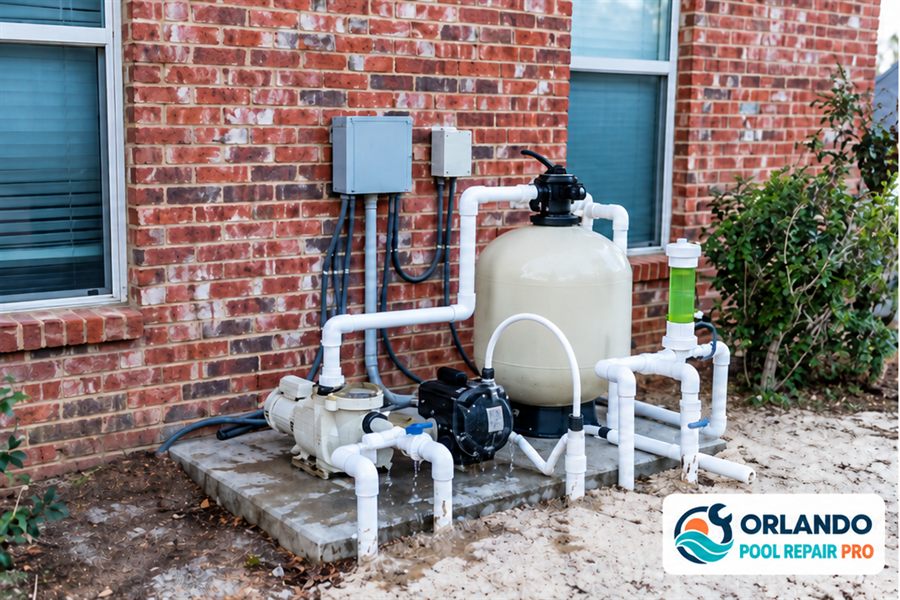
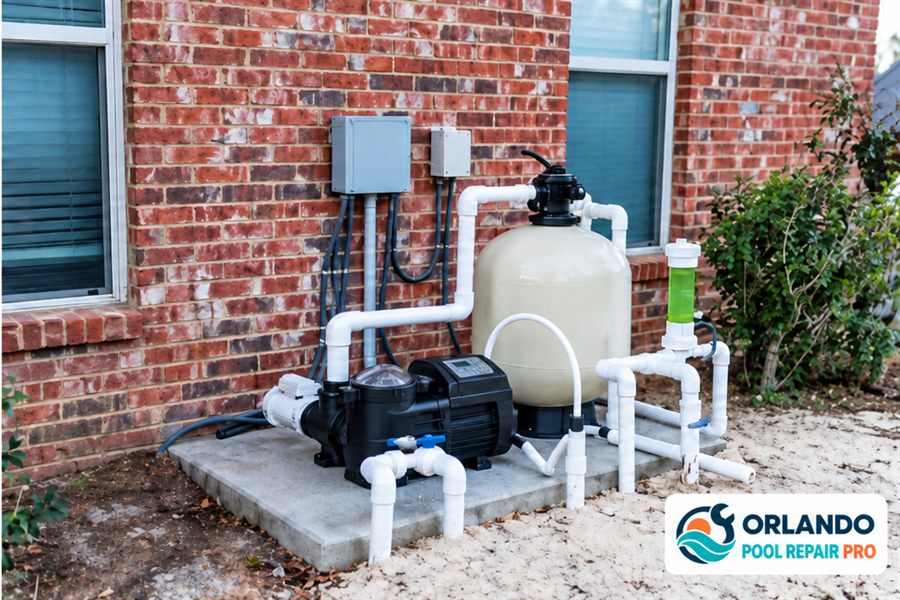
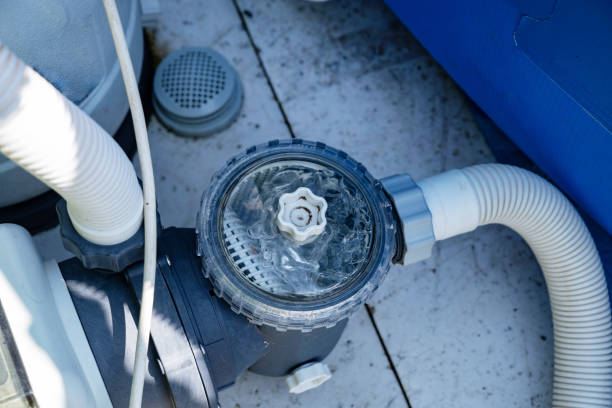
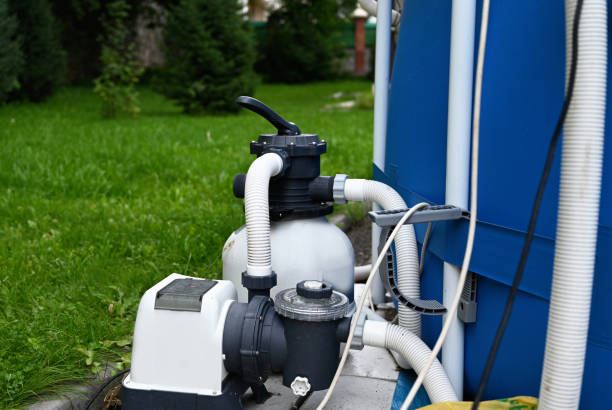
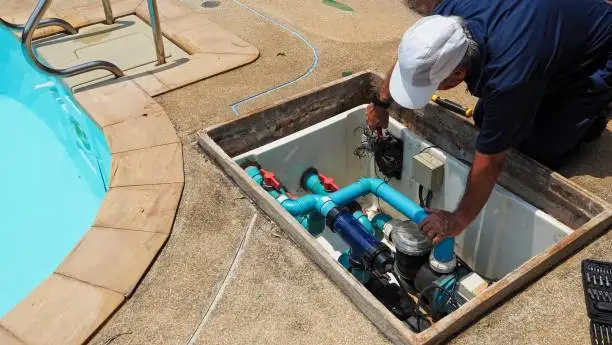
A noisy Oak Ridge pump can have worn bearings, a circulation problem or another fault that requires checking. Visible water may come from a union, lid seal or mechanical shaft seal, while low flow can involve a restriction or suction-side air leak. Tell us whether the pump starts, whether it holds prime and whether the heater or controller also shows an error. Note recent cleaning, valve changes or other work. These observations help define the investigation, but they do not require a resident to open electrical covers or dismantle pressurized equipment.
There is no verified Oak Ridge motor-size market share in the source material, and we do not infer it from an older housing median. Modern pumps include fixed-speed and variable-speed configurations; the installed model establishes which controls and operating range apply. Required circulation, pipework resistance, filter limits, heater needs and electrical compatibility guide repair or replacement. A smaller serviceable component should not be discarded because a larger horsepower label sounds more reassuring. For shared facilities, the approved operating needs and responsible operator’s information matter; a household schedule should not be copied into a public-pool system without checking those requirements.
Separate surface work, jurisdiction and a useful service visit
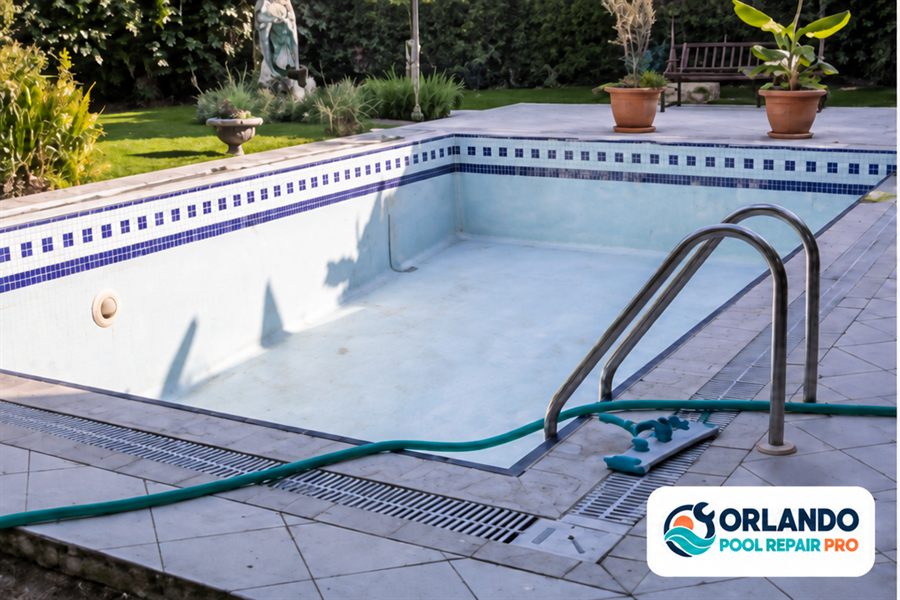
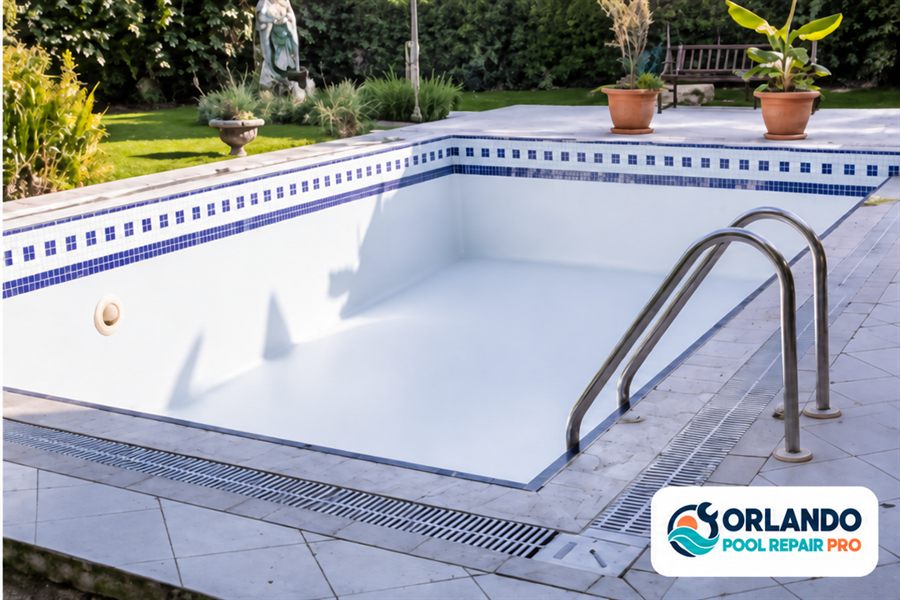
A worn Oak Ridge pool interior needs a material and condition assessment, not a recommendation derived from the house’s construction year. Published finish comparisons describe approximately 5–10 years for plain plaster and 7–15 for quartz, with properly installed and maintained pebble capable of more than 20 years. These are planning references rather than guarantees, warranty periods or evidence that an unknown finish is original. Loose material, roughness, staining and unexplained leakage should be discussed separately. New plaster alone should not be promised as the cure for a plumbing or structural problem.
For a larger scope, use the precise property address and applicable Orange County resources to confirm the review route instead of treating the postal city as the authority. The written proposal should distinguish finish preparation, fitting or tile work, controlled filling and startup responsibilities. Before a diagnostic visit, arrange safe access and the authorized contact, then share equipment labels, symptoms and recent repair records. For water loss, record refill dates and a rain-free bucket comparison if practical. Keep the findings and approved repairs together afterward so owners, managers and future service providers can understand what changed and what remains outside the completed scope.
An Oak Ridge request should make clear whether you are the owner, a resident reporting a problem or a manager arranging the work. Give the full Orange County property address and explain who can authorize repairs. If a shared facility is involved, ask the responsible operator for recent fault and maintenance information. For water loss, include the dates when refills became more frequent and whether the automatic filler was running. For a pump fault, describe whether it starts, stays running and holds prime without taking equipment apart. These are different observations and can help shape the visit. If the proposal includes both equipment and surface work, ask for separate descriptions so each price has a clear purpose and the approving person knows what is being agreed.
Sources for local pool planning