Meadow Woods housing age is context, not an equipment birthday
The 2020–2024 ACS estimates a median housing construction year of 2006 for Meadow Woods, with a margin of error of about three years. Its housing estimates include 5,471 units built in the 2010s and 819 in the 2020-onward category. That combination does not describe one uniform generation of swimming pools. Some owners may have added a pool after construction, while others may have changed motors, heaters or controls over time. A house’s construction year cannot establish any of those installation dates.
When a pool has several generations of parts, matching the current setup matters more than rebuilding an imagined original specification. Keep the model number of the pump that is actually installed, not just the one named in older plans. A replacement motor label may differ from the pump housing label, so photograph both if accessible. For resurfacing, separate the last known finish date from general remodeling dates. This makes the estimate more useful and avoids the expensive assumption that every part must be replaced because the house is approaching a particular age.
Identify private responsibility and shared-pool responsibility
ACS estimates classify roughly 63.1% of Meadow Woods housing units as detached and 19% as attached single-family units. About 72.7% of occupied units were owner-occupied in the same data set. These are housing categories, not evidence that each detached property has a pool or each attached home shares one. We ask whether the request concerns an individual backyard pool or a facility used by several households. That answer establishes who can approve work and which operating information should accompany the repair request.
For an owner-managed residential pool, explain how the system is normally used and which functions stopped working. If you rent the property, establish the owner or authorized manager’s involvement before arranging changes to installed equipment. A shared-pool request should include the responsible operator or management contact, especially if circulation settings, access or closure are involved. This does not assume one type of tenure for your household; it keeps the appointment aligned with the actual decision maker. Clear authorization and reliable access help prevent a diagnostic visit from becoming a discussion that nobody present can resolve.
Measure a suspected leak before choosing the repair
Meadow Woods owners reporting a falling water level can start with a measured comparison rather than a guess about Florida evaporation. During a rain-free 24-hour period, a stable bucket of pool water on a step provides a useful weather comparison when its rim stays above the pool. Mark the level inside the bucket and the pool level outside it, switch off automatic filling and avoid top-ups or swimming during the test. Compare each drop with its own starting mark the next day. Rain or changed water use means the comparison should be restarted.
A greater drop in the pool supports further leak investigation; it does not reveal the location by itself. The problem could involve a visible equipment connection, a fitting, a skimmer area or plumbing that needs professional testing. Similar drops suggest evaporation, but continuing unexplained refills still deserve attention. Record what happened with normal operation and send the observations with your request. There is no verified Meadow Woods-wide evaporation cutoff in the research used here, so we do not label every loss beyond one fixed daily measurement as a proven leak. Do not lower the pool to expose a suspected crack.
Pool ownership and dimensions need their own evidence
A Meadow Woods pool-ownership percentage should come from defined property records and the correct area boundary. Census housing totals count homes, not swimming pools, and a property with a shared amenity cannot be equated with many separate backyard pools. Individual property and permit records may provide clues, but a record’s absence should not be treated as proof of absence or an exact installation history. Send the system details you have. A practical assessment can still proceed when an old invoice is missing, provided the uncertainty is acknowledged.
Regional builder examples are useful for scale without inventing a local average. Southern Pool Designs publishes residential package dimensions spanning 12 by 24 through 15 by 30 feet and another range up to 18 by 35 feet. Those are product examples from a Sanford builder, not measured Meadow Woods pool sizes. A simple 12-by-24-foot rectangle at an assumed average depth of 4.5 feet would hold around 9,700 gallons, but shelves, spas, irregular walls and varying depth change the result. For a new finish, the interior wall-and-floor area matters separately from the water footprint and calculated volume.
Trace poor flow through the pump, filter and heater
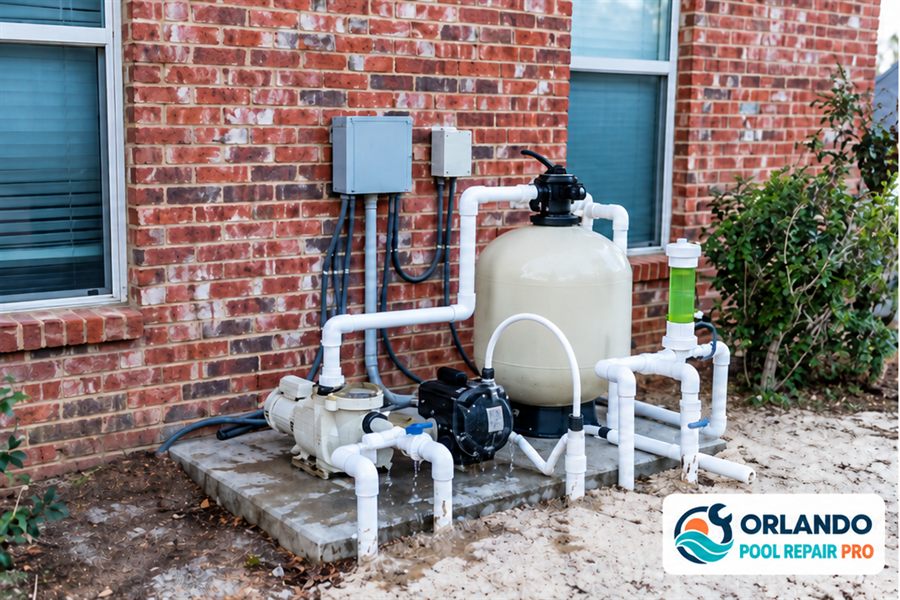
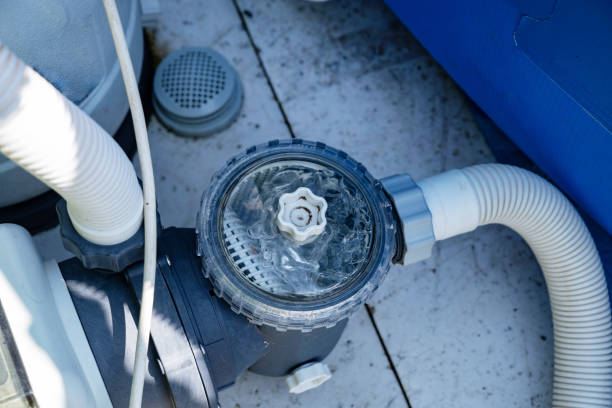
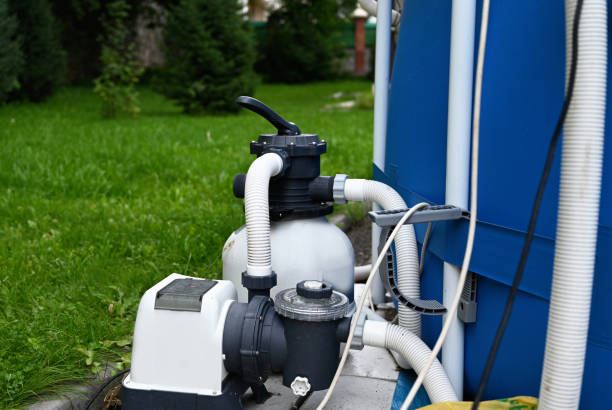
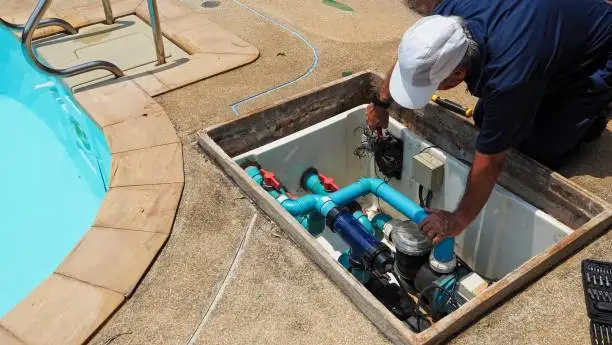
If a Meadow Woods heater displays a flow fault while the pump runs, that does not automatically mean both appliances have failed. The circulation path, filter condition, valve positions and installed controls need to be considered together. A dirty basket, obstructed impeller or suction-side air leak can affect performance, while a damaged seal may leave visible water between components. Tell us whether the flow problem appeared before the heater error and whether any maintenance or setting change immediately preceded it. Do not disassemble pressurized or energized equipment to look for the answer yourself.
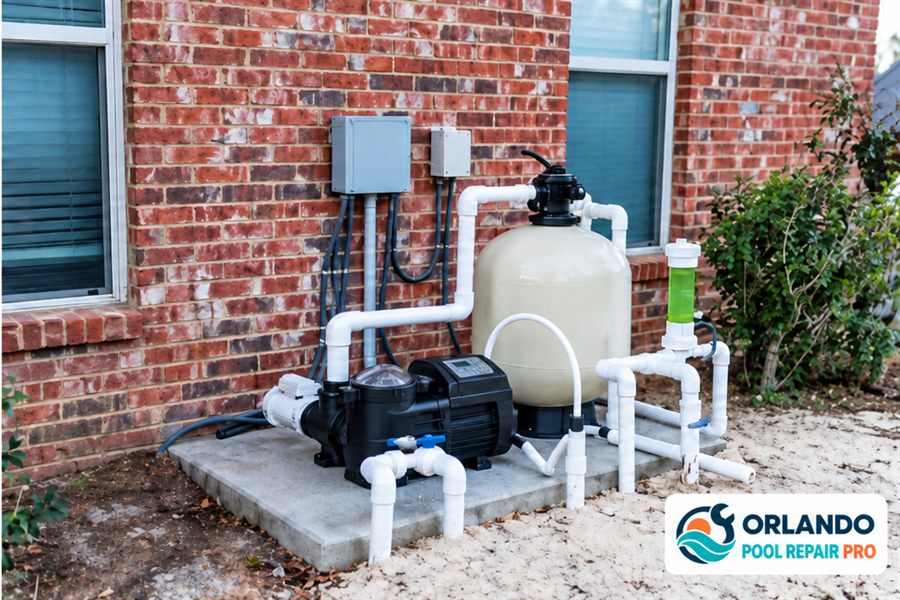
No local motor-size survey has been established for Meadow Woods, so brand or horsepower prevalence should not be guessed from housing age. Published equipment examples include residential variable-speed models with different total-horsepower ratings and operating ranges. The appropriate choice follows required flow, plumbing resistance and the limits of connected equipment, not a rule that a larger motor is always better. We compare a parts repair with a component or whole-pump replacement where warranted. For a shared facility, the operating requirements and responsible operator’s information must guide the assessment rather than a household energy-saving schedule.
Coordinate the finish, the address and the follow-up care
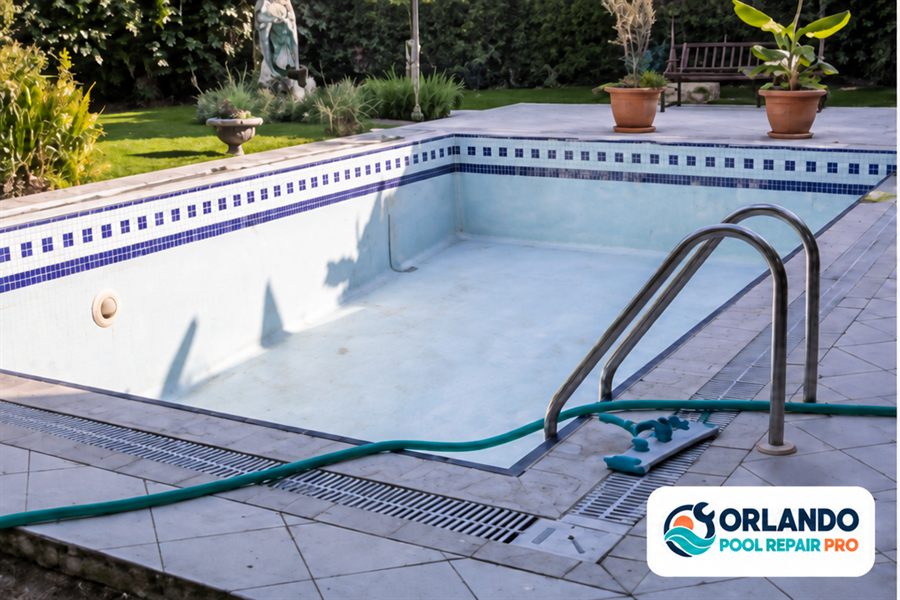
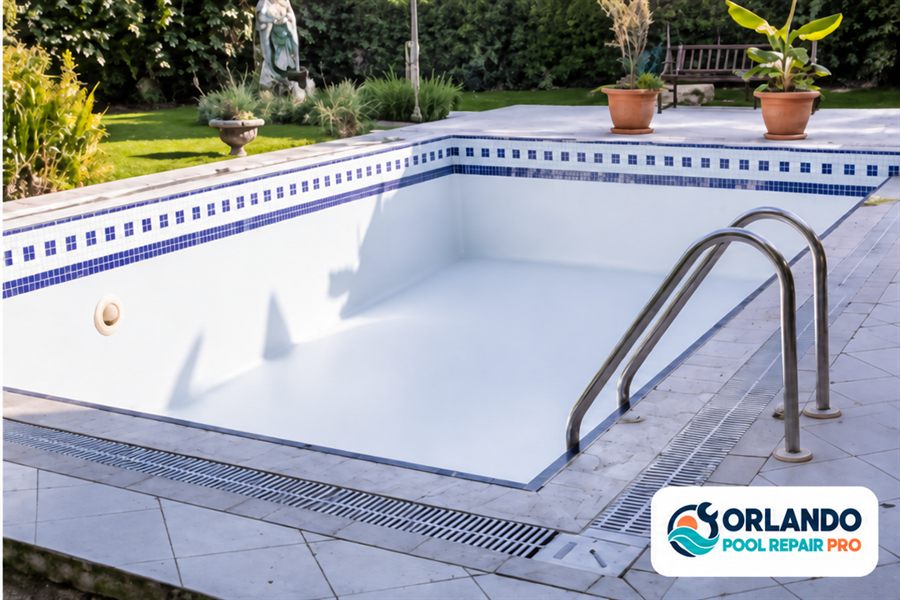
A Meadow Woods pool with an older original finish may be ready for attention, but the actual material, condition and maintenance history should lead that discussion. Published finish comparisons give plain plaster a shorter planning life than quartz and properly maintained pebble. They are not guaranteed service intervals, and the home’s 2006 median construction year is not a resurfacing date. Inspect loose or rough areas, recurring stains and unexplained water loss as separate questions. Agree on preparation and any separate tile, coping or fitting work before comparing material prices.
An Orlando mailing address alone does not settle whether a Meadow Woods property is within city jurisdiction. Use the official address checker and applicable Orange County resources when confirming a project that needs review. For a larger resurfacing scope, identify who handles controlled draining, filling and startup care, including brushing and water-balance checks. For an ordinary repair visit, arrange access and provide an equipment overview and symptom timeline. Keep the diagnosis, approved work and later maintenance instructions together so the next person looking at the pool can understand what was found, what changed and what still requires separate attention.
A Meadow Woods water-loss request is easier to assess when the notes explain how the pool is normally used. Record when water was added, whether an automatic filler was active and whether rain interrupted a comparison. If another person maintains the property, ask about recent valve or timer changes before assuming a buried line has failed. Keep observations separate from guesses: a wet connection is something you saw, while a suspected underground leak still needs checking. Tell us if the pump has also started sounding different or the heater shows an error. These details may point to more than one issue. If the water drops quickly, seek help rather than letting equipment run dry while you collect a longer record of the problem.
Sources for local pool planning