Understand the Pine Hills housing picture before dating the pool
The 2020–2024 Census estimates list 24,609 housing units in Pine Hills, including 17,201 detached units and 714 attached single-family units. The median housing construction year is 1980. Those figures support an established-housing context, but they do not identify which homes have pools or how old any particular pump may be.
Of occupied units, 55.4% are owner occupied in the same data. When arranging service, identify whether the requester is the owner, a tenant or another representative and who can approve a proposal. For an existing pool, look for the latest equipment and finish invoices rather than relying only on the home’s construction record. A new motor can be attached to an older installation, while a recently resurfaced interior can sit beside equipment that still needs attention. The repair discussion should keep those different histories separate.
Use an address-matched pool record rather than a broad postal estimate
Pool-property information needs a clearly defined geography and denominator. Pine Hills is an Orange County community, so the actual service address matters when consulting county records. A pool flag on a classified parcel is not the same measure as a Census housing unit, and an address search should not be treated as a count of every physical pool used by residents.
That distinction is useful even when the question is simply whether the pool is private or shared. Tell us who is responsible for the equipment and which property the request concerns. A detached home does not automatically prove there is a pool, and a non-detached housing unit may have access to a shared facility. For the service estimate, photographs, model details and current symptoms provide information that an aggregate property count cannot supply. We do not infer pump size or finish condition from the neighborhood name.
Explain the size of your pool without relying on an assumed local average
A regional pool-builder example is a useful illustration, not a substitute for the pool’s dimensions. Published Central Florida package examples include footprints from 12 by 24 feet to 15 by 30 feet, with other packages larger. No measured Pine Hills average volume is established by those offerings, and older or renovated pools can have many shapes.
If you have a builder’s drawing or a reliable gallon record, share it. For a rectangular illustration, 12 by 24 feet at an assumed average depth of 4.5 feet works out to about 9,700 gallons. A different depth, rounded sections, steps or a shallow shelf changes the result. The pump assessment also needs the connected system, while a resurfacing estimate needs the interior walls and transitions. A photograph taken from the back door can show the layout, but it does not by itself establish the volume or finish area.
Match motor options to the installation already in place
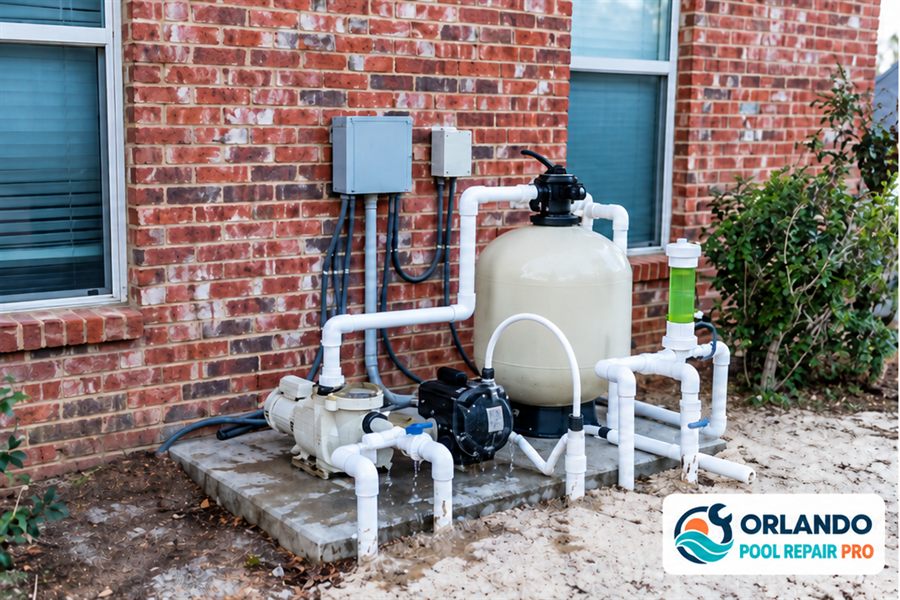
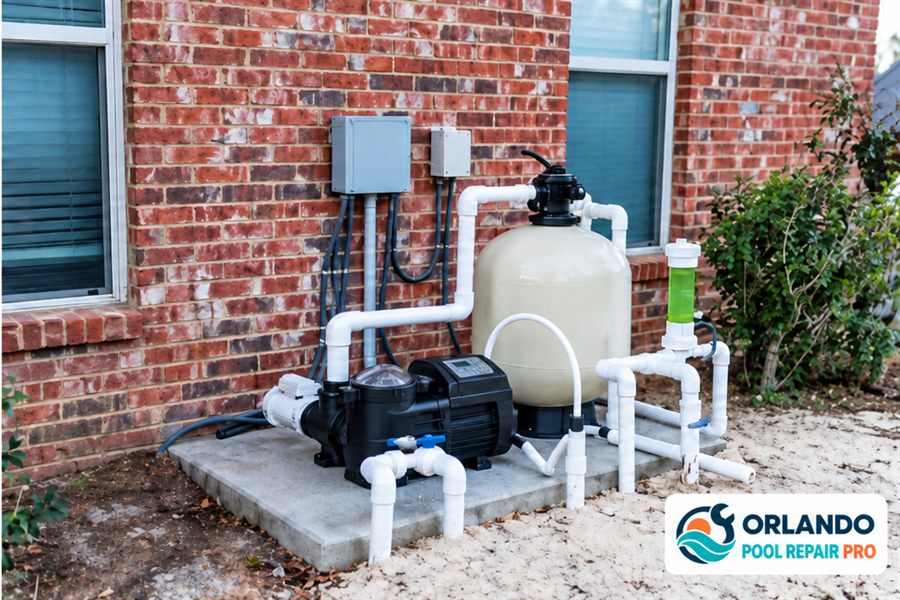
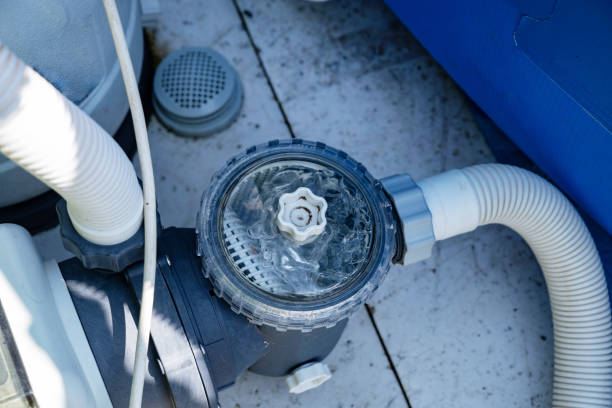
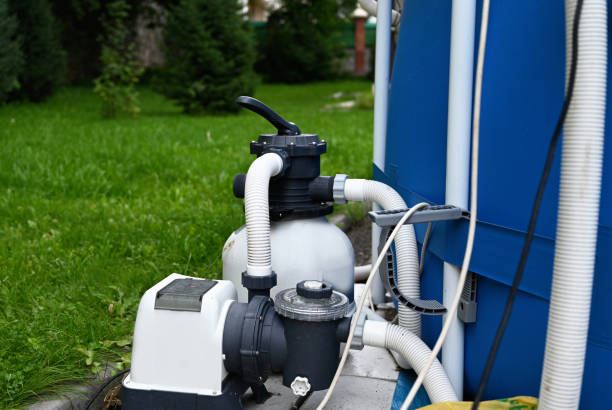
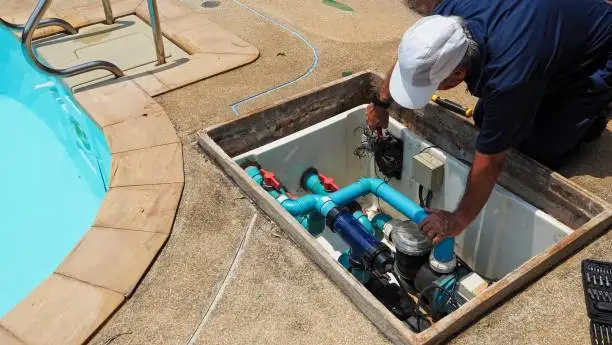
Residential variable-speed product examples include Pentair IntelliFlo3 equipment with 1.5 and 3.0 total-horsepower options. They are examples of available equipment, not a statement that Pine Hills pools mostly run one motor size. The correct proposal considers the pump, connected filter and heater, plumbing and any controls.
When equipment has been changed over time, a photo showing how the pieces connect can be particularly useful. Identify any controller or timer and copy the exact fault code if one appears. Do not choose a replacement solely because its advertised horsepower is larger. Likewise, do not assume that replacing a motor will resolve a separate visible leak or water-loss concern. We assess the system and explain which part of the proposal addresses each symptom, so a targeted repair and a complete equipment change can be compared fairly.
Preserve a clear account of small leaks and repeat failures
For a visible equipment leak, note where the water first appears and whether it is associated with the pump running. Keep exterior photographs of the area and the equipment label. For a pool level that keeps falling, record recent top-ups and any automatic filling instead of assuming the same connection is the only source of loss.
An earlier invoice can be helpful if a fault has returned. It shows whether the previous work involved a seal, motor, control or another component. Tell us whether the symptom disappeared completely and how long the improvement lasted. There is no need to open an electrical enclosure or pressurized filter to prepare that history. These observations help decide whether the next step is a clear small repair, a diagnostic visit or further testing before a larger scope can be priced.
Look at the current interior before setting a resurfacing date
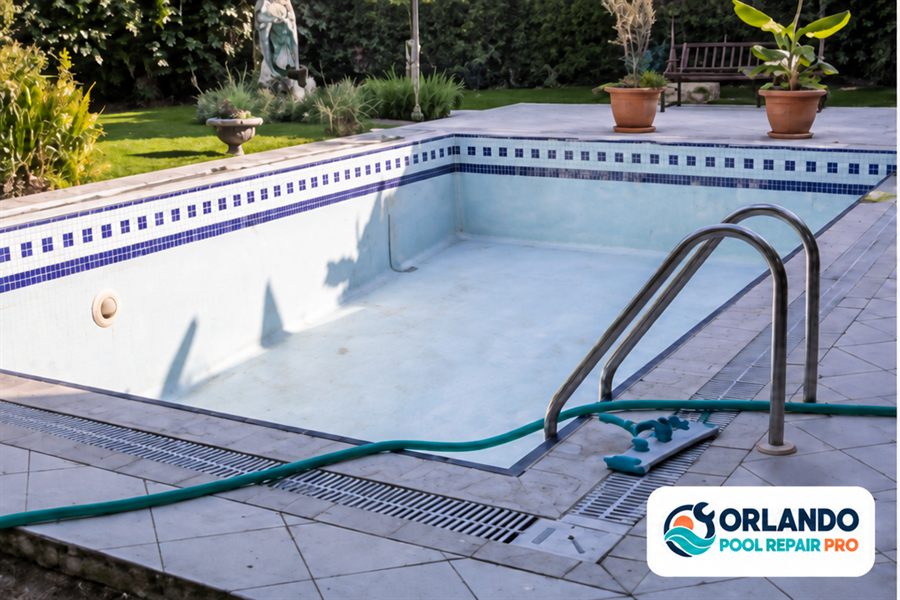
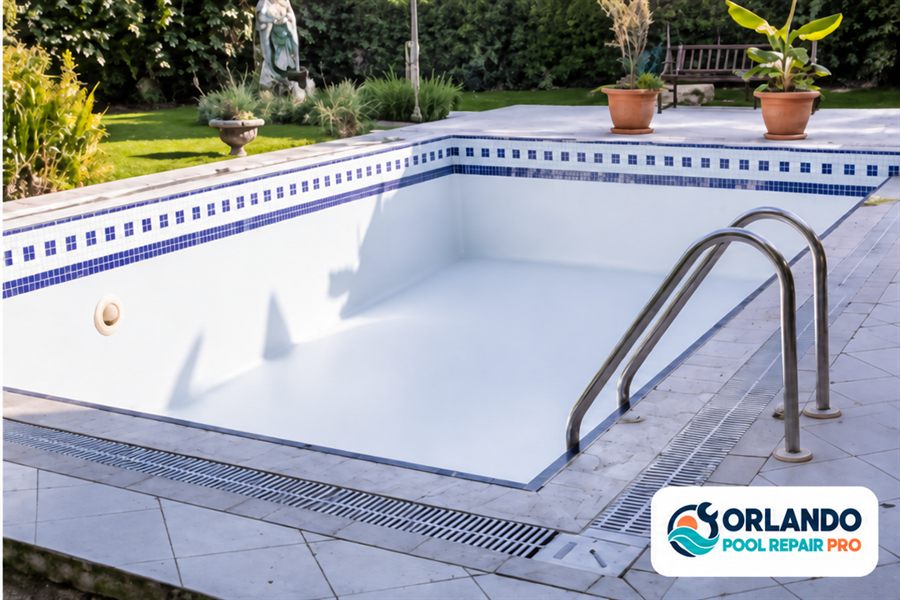
Common finish planning comparisons place plain plaster around 5–10 years, quartz around 7–15 years and properly maintained pebble beyond 20 years. These are material-based reference periods. They are not a schedule that can be calculated from Pine Hills’ 1980 median house year, and they do not identify the current surface at your address.
Describe whether the concern is roughness, visible wear, staining or a previous patch that has changed. Photos of the steps, floor and walls can show more than one close-up. If you want tile, coping or fittings changed, identify those as additional items for the estimate. Water loss should also be discussed before resurfacing is treated as the solution. The agreed proposal should explain preparation and the responsibilities for filling and startup care, rather than leave the owner with only the name of a new finish.
Start with Orange County resources and a defined service visit
For a county-address project in Pine Hills, Orange County’s permit resources are the starting point for identifying an applicable review route. Confirm the property jurisdiction and the proposed work. A small repair and a larger alteration can need different supporting information; the community name is not a separate municipal building department.
Include the full address, equipment model, symptoms and the person who can authorize the visit. For a shared facility, add the responsible operator or property contact. Keep any existing project records and planned equipment changes together when a scope needs review. During the repair discussion, ask which charge covers diagnosis, what the proposed parts or installation include, and whether any further work is separate. That makes the estimate useful for an owner comparing options without requiring the customer to diagnose the equipment before asking for help.
A detached-home statistic cannot identify the pool at an address
Pine Hills’ estimated 69.9% detached-housing share describes the type of structure in the Census housing inventory. It does not establish that those homes have private pools. Nor does the remaining share tell us that residents without detached houses lack access to a shared pool. Housing form and pool presence are separate questions.
The distinction matters when searching for local service information. A photograph, listing description or neighborhood label may help identify a property, but it is not a complete record of the present pool equipment. A detached house could have no pool, a later-added pool or a refurbished installation. A shared facility can serve several housing units without being repeated as a separate pool at every resident’s address.
For an accurate request, describe the actual pool and give the full service property address. Explain whether it serves one household or a shared property, and identify who can authorize the work. If you have a pool plan, equipment invoice or previous finish record, include it with the symptoms. This moves the conversation from a broad housing statistic to information that can support a useful repair proposal, without turning Pine Hills’ housing mix into an unsupported pool-ownership percentage.
Sources for local pool planning