
Inspect visible equipment
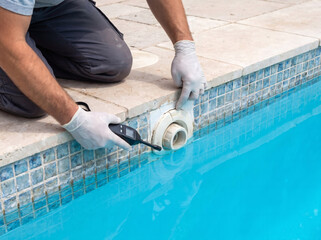
Check the equipment pad, valves, unions, pump seals and visible fittings. Wet ground or an obvious connection leak can explain water loss without a hidden crack in the pool shell.
When the water keeps dropping, finding the source comes before choosing a repair. We investigate Orlando pool water loss at the equipment, pool fittings and plumbing, using the tests that fit the symptoms.
Get a QuoteHeat, wind, splash-out and rain all affect the water level. A bucket comparison or water-loss sensor can help establish whether the pool is losing more water than evaporation explains. Review when it drops and whether the pattern changes with the pump running; a refill schedule alone cannot locate the leak.
A tape mark shows how far the water falls, but it does not tell you how much was evaporation. A bucket exposed to the same weather gives you a useful comparison. Use this check for a home pool; shared-pool testing should be coordinated with its responsible operator.
Call if the pool repeatedly loses more water than the bucket, or if unexplained refilling continues despite an unclear result. A small difference can be retested during stable weather. There is no single inches-per-day rule that fits every Florida pool: heat and wind change evaporation. Similar drops suggest evaporation, but they do not rule out every small or intermittent leak.
An obvious equipment leak, wet ground that keeps returning or water nearing the skimmer intake warrants prompt attention. Do not let a pump run dry, drain the pool to look for a leak or open electrical fittings. If you are unsure how to protect the equipment, ask for help rather than extending the test.
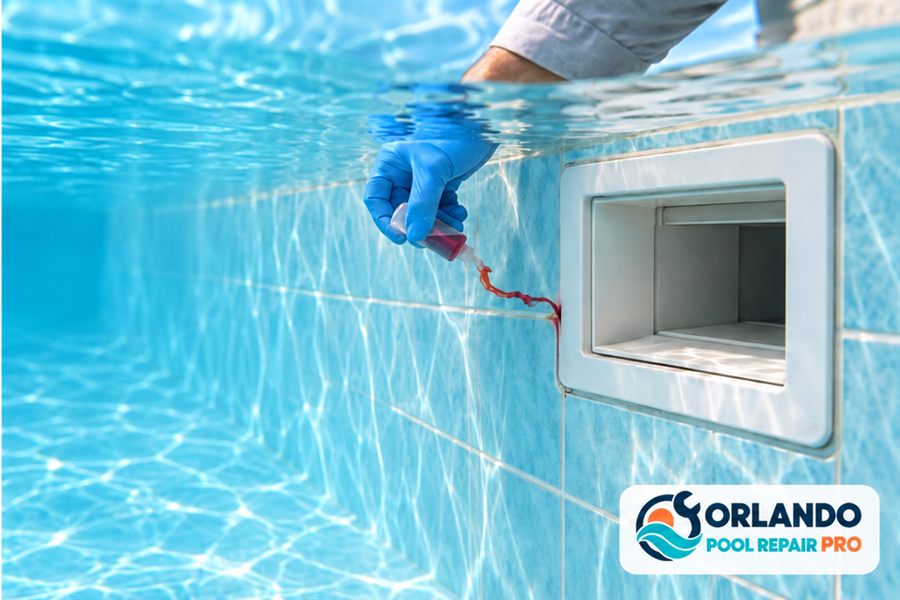
Possible locations include fine shell cracks, skimmer seams, return fittings, light niches, drain assemblies, hydrostatic valves and buried lines. Gaskets and equipment-pad connections can leak too. Not every leak is an invisible crack, and a newly plastered surface does not rule out a fitting or plumbing problem.
Sun, wind, warm water and frequent storms can make visual guesses unreliable. Rain can hide ongoing loss, while automatic filling can keep the level looking normal. Record top-ups and water levels so the technician has a useful starting point; do not drain the pool to look for the leak.
For a hotel, apartment or community pool, review fill records, water use and operating logs with the responsible operator. Plan tests around circulation, disinfection, access and safe pool use. Findings can support a staged repair and closure plan, with project-specific approval or inspection needs confirmed separately.
Pool leak detection typically ranges from $400 to $700, depending on the pool and testing scope. Detection identifies the source of water loss; structural work, fitting repairs or buried-pipe access are quoted separately. A larger system or a difficult-to-locate leak may need a different scope, which should be explained before additional work.
It is a reason to investigate, but weather, splash-out and evaporation need comparison. A measured water-loss test is more useful than guessing.
Dye, pressure tests and electronic listening can help narrow the area first. Some access or excavation may still be necessary to confirm or repair the fault.
No. It is the supplied detection-only charge. A repair follows a separate scope and price.
No single sequence applies to every pool. The method depends on the symptoms, pool design and what the initial tests show.
Tell us what changed, what equipment you have and whether the pool serves a home or shared property.
Get a Quote