Pool Repair in Maitland, Florida

We provide Maitland pool pump repairs, resurfacing, heater repairs, and leak detection. Tell us about a new noise, leaking connection, poor flow, falling water level or rough interior. Include earlier repairs and any recent control changes. We check the installed equipment before suggesting replacement.

Maitland's Census estimates show that 34.4% of housing units are detached houses and 44.4% of occupied units are owner occupied. The median home construction year is 1996. Those figures do not identify a private or shared pool, or date its equipment. We confirm who manages the property, who can approve repairs and how access, scheduling and aftercare will work.

Why Choose Orlando Pool Repair Pro

We are the #1 go to pool repair company in Maitland FL. Our approach starts with checking whether a small repair will solve the problem or a full replacement is needed. Our goal is to save homeowners hundreds by repairing what we can, rather than pushing a more expensive item. We tailor the repair to the pool and property, with clear pricing and a useful handoff to the owner or operator. We offer competitive pricing, respect your property and clean up afterward. Most products we install have manufacturer warranties, with coverage depending on the product and its terms.

Property records accessed October 24, 2026 flag a pool on 2,074 of 3,743 single-family-classified parcels in Maitland’s municipal jurisdiction—about 55.4%. This measures recorded properties, not all housing units or the number of individual pools.

We also serve Altamonte Springs, Casselberry and Winter Park.

Local homes, pool sizes, pumps and resurfacing in Maitland

Read Maitland’s housing data as context, not a pool inventory

The Census estimates identify 10,017 housing units in Maitland, including 3,442 detached units and 864 attached single-family units. Among 8,972 occupied units, 3,988 are owner occupied. These structure and tenure figures show why a local pool inquiry should establish the property arrangement instead of assuming every resident is the owner of a detached house with a private pool.

The 1996 median construction year is an estimate for housing structures, not for pool shells, motors or finishes. A pool may have been installed after the house, and equipment may have been changed at different times. For an established address, ask for the latest pump and resurfacing records if they are available. For a managed property, identify the operator and the person who approves repairs. The equipment assessment and the service arrangement both benefit from knowing what is currently in place and who is responsible for its use.

Keep pool-property records separate from housing-unit percentages

A pool flag on a single-family-classified parcel describes a different unit of analysis from a Census housing unit. A municipality-matched property-record figure can provide local pool context when its classification, boundary and snapshot date are stated. It should not be described as the share of every apartment, condominium or other housing unit with a private pool.

For a Maitland service request, clarify whether the pool serves one household or a shared property. A shared facility may serve many housing units, while a parcel flag cannot tell us its operating schedule or the number of separate vessels present. Neither dataset establishes the pool’s volume, motor size or condition. That is why the address, pool use and current equipment information belong in the request alongside the symptom. Local statistics help explain the market, but the proposal still has to fit the actual installation.

Establish pool dimensions before relying on a volume assumption

There is no measured Maitland average pool volume established in the research used for this page. A Central Florida builder’s published packages include examples between 12 by 24 and 15 by 30 feet, as well as larger designs. Those offerings are a regional reference rather than a survey of installed pools in Maitland.

A simple rectangular example shows why the full geometry matters: at an assumed average depth of 4.5 feet, a 15-by-30-foot pool holds about 15,100 gallons. Changing the depth, adding a shallow shelf or using a freeform shape changes the calculation. If you have an equipment schedule, builder’s plan or known volume, provide it. Photos of connected spas or features may also help. Resurfacing requires a different look at the same pool, including the walls, steps and transitions rather than only the footprint of the water.

Use Maitland’s equipment-information approach for a better match

Maitland’s pool checklist identifies flow calculations and manufacturer information for pumps, drains and applicable heaters as part of the information used for reviewed pool work. It is a useful reminder to collect connected-system details. A checklist for a larger project should not be treated as proof that every small gasket repair requires a new set of plans.

Show the existing pump, filter and heater labels and how they connect. A picture of a controller is useful if the equipment is automated. Describe which functions work normally and which do not. When a proposal changes equipment, its rationale should explain the intended match, rather than rely on the appearance of the pump or a single advertised number. For shared pools, include the responsible operator so that the equipment discussion accounts for the facility’s actual operating needs.

Compare a motor repair with the condition of the complete pump

Pentair’s IntelliFlo3 residential products offer 1.5 and 3.0 total-horsepower examples. This describes available options, not the most common motors in Maitland. The current system, required circulation and connected equipment determine which repair or replacement should be discussed.

Keep the difference between a changed motor and a replaced pump clear in the service history. An earlier invoice may show that only one component was renewed, which can matter when another fault appears. Tell us about visible leaks, noise, shutdowns and error messages separately. If symptoms began after a setting or equipment change, explain that sequence. We assess whether a targeted repair is sensible and whether any remaining components also need attention. The written scope should identify what will be changed and how that work relates to the symptoms reported.

Plan resurfacing from the finish and the evidence of wear

Material planning references commonly compare plain plaster at around 5–10 years, quartz at 7–15 years and properly maintained pebble beyond 20 years. They are not a Maitland-wide replacement schedule, nor can they be applied to the home’s construction date to determine when a pool is due for work.

Identify the present finish and last known resurfacing date if possible. Photograph texture changes, worn areas and the steps, and distinguish those issues from a separate desire for new tile or coping. Repeated loss of water should be investigated rather than assumed to disappear after a new finish. For a private pool, agree who handles filling and startup care. For a shared pool, also identify who coordinates access and the operating handoff. A complete proposal should make preparation, finish selection and those responsibilities understandable before the interior work starts.

Prepare the local records and people needed for the visit

Use the actual property address when confirming Maitland’s applicable project route and the scope of any review. Have the existing equipment information and proposed changes available, especially when earlier repairs or modifications are involved. A focused component repair and a wider installation change should be described accurately rather than grouped under an unclear request for a new pump.

Before the visit, write a short timeline and gather ordinary exterior photographs without opening electrical or pressurized components. Include who will provide access and who can approve a repair or further testing. At a managed property, distinguish that decision-maker from the person who handles daily pool operation if those roles differ. Ask which items cover diagnosis, parts, installation and any separate finish work. Those questions help the owner or manager compare an understandable scope and make a decision based on the actual findings.

Use the right local measure for the question being asked

Maitland’s 34.4% detached-housing share and its 55.4% pool-flag share can both be useful without being interchangeable. The Census percentage describes structure types across all housing units in its estimate. The property-record percentage concerns 2,074 pool-flagged parcels among 3,743 single-family-classified parcels in the retrieved municipal dataset. These are different populations, measured through different records and time frames.

It would therefore be misleading to describe 55.4% as the share of all Maitland housing units with private pools, or to treat the detached-housing count as the denominator for the parcel query. The figures also do not reveal how many residents share a facility or which pump serves a particular property. An aggregate local statistic is context rather than an equipment specification.

When arranging repairs, tell us which service property and pool are involved and whether the work is for a household or a managed facility. Include the person who knows the operating routine and the person who can approve the proposal. Then supply the current equipment information and symptoms. Matching those roles and records to the actual installation is more useful for a repair decision than combining city statistics into a percentage they were not designed to produce.

For a managed Maitland property, collect the equipment details before comparing replacement prices. A quote for a whole pump and one for a motor alone describe different work, even if both are offered in response to the same noise. Ask what was checked and what parts each option keeps. The property contact should also know who can approve the expense and who will provide entry. If the pool serves several households, include the operator's information about normal use and recent faults. For a private home, past invoices and a clear account of the symptoms are a useful starting point. Keep the final findings with the invoice so a future service visit can distinguish the completed work from equipment that was left in place.

Sources for local pool planning

Pool Repair & Resurfacing Projects

Shared project examples from Orlando Pool Repair Pro. Photos are edited illustrations of the work described.

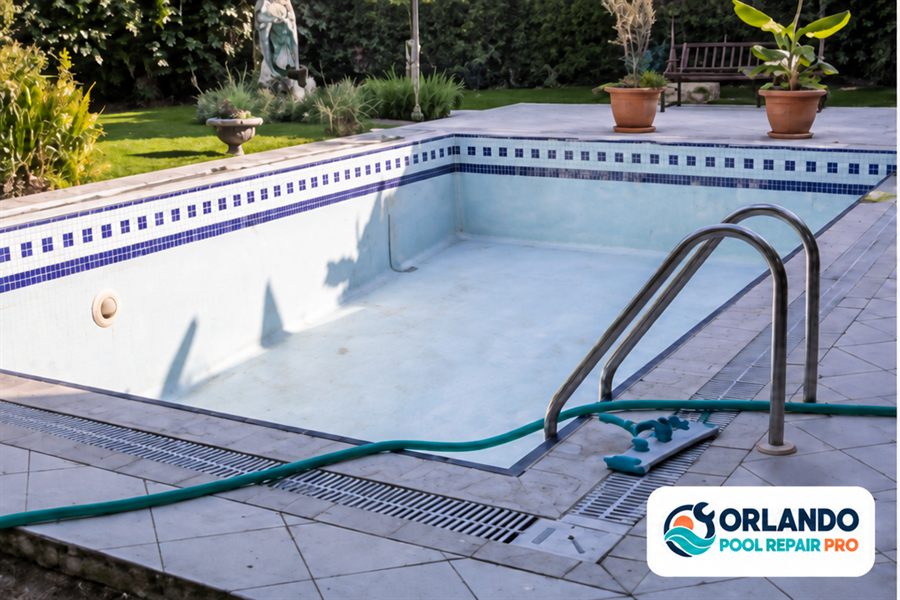
Before
Edited illustration of the original empty pool before resurfacing
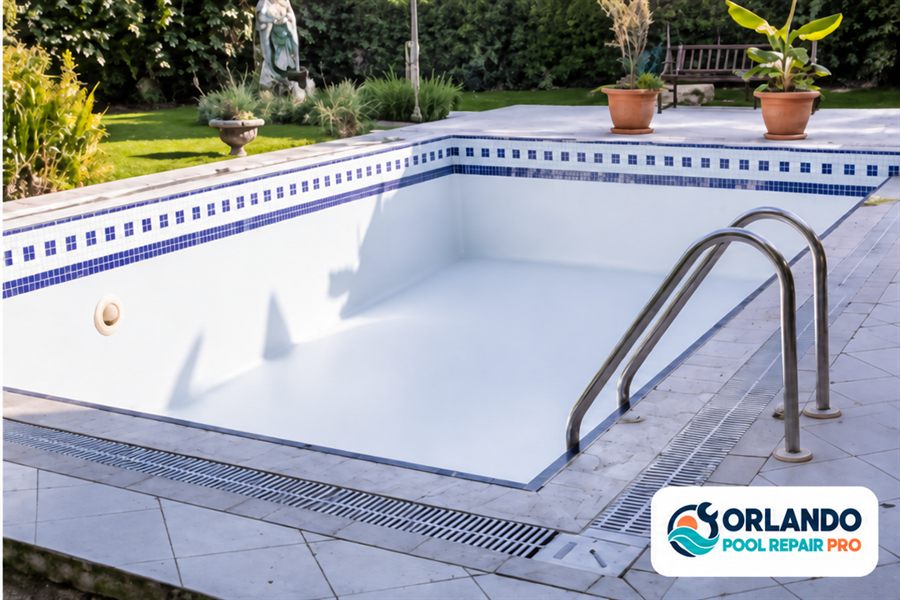
After
Edited illustration of the same empty pool with fresh white plaster

Fresh standard plaster for an empty pool

The supplied project example renews the pool interior with standard plaster. Preparation and application took 6 days, followed by a 28-day water startup and curing-care period. Filling, brushing and water checks follow the chosen finish’s instructions; swimming clearance is confirmed separately.

Price
$6,900
Completion time
6 days of project work
Aftercare
28-day water startup and curing care
Read about this service
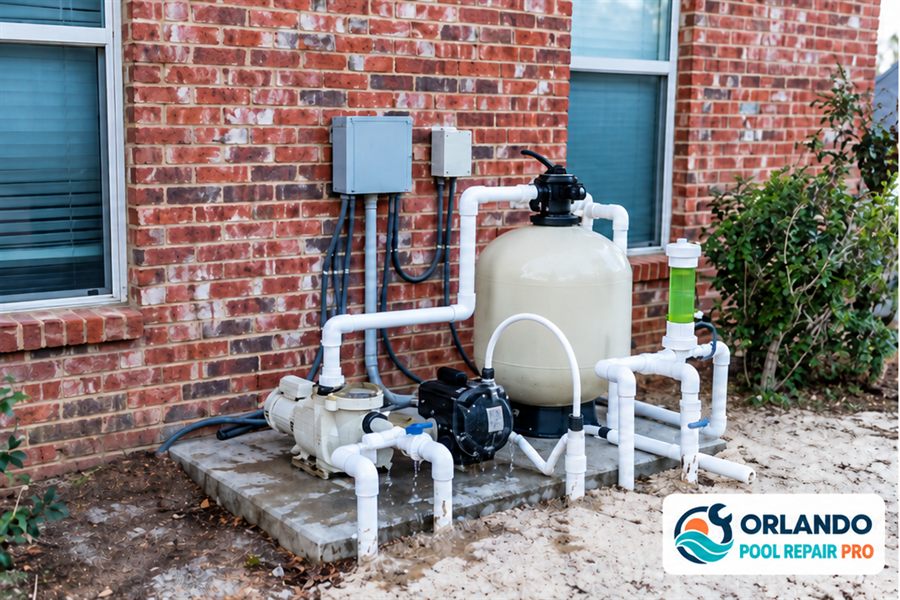
Before
Edited illustration with water leaking at the old pump connections
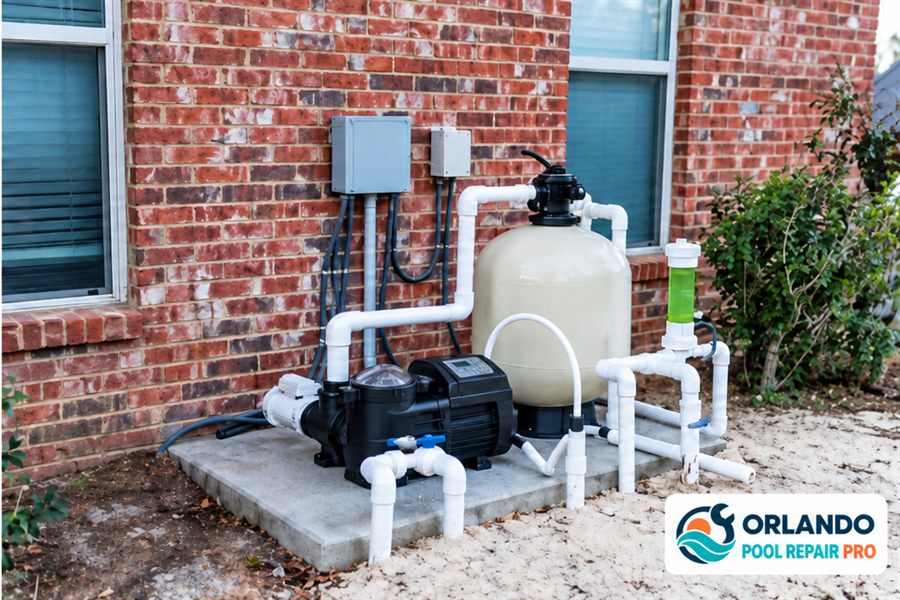
After
Edited illustration of the same pad with a new variable-speed pump

A leaking pump replaced with a variable-speed model

The supplied customer example involved a leaky pool pump. The homeowner chose a variable-speed replacement, with the new pump and agreed connections installed in 1 day. The equipment is matched to the existing circulation system.

Price
$2,200
Completion time
1 day
Read about this service
Before
Edited illustration of a pool skimmer before dye testing
After
Edited illustration of dye tracing a suspected leak beside the skimmer

Finding the reason for repeated refills

In the supplied customer example, the pool needed a top-up every couple of days. A 2-hour detection visit investigated the water loss and narrowed the suspected leak location. The edited comparison shows a dye-test illustration; the $450 charge covers detection, with any repair priced separately.

Price
$450
Completion time
2 hours
Read about this service

Residential & Commercial Pool Repair in Maitland, FL

Edited illustration of leaking pool equipment beside a brick wall

Pool Pump Repair

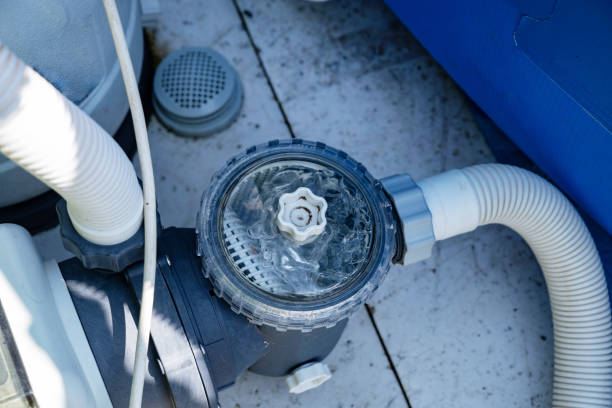
A leaking pump does not always need to be replaced. A worn lid gasket, shaft seal or plumbing fitting may be the only part that needs attention. A targeted repair can avoid the much larger cost of replacing otherwise sound equipment. A cracked pressure-filter tank is different: the damaged component needs replacement rather than a patch.

Close-up of a pool pump and strainer beside an above-ground pool

Pool Pump Replacement

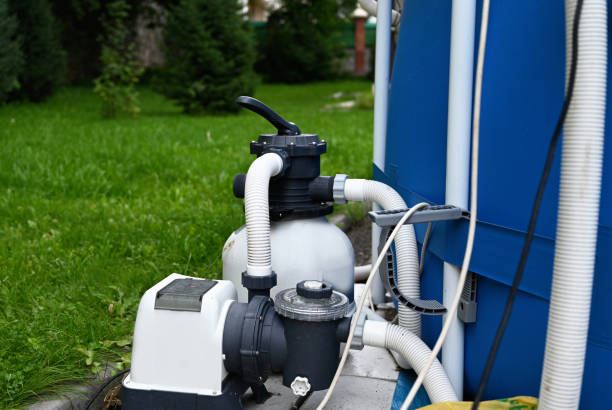
If an older pump keeps failing, a full replacement may be the better use of your money. We compare the condition of the motor, housing and controls before discussing a variable-speed model. The new pump needs to suit your plumbing, filter, heater and swimming routine. In Orlando heat, clear airflow and protection from direct sun help reduce equipment stress.

Edited illustration of an empty pool with fresh white plaster

Pool Resurfacing

Rough, worn plaster can make a home pool uncomfortable and harder to keep looking clean. We assess the existing finish and discuss preparation, standard plaster and any repairs needed underneath. Draining needs planning around Florida rain and groundwater conditions. Once the pool is refilled, brushing and water-balance checks help protect the fresh finish during its startup period.

Pool heater beside outdoor pool equipment

Pool Heater Repair

A heater that stops warming your pool may have a flow, sensor or ignition problem. We look at the fault before comparing a repair with replacement. Electric heat pumps use warmth from Orlando air, while gas heaters generally heat the water faster. Your swimming schedule, fuel supply and existing equipment help determine the practical choice.

Edited illustration of red dye testing a pool skimmer seam

Pool Leak Detection

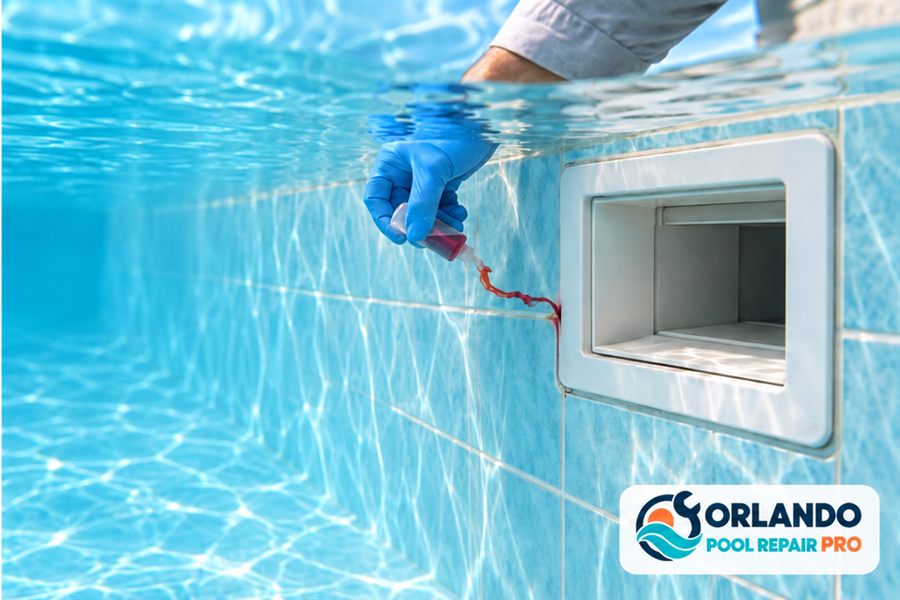
Refilling your pool every few days is a reason to investigate water loss. We compare evaporation with possible leaks and inspect valves, seals, skimmers and return fittings. Dye testing, plumbing pressure tests or electronic listening may help locate the problem. Detection identifies where the water is going so a repair can be scoped separately.

Pool filter tank and pump connected beside an above-ground pool

Pool Filter Repair & Replacement

Cloudy water or rising filter pressure can point to a dirty cartridge, a worn seal or a filtration problem. We check the filter and its connections before suggesting parts or replacement. A leaking O-ring may be a small repair, while a cracked pressure tank needs the damaged component replaced. The aim is to restore filtration without replacing equipment that still works.

Technician working on pool circulation equipment beside a swimming pool

Commercial Pool Pump Repair

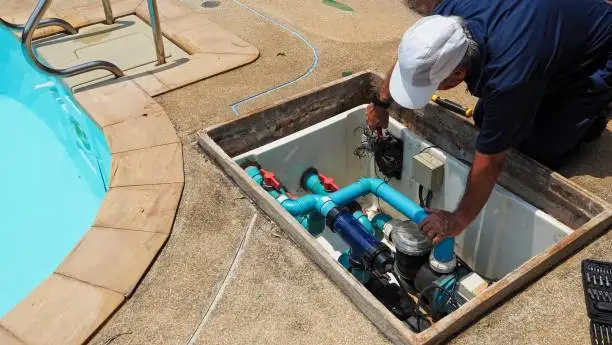
A hotel or community pool pump needs to maintain the flow its filtration and treatment system requires. Commercial equipment ranges from smaller pumps to models such as Pentair’s 3–15 HP EQ series. We check leaking shaft seals, worn bearings, blocked impellers and motor or drive faults. Repair planning includes the equipment model, operating flow and the property’s pool operator.

General pool pump illustration; commercial replacement sizing is assessed separately

Commercial Pool Pump Replacement

A commercial replacement is sized around the pool’s approved design rather than a home-pool rule of thumb. We review circulation needs, the filter, pipework and connected chemical-feed equipment. A variable-speed setting must still meet the system’s operating requirements. Equipment changes are coordinated with the operator and the appropriate authority where review is required.

Edited plaster-finish illustration; commercial scope is assessed separately

Commercial Pool Resurfacing

A shared pool needs a clear closure, resurfacing and startup plan. We help property managers review the finish, steps, depth markings, ladders and fittings alongside surface preparation. Florida public-pool work can involve more than applying fresh plaster. The schedule allows for scope-specific reviews, filling and the selected finish’s water-care instructions.

Pool heating equipment shown as a general service illustration

Commercial Pool Heater Repair

A hotel or community pool heater needs to suit the property’s heating demand and swimming schedule. We assess water flow, controls and damaged parts before recommending a major repair or replacement. Water chemistry, airflow and heat-exchanger condition all affect that decision. Replacement capacity and installation details need coordination with the existing plant and site requirements.

Edited illustration of dye testing at a pool fitting

Commercial Pool Leak Detection

Automatic top-ups can hide a leak in a hotel or community pool. We review water-loss records and inspect the equipment before testing pool fittings or plumbing. Dye, pressure tests and electronic listening may help narrow the source before opening a deck. The findings give the property manager a clearer repair scope and a basis for planning downtime.

Pressure gauge and valve on water-circulation pipework

Commercial Pool Filter Repair & Replacement

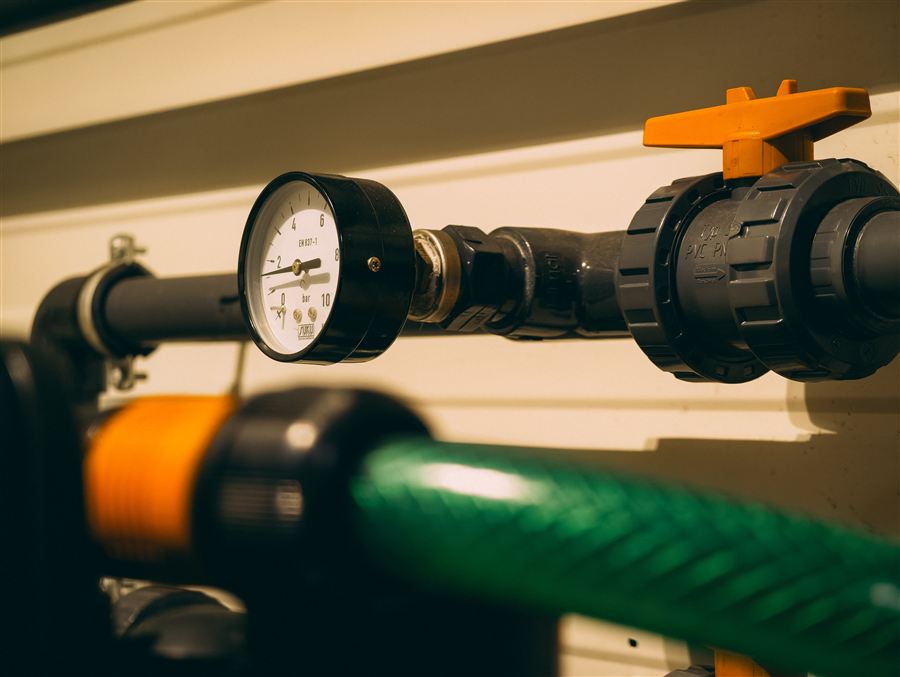
A commercial pool filter needs to handle the system’s approved flow and regular operating load. We assess pressure changes, leaking seals and damaged housings alongside the circulation equipment. Repair or replacement is planned around filter capacity, chemical-feed operation and the property’s maintenance schedule. Scope-specific review and operator coordination help keep the work aligned with the pool’s requirements.

Planning Pool Repairs in Maitland

Match equipment information to the proposed change

Maitland’s pool checklist includes flow calculations and manufacturer information for pumps, drains and applicable heaters. Keep existing model numbers and plumbing details available for an equipment change. The full checklist is a reference for reviewed work, not a claim that every gasket repair needs a new plan.

Maitland pool checklist

Preparing for your Maitland pool visit

Send photos showing how the pump, filter and heater connect, not just a close-up of the failed part. Note the existing speed settings if readily available. For shared pools, coordinate the proposed operating changes with the responsible operator.

Use the estimate form to share the equipment model, symptoms and service address. For shared pools, include the responsible operator or property contact.

Pool Repair Prices in Maitland, FL

These regional planning ranges help you compare pool work in Maitland. The final quote depends on the equipment, access and work required; commercial systems are assessed individually.

Pool repair planning-price ranges supplied by Orlando Pool Repair Pro
ServiceTypical price range
Leak DetectionDiagnostic testing; any repair is quoted separately.$400–$700
Pool ResurfacingPreparation and finish depend on the pool and agreed scope.$5,200–$12,000
Pool Pump ReplacementEquipment selection, connections and installation requirements affect the quote.$1,900–$5,000
Miscellaneous Pool RepairsGaskets, seals and smaller fitting repairs; parts and scope vary.$150–$500

How Our Pool Repair Process Works

  1. Tell us what changed

    Share the symptoms, equipment model and whether the pool is at a home or shared property. Photos and error codes make the first conversation more useful.

  2. Inspect and test

    Look for the cause of the leak, poor flow, heating fault or surface wear. Use the tests that fit the problem rather than replacing parts on a guess.

  3. Compare the options

    Explain what can be repaired, what needs replacement and what further testing may reveal. Put the proposed scope and exclusions in writing.

  4. Plan the work

    Confirm access, equipment compatibility and any required review. For shared pools, coordinate closure and operating needs with the responsible person.

  5. Repair and check

    Complete the agreed work, then check the relevant flow, connections, heating or finish. Diagnostic-only visits end with findings and a separate repair proposal.

  6. Explain aftercare

    Give the owner or operator clear settings and follow-up steps. Fresh plaster needs a startup plan; reopening follows the applicable equipment and finish instructions.

Maitland Pool Repair FAQs

Why collect several model numbers for a Maitland pump repair?

The pump works with the filter, heater and plumbing. Those details support a compatible proposal and may also be relevant when equipment changes require review.

Can you repair a pool in Maitland the same day?

We can typically complete repairs the same day or next day, depending on the project type and parts availability. Tell us the symptoms and equipment model so the timing and scope can be confirmed.

Where can I compare repair, resurfacing and leak-detection options?

The service cards above link to the detailed pump, resurfacing, heater and leak-detection pages. The planning-price sheet provides regional ranges; the final quote depends on the pool, equipment, access and agreed work.

View all service areas or compare our pool services.

Let’s find the right fix for your pool.

Tell us what changed, what equipment you have and whether the pool serves a home or shared property.

Get a Quote