Lake Mary has a substantial base of recorded private pool properties
An official Seminole County parcel snapshot retrieved October 24, 2026 flagged 2,377 Lake Mary single-family-classified parcels with a pool, out of 5,281 parcels in that same classification and municipal jurisdiction. That is approximately 45%. These are properties carrying a pool flag, rather than a count of every individual pool, and they are not 45% of all Census housing units. Apartments, other property classes and shared amenity pools are outside this particular calculation.
The distinction matters when planning service. A backyard pool owner normally has a different authorization and access arrangement from someone responsible for an apartment or community pool. Tell us which situation applies when booking. For a shared system, include the operator or property manager so decisions about circulation, testing and downtime reach the person who can coordinate them. We do not use the parcel statistic to assume that every Lake Mary house has the same size pool or equipment.
A 1997 housing median calls for equipment history, not assumptions
The Census estimate describes housing structures within Lake Mary’s place boundary. It is a median, not an arithmetic average, and it does not cover every address that happens to use Lake Mary for mail. Among occupied housing units, the ACS estimated an owner-occupied share of about 62.9%. For service, that makes identifying the actual owner, tenant or authorized manager useful; the person reporting a problem may not be the person approving the repair.
If a pool dates from the same period as the house, its original installation paperwork can explain the plumbing layout. However, a motor, filter or controller could have been replaced much later. We compare those records with present symptoms instead of assigning the whole system a late-1990s age. A recently fitted motor with a leaking connection may warrant a targeted repair, while repeated failures across several worn components need a broader cost comparison.
Measure the pool before choosing equipment or a finish quantity
No measured Lake Mary average pool size was established in this research. Published examples from Central Florida builder Southern Pool Designs include compact 12-by-24-foot pools and larger 15-by-30-foot designs, but those are examples of that builder’s packages rather than a survey of this city. They help frame a conversation about scale without turning a marketing example into a local average.
For a rectangular example, a 15-by-30-foot pool at an assumed average depth of 4.5 feet holds roughly 15,100 gallons, using 7.48 gallons per cubic foot. A tanning shelf, sloped floor, attached spa or freeform outline changes the calculation. Resurfacing also includes wall and step area, not simply the surface rectangle seen from above. For a Lake Mary estimate, useful photographs show the whole pool, depth changes, steps and any connected spa so the actual job can be measured.
Match the Lake Mary pump to the complete circulation system
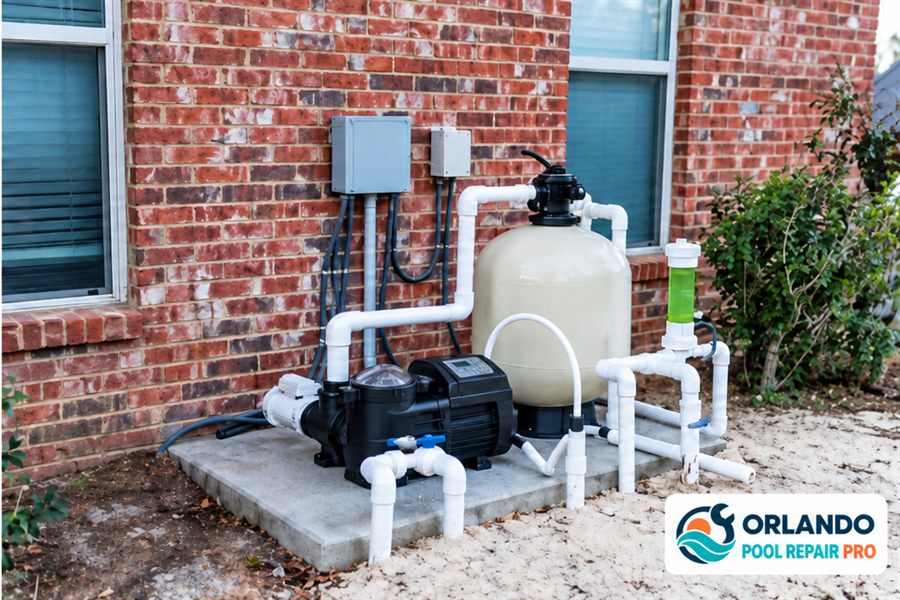
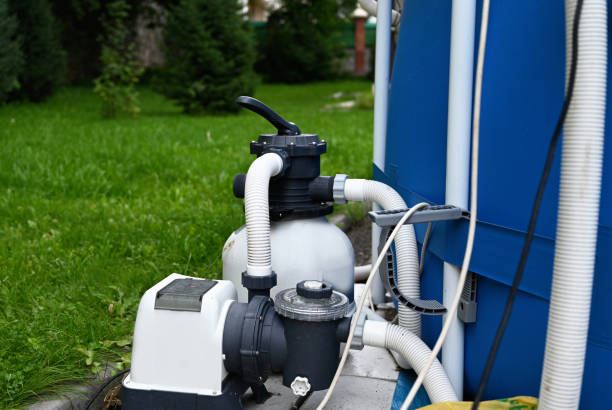
Manufacturer specifications illustrate the choices available, rather than prove which motor is most common locally. Pentair’s IntelliFlo3 VSF includes 1.5 and 3.0 total-horsepower options. Its SuperFlo VST example is rated at 2.2 total horsepower and operates across a range of speeds. We do not assign a particular model to a Lake Mary pool merely because the house has a certain construction date or the pool resembles a package photograph.
The right assessment compares required flow and system resistance with the pump’s performance curve, while considering plumbing, filter, heater and water features. A larger horsepower number is not a substitute for those checks. Bring the existing pump nameplate and control information to the request, especially if different components were installed at different times. Confirming that combination helps avoid buying an expensive pump that is poorly matched to equipment that otherwise still works.
Separate a small leak from a motor or control failure
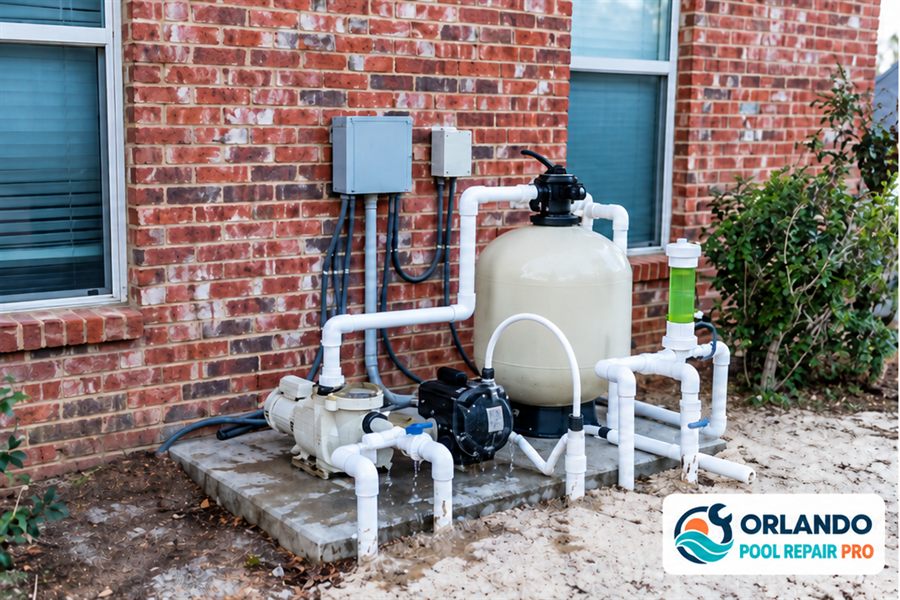
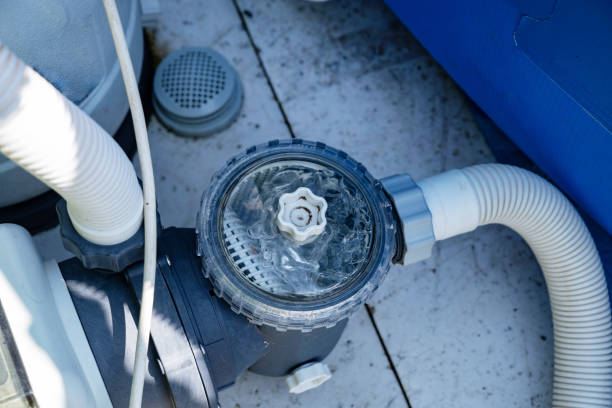
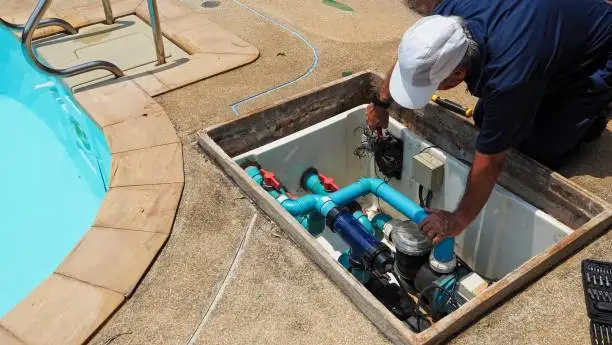
An owner might describe all water at the equipment pad as a leaking pump, yet a lid O-ring, shaft seal, union or adjacent fitting can each need a different part. Note where the water first appears and whether it happens only while circulation runs. A short video taken from a safe distance can be more useful than a close photograph of a wet pad after everything has stopped.
Likewise, poor flow is not automatically a worn-out motor. Baskets, impellers, air entering the suction side and the surrounding filter system can affect performance. A motor that repeatedly shuts down or reports drive faults needs diagnosis before more resets are attempted. In Lake Mary’s mixed-age equipment setups, the repair discussion should identify the actual failed component, explain whether compatible parts remain available and show when a full replacement offers better value.
Use the existing finish, not the house date, to plan resurfacing
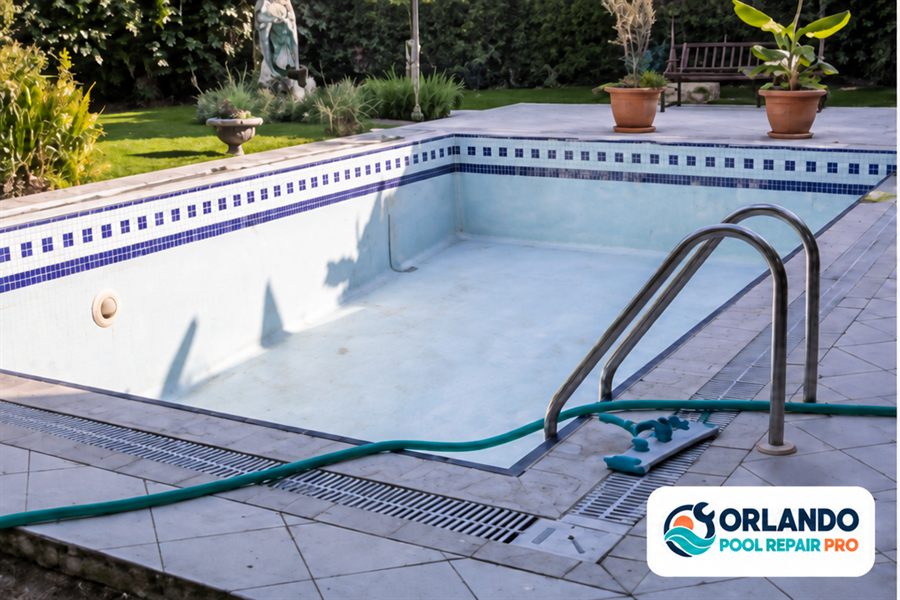
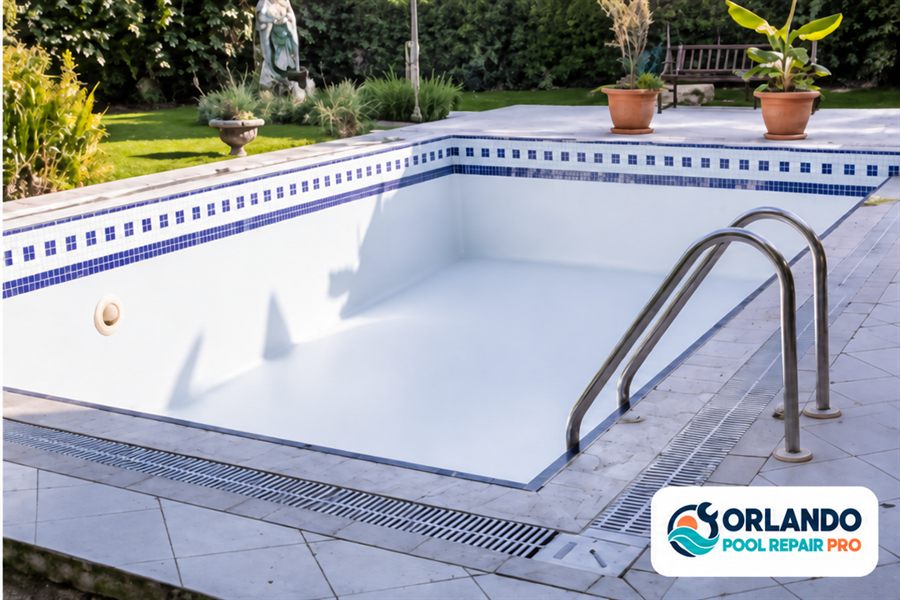
The age of a Lake Mary house does not tell us whether its pool still has its first interior finish. Ask for the last resurfacing invoice and material description if they are available. Standard plaster, quartz and pebble have different service expectations, and installation quality, water chemistry and care can change the result. Roughness, wear and previous patching deserve inspection before a fresh finish is selected.
PebbleTec’s published comparison uses planning ranges of about 5–10 years for plain plaster, roughly 7–15 years for quartz and more than 20 years for a properly installed and maintained pebble finish. Those are neither warranties nor a required replacement calendar. If water is disappearing, investigate the leak rather than assume resurfacing fixes it. A written finish scope should separate preparation, tile or fitting work, filling and the startup care the renewed interior will require.
Coordinate the Lake Mary scope, review and service visit
Lake Mary’s Building Division provides a permit portal and ePlan information. When a proposed equipment change or larger pool project requires review, confirm the required submission and supporting information before setting a firm work date. The fact that a city has a portal does not mean every seal repair requires the same process as a larger installation. Describe what is changing and keep the equipment information with that scope.
For the visit itself, explain access, the decision-maker’s availability and any earlier attempt to solve the problem. If a returning fault was worked on recently, retain the invoice so the next assessment can start with that history. Shared pools also need the operator involved before tests or a closure are arranged. That preparation gives the repair conversation a clearer purpose and helps the final proposal address the actual Lake Mary property rather than a generic pool.
Create a pool-specific handover record
Lake Mary’s recorded pool-property share of 45% and its 55.8% detached-housing share answer different questions. For a person taking over responsibility for a pool, neither figure replaces a handover record for the actual installation. Ask the previous owner or manager for the last pump invoice, the filter and heater model information, the finish specification and any care instructions still available. An equipment label photograph can preserve details that become difficult to read later.
A useful handover also identifies who maintains the water, where current operating settings are recorded and which faults have returned after earlier work. For example, an invoice for a recent motor does not establish that all surrounding parts were renewed at the same time. Keeping the individual items separate helps explain what a later estimate is proposing to change.
If larger alterations went through Lake Mary’s review process, retain the relevant project information with those records. Then compare a new proposal against the system that exists, rather than assume the original house plan describes today’s pool. The result is a clearer decision about a minor repair, a replacement component or a finish project, with responsibility for follow-up care agreed before the work starts.
Sources for local pool planning