Winter Garden’s housing mix includes established and more recent construction
The ACS estimated 17,326 housing units in Winter Garden, including 11,942 detached units and 1,594 attached single-unit structures. About 26% of the total were estimated to have been built in 2010 or later. These figures sit alongside a 2004 median construction year, so the city should not be reduced to a single description of either brand-new homes or older properties.
For pool service, identify what has changed at your own address. A newer house can still have a leaking fitting or an equipment fault, while an older house can have a recently renovated pool. Among occupied housing units, the estimated owner-occupied share was about 65.7%; the person arranging work may therefore be an owner, tenant or authorized manager. Establish who approves the scope and who will handle follow-up care before combining several requested repairs into one project.
A housing category is not a count of Winter Garden pools
Detached homes are a substantial part of Winter Garden’s housing stock, but that does not establish how many of them have private swimming pools. A defensible pool-property figure needs records that identify pools and a clearly defined residential property group. It should not be calculated by treating all detached homes as pool homes or by using the share of sale listings that happen to advertise a pool.
The service request should say whether the equipment belongs to a private backyard pool or a shared facility. A resident who uses a community amenity may need the property operator to arrange the work, whereas an individual owner may control every part of a backyard installation. That difference affects access, authorization and the plan for temporary downtime. The useful estimate is based on the actual pool, features and responsible people rather than an assumed household-to-pool relationship.
Document a refill before asking Winter Garden Utility Billing about it
Winter Garden publishes a pool-fill and water-leak adjustment form for city utility customers. The form concerns eligible sewer charges, rather than a blanket reduction for the water itself. Keep the date of the fill or repair and the supporting invoice, then ask Utility Billing how the current policy applies to the actual account. A pool contractor’s quote does not determine eligibility.
For resurfacing, agree on who will keep the fill records and monitor the water as part of the project plan. If the work follows a leak, retain the detection findings and proof of the separate repair as well. Those documents help explain what happened instead of presenting an unexplained high bill after the fact. A planned total refill and ongoing top-ups can be different situations, so describe the event accurately when speaking with the provider.
Use interior measurements for a resurfacing quote
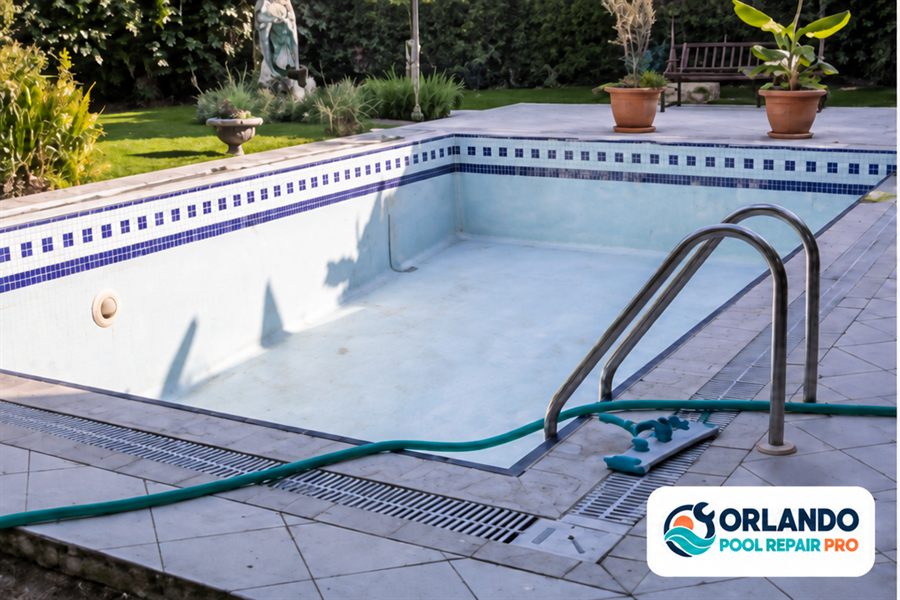
The water’s surface rectangle is not the entire area receiving a new finish. Walls, steps, slopes, benches and the shape of a connected spa all affect the interior quantity. A broad photograph is helpful, but measurements or a pool plan give a better basis for comparing scope. If tile, coping or fittings are also changing, identify them separately so a finish-only price is not mistaken for a full renovation.
No measured Winter Garden average pool size was established here. A Central Florida builder’s published packages include examples such as 12-by-24-foot and 15-by-30-foot designs, but those do not define a standard local backyard. At an assumed average depth of 4.5 feet, a rectangular 15-by-30-foot example calculates to about 15,100 gallons. Freeform outlines, shallow shelves and other details change that illustration. We use the dimensions and features at your property rather than a regional package number.
Keep the pump, filter and heater working as a matched set
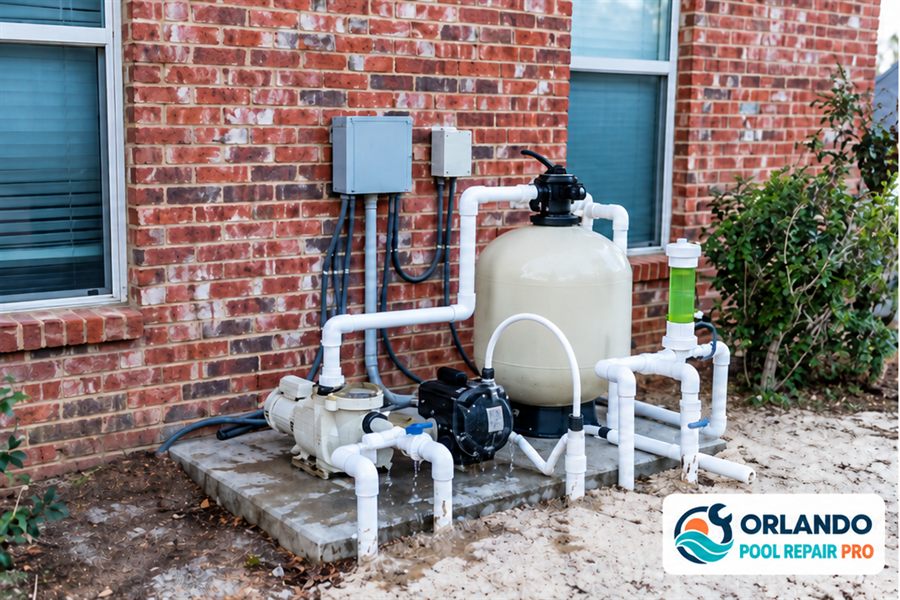
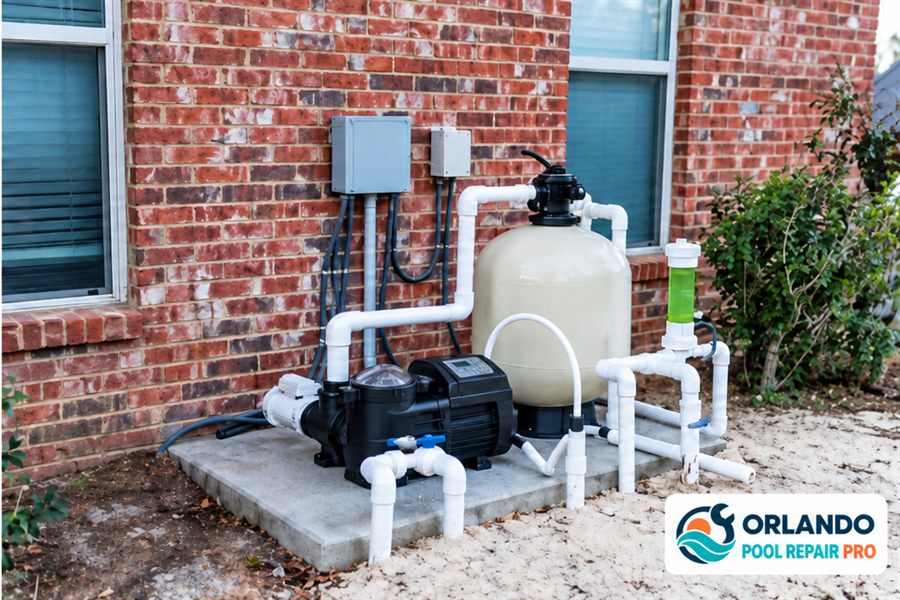
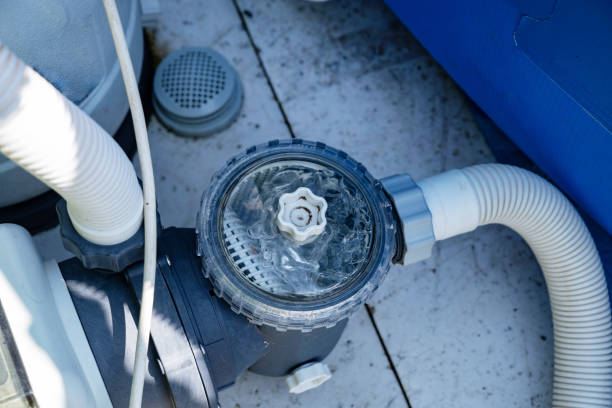
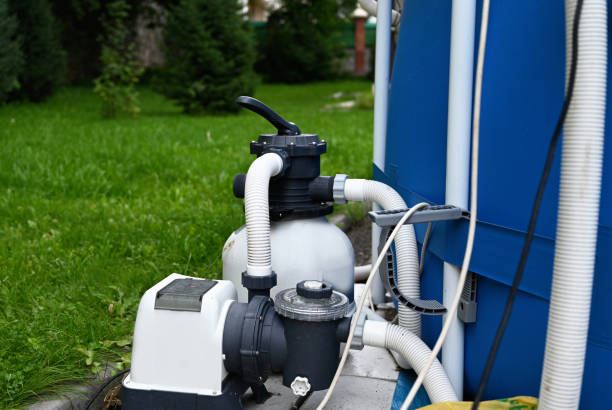
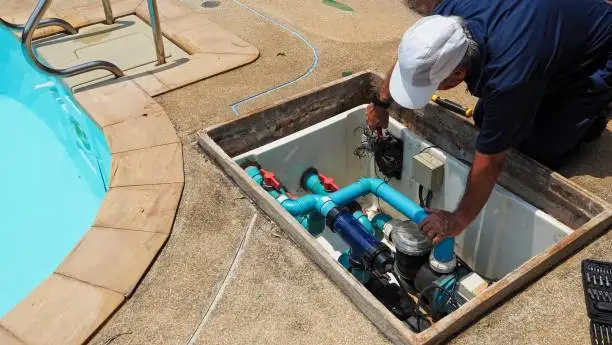
A pump replacement can be part of a wider pool refresh, but a new finish does not automatically mean the existing equipment needs replacement too. Check which components still perform properly and which have documented faults. If a motor was changed after the original pool installation, its current label and settings are more useful than the age of the house when assessing the next step.
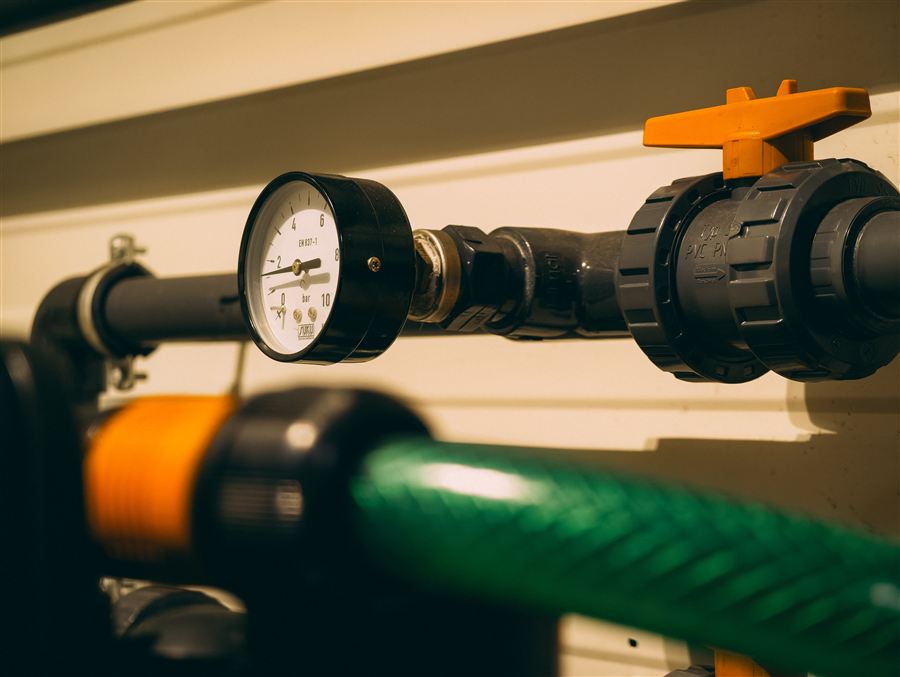
Manufacturers offer variable-speed models across different capacities. Pentair’s IntelliFlo3 VSF examples include 1.5 and 3.0 total horsepower, while the SuperFlo VST example is rated at 2.2 total horsepower. These are options to assess, not evidence that one size is the Winter Garden norm. Required flow, system resistance and the performance curve must be considered with the plumbing, filter and heating equipment. A suitable match can preserve parts of the installation that still serve the pool well.
Separate finish wear from a leak or a small equipment repair
An owner may see declining water levels, rough plaster and moisture near the pump at the same time. Those observations need to be separated rather than rolled into one assumption about the entire pool being worn out. A connection or seal can leak while the interior remains serviceable, and a worn interior can coexist with a separate plumbing problem that resurfacing will not resolve.
Note when the water drops, whether automatic filling is present and where visible moisture begins. For equipment faults, photograph model labels and fault messages without opening electrical or pressurized housings. A clear record helps compare a minor fitting or gasket repair with the need for further testing. If motor problems recur or major components are damaged, a replacement proposal can explain why. That reasoning keeps a Winter Garden renovation from growing into unnecessary equipment work simply because several symptoms were reported together.
Plan the new finish’s care instead of relying on a calendar alone
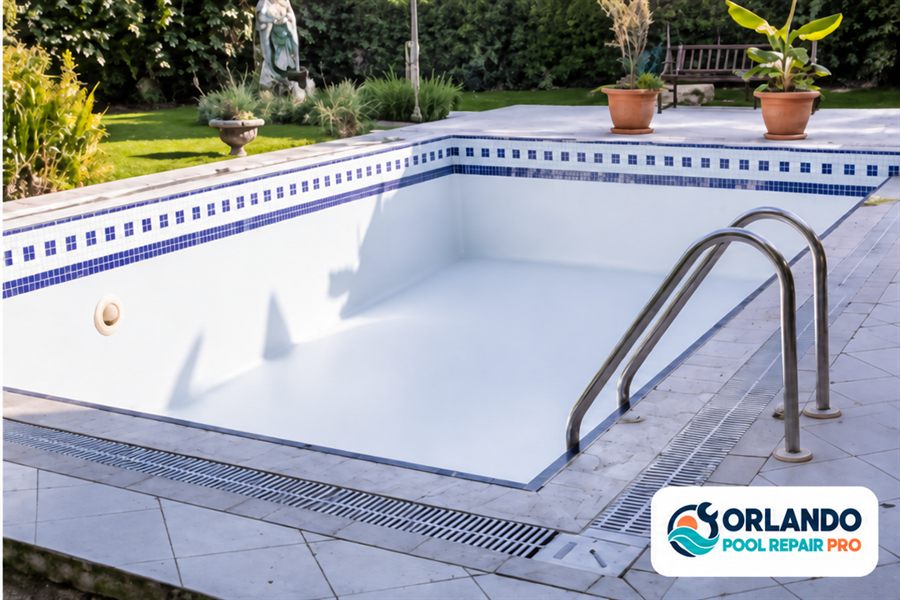
Ask what the existing interior is made of and when it was last resurfaced. PebbleTec’s comparison describes plain plaster at about 5–10 years, quartz around 7–15 years and a properly installed and maintained pebble finish at over 20 years. Those are planning expectations affected by chemistry, installation, use and care, not a promise that a finish lasts until a particular anniversary.
Before selecting the next material, discuss comfort, appearance and the care it will need. Preparation and any underlying defects belong in the scope, as do filling and startup responsibilities. Retain the finish specification and the installer’s care directions after completion. For Winter Garden owners coordinating the refill and possible utility questions, keeping those records together makes the project easier to manage. It also helps the next service assessment understand the pool’s real history instead of having to infer it from the year the house was built.
Keep one agreed record from finish inspection through refill
Winter Garden’s municipal parcel snapshot flagged 3,848 single-family-classified properties with a pool out of 14,060, approximately 27.4%, retrieved October 24, 2026. This local pool-property measure is distinct from the Census detached-housing share. For an individual owner planning resurfacing, the more useful record is the condition and agreed scope of that specific interior before work begins.
Keep photographs of existing wear alongside the selected finish description. If a leak or damaged fitting is being investigated separately, retain those findings with the proposal so a cosmetic improvement is not mistaken for completion of another repair. Agree whether tile, coping or fittings are included, and identify who will monitor filling and receive the startup directions.
The same project folder can hold the dated completion invoice and refill information for a question to Winter Garden Utility Billing. Its adjustment form addresses eligible sewer charges; the repair company cannot decide the account’s eligibility or promise a credit. Keeping one consistent record avoids describing the event differently to the installer, the person caring for the water and the utility. It also gives a future technician a clearer finish history than a remembered estimate of when the pool last looked new.
Sources for local pool planning