One Four Corners address check can prevent a county mix-up
Lake, Orange, Osceola and Polk counties provide the Four Corners address-lookup tool because a mailing description does not reliably establish the responsible county. For a larger pool alteration, checking the actual property before choosing an agency is more useful than assuming the process used on a neighboring street will apply. The required review still depends on the work proposed.
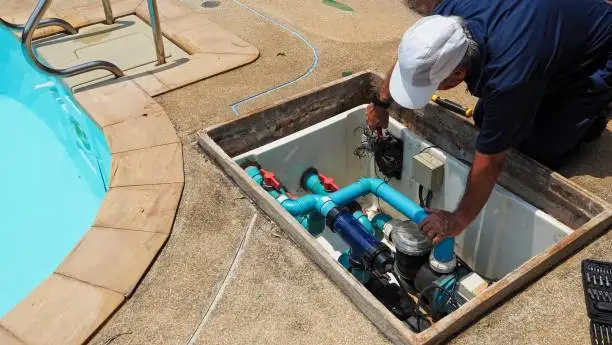
Keep the service address, owner or manager contact and equipment details together when requesting an estimate. If a pump, heater or electrical arrangement is changing, describe each part of that scope. That gives the responsible people a consistent description to work from. It also separates an urgent equipment diagnosis from the planning needed for more substantial work. A pool can be in the same broad Four Corners market as another property while having a different county, operator or installation history.
The housing figures describe a mixed market, not one pool type
The Four Corners ACS estimate included 37,575 housing units, of which 24,422 were occupied within the survey definition. Detached homes made up approximately 48.6% of all units and attached single-unit structures about 6.6%. Among occupied units, roughly 51.8% were owner occupied. These are different measures with different denominators; they do not establish a private-pool percentage or explain why individual units were vacant.
For service planning, ask who uses the pool and who is responsible for its equipment. A homeowner, a person managing an individual property and an operator of a shared pool can need different communication and access arrangements. If nobody who authorizes repairs is present, agree who will receive the findings before the visit. The useful local lesson is to confirm responsibility rather than assume that a particular housing category means the person reporting the fault can approve every part of the work.
Four counties make a single unsourced pool percentage misleading
A residential pool prevalence calculation for Four Corners would need the relevant property records from all four counties and a consistent area boundary. A total from one county cannot describe the entire community, and a count of public or shared pools does not count every backyard installation. We therefore do not turn the housing figures into a claim that a fixed percentage of Four Corners homes have private pools.
What matters to the estimate is whether the pool at the service address is private or shared, how it is used and what equipment is installed. A pool flag in a property record can help document a property, but it cannot tell us its current motor, finish condition or repair frequency. Describe any spa, water feature or separate circulation equipment in the request. Those details give the technician a practical picture that an unsupported market-wide pool count would not provide.
Measure the water and interior instead of assuming a package size
Central Florida builders publish several pool dimensions, but no measured Four Corners average was established by this research. Southern Pool Designs’ package examples include 12-by-24-foot to 15-by-30-foot designs as well as larger options. They illustrate possible scales, not a standard installation for this area. A freeform pool, a rectangular pool and a pool with a connected spa can have different volumes and circulation needs.
A 15-by-30-foot rectangle with an assumed average depth of 4.5 feet calculates to roughly 15,100 gallons. Shelves, slopes, steps and other shapes change that example, so the estimate should use actual dimensions where possible. A resurfacing quantity also includes walls and interior details, not just the water’s footprint. If a property contact is gathering information for an absent owner, request wide photographs, visible depth information and any pool plan alongside the equipment images.
A 2005 housing median is a prompt to check replacement history
A pool installed with a mid-2000s house could have had several later equipment or finish changes. Another pool might have been added to an older property more recently. The Census construction-year estimate cannot settle either case. Ask when the pump, motor, heater and interior were installed, and keep any invoices available so the current condition can be compared with the actual history.
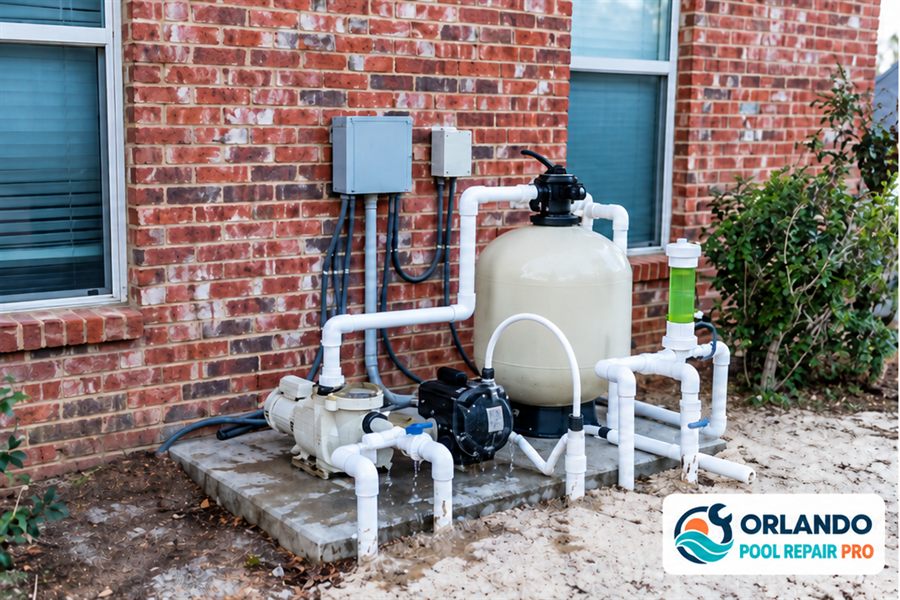
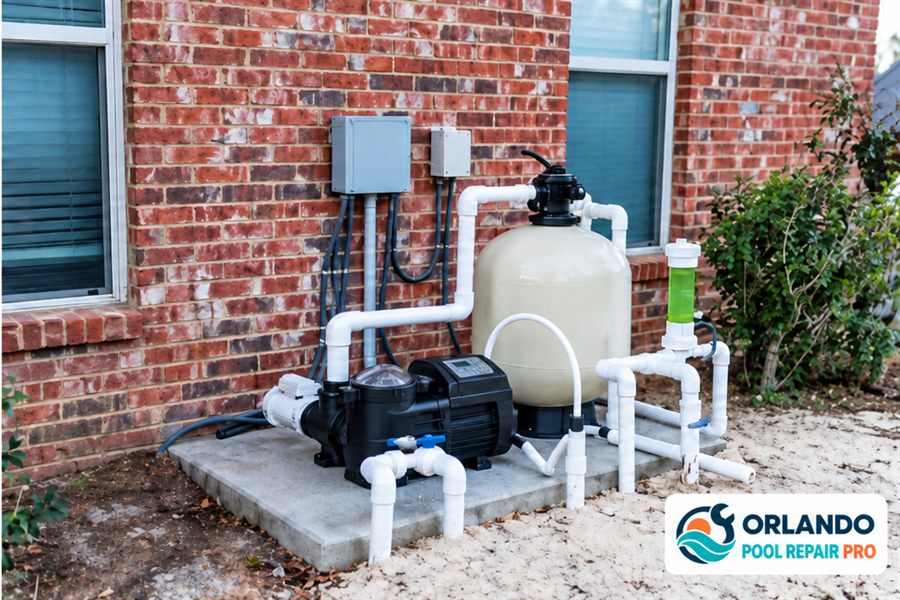
If a newer motor is attached to older plumbing or other equipment, the fault may lie in a connection, seal or operating condition rather than the most recently purchased component. Repeated shutdowns, low flow, a persistent leak or a control error need a diagnosis. When several parts are worn or compatible repairs are no longer sensible, replacement can be compared openly. The recommendation should explain that reasoning instead of treating every Four Corners pool as the same age as the surrounding houses.
Select a pump by its operating match, not by the largest number
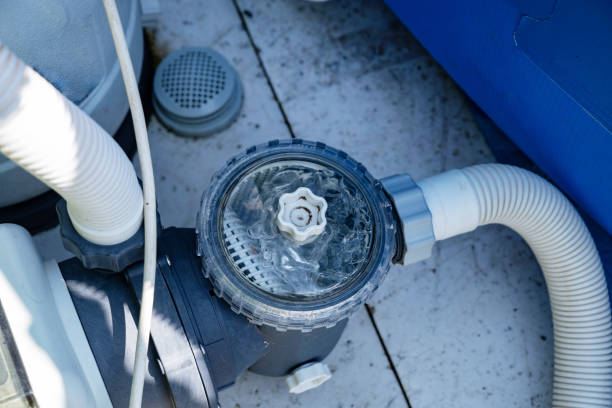
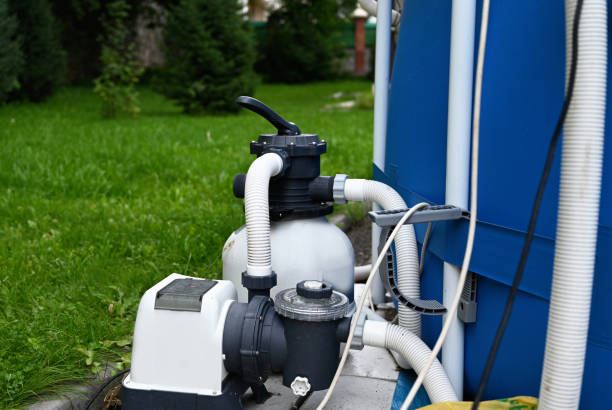
Pentair’s residential product examples include IntelliFlo3 VSF options rated at 1.5 and 3.0 total horsepower, and the SuperFlo VST example carries a 2.2 total-horsepower rating. These are available equipment specifications, not a survey showing what most Four Corners pools use. Variable-speed equipment can operate across a range of settings, but the correct operating match still depends on the pool and connected system.
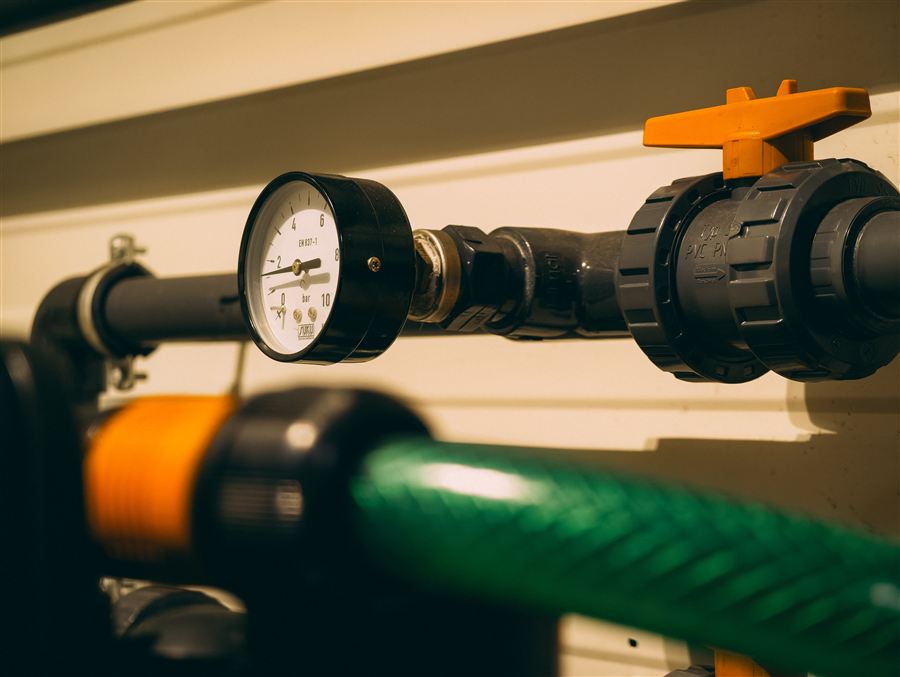
The assessment should compare required flow, resistance in the system and the manufacturer’s performance curve. Filters, heaters, pipework, spas and water features all influence the discussion. For a shared pool, involve the responsible operator before proposing changes to the operating arrangement. For a private pool, note how the equipment currently behaves during its normal schedule. The distinction allows a focused component repair or a suitable replacement proposal without assuming that a higher horsepower motor is automatically the better answer.
Put resurfacing, refill and aftercare in the same plan
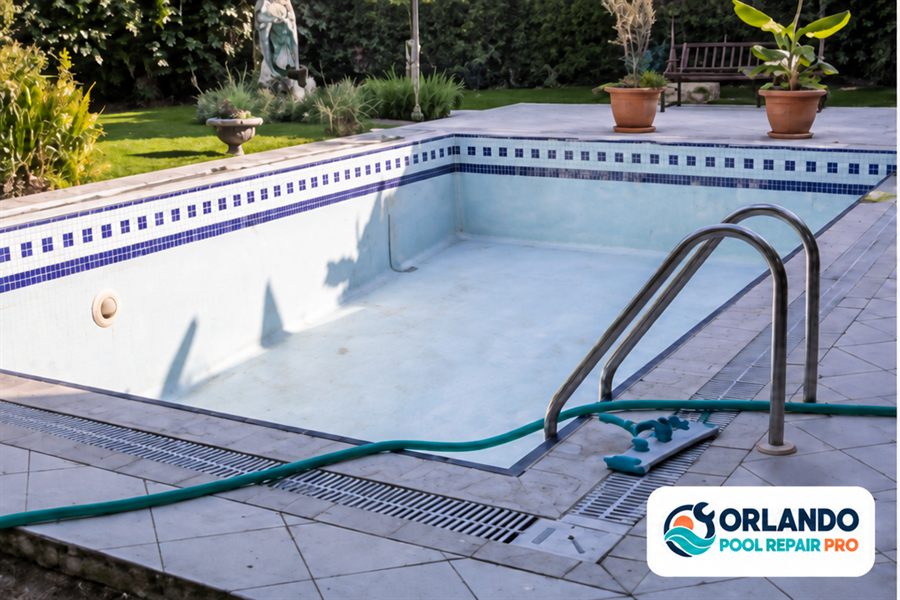
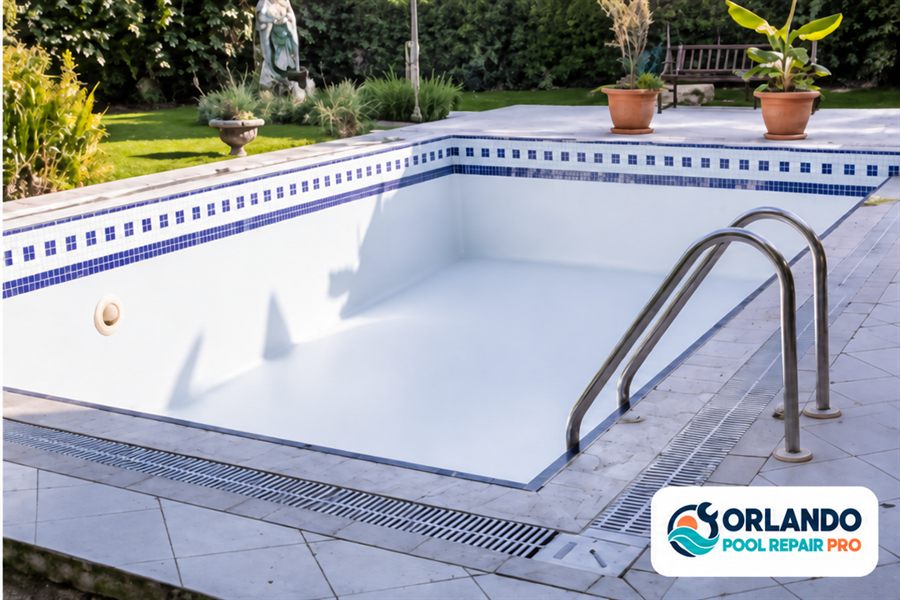
For an existing Four Corners pool, the last finish invoice is more useful than the house’s build date. Identify whether the current interior is plain plaster, quartz or pebble and describe roughness, wear or previous repairs. Investigate unexplained water loss separately; a new surface should not be represented as a cure for every fitting or buried-line leak.
PebbleTec’s published comparison gives approximate planning expectations of 5–10 years for plain plaster, 7–15 years for quartz and over 20 years for properly installed and maintained pebble. Care, chemistry and installation affect those ranges. Before work, agree who will monitor filling and carry out startup care, especially if an owner and local contact share responsibilities. The written scope should identify preparation, finish, separate tile or fitting work and aftercare so the person managing the property knows what follows the installation.
Agree who will receive the findings and approve the next step
In Four Corners, an equipment visit may involve an owner, an on-site contact and a person responsible for ongoing pool care. The Census owner-occupied share of 51.8% among occupied housing units does not identify which arrangement applies to your address. Nor does a county name establish who can authorize a repair. Confirm those roles directly rather than infer them from an area statistic.
Before a diagnostic visit, decide who receives the findings and who approves additional work. A leak-detection appointment, for example, can end with a location or test result that still needs a separate repair proposal. If the person attending the property cannot approve that next step, a clear contact arrangement prevents the finding from being mistaken for a completed repair.
Use the same full street address when sharing those records and when checking the official Four Corners county lookup. Parts of the area fall in four counties, and an owner’s mailing description may not identify the project’s jurisdiction. Keep the findings, agreed scope and aftercare responsibilities together so everyone works from the same information. This helps a private owner or shared-property contact coordinate the actual pool without relying on an unverified market-wide pool count.
Sources for local pool planning