Kissimmee has a mixed housing and ownership picture
The Census estimates count 30,926 housing units in Kissimmee, including about 14,180 detached single-family units and 2,613 attached single-unit homes. Among occupied units, roughly 46.3% are owner occupied. That mix matters when arranging pool work: the person using a pool may not be the person who authorizes equipment changes, while a shared pool can have its own operator and operating requirements. Tell us who owns the equipment and who can approve the proposed repair.
A 1992 median construction year is a useful reason to ask about past changes, not a reason to declare a pool old. Gather the latest pump invoice, heater information and any resurfacing record. If documents are missing, a readable equipment label and photographs can help establish what is installed. The condition assessment should come from that system, rather than applying the housing median to every Kissimmee backyard.
Identify a private pool before discussing how common pools are
A house listing, detached-home count or neighborhood description cannot tell us whether the service property has a private pool, a shared amenity pool or no pool at all. We have not established a measured private-pool ownership rate for all Kissimmee housing units. The useful booking information is the actual pool type, the responsible owner or operator, and whether the equipment serves only that pool or additional water features.
For a property managed by someone else, include the contact who can provide gate access and explain the daily routine. A photo taken while the fault is happening is often more useful than a general property photograph. If the complaint is repeated refilling, note whether an automatic filler is masking the loss and whether anyone has recently changed the pump schedule. Those observations describe the real pool rather than relying on an area-wide assumption.
Measure the pool instead of borrowing a local average
A measured average pool size for Kissimmee has not been established here. Central Florida builder Southern Pool Designs publishes packages including 12-by-24-foot and 15-by-30-foot pools, with larger examples extending to 18 by 35 feet. They are useful illustrations of different project scales, not a survey of Kissimmee pools. Your own length, width, depth and shape are the starting points for discussing circulation or a finish estimate.
For perspective, a rectangular 12-by-24-foot pool averaging 4.5 feet deep would hold approximately 9,700 gallons; a 15-by-30-foot rectangle at the same depth would hold roughly 15,100. Those are calculated examples, not measurements of your pool. A shallow shelf, attached spa or freeform shape changes the volume. For resurfacing, the walls and steps also add finished area, so the water's footprint alone should not determine the quote.
Plan a pump repair around its actual job
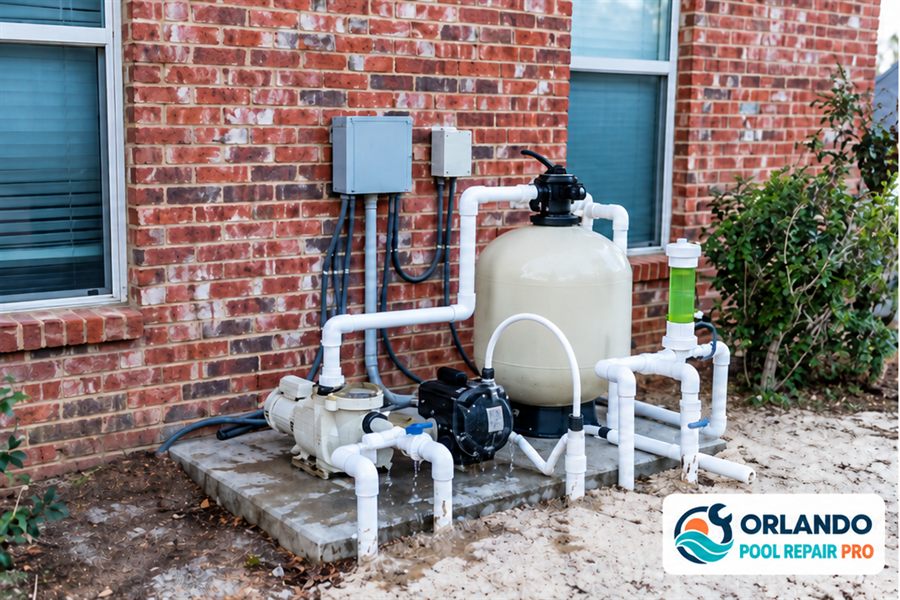
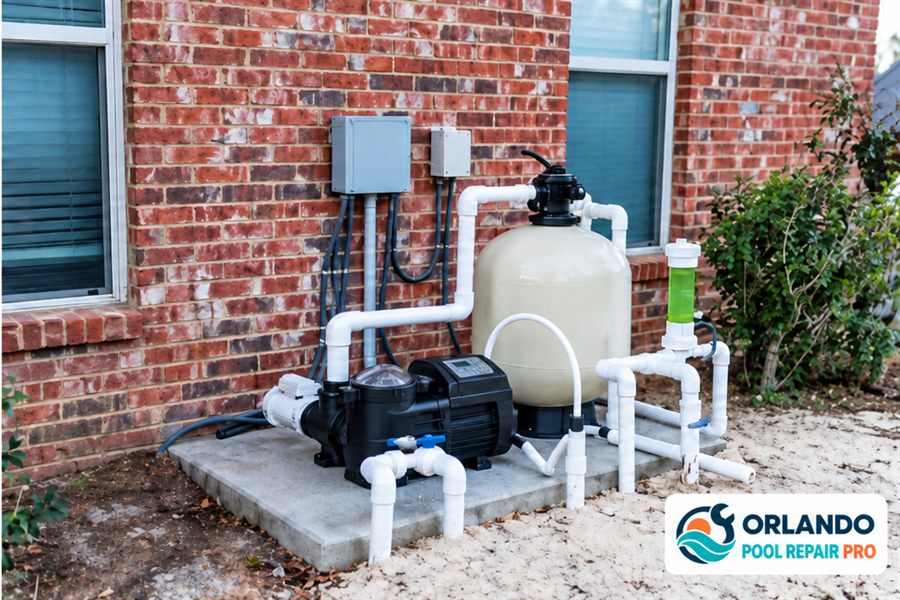
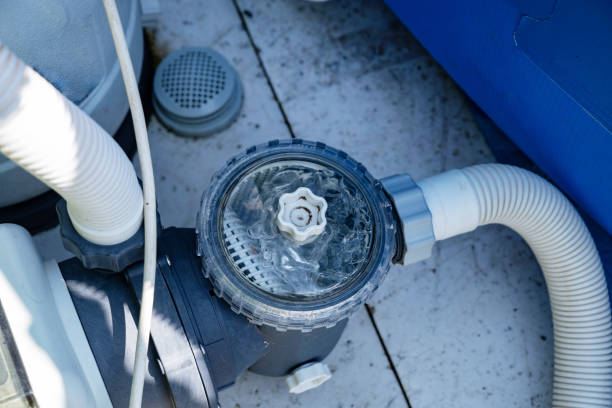
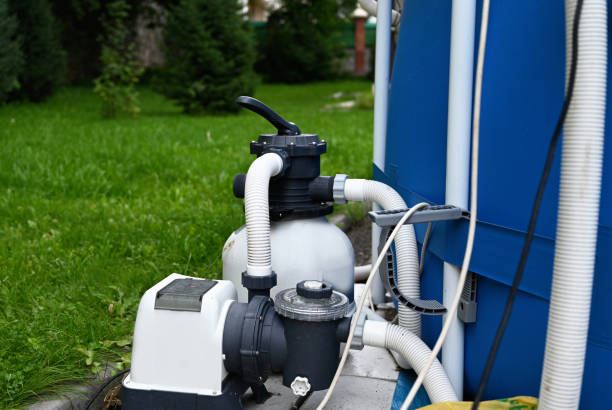
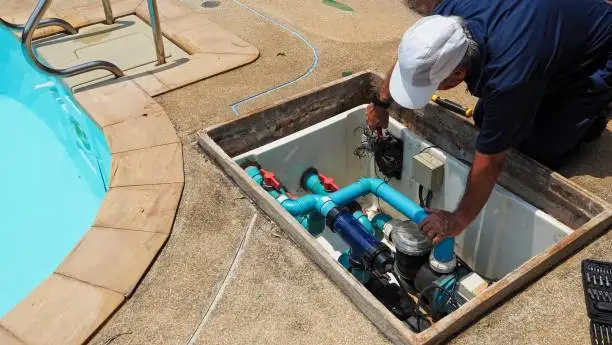
The pump must provide suitable flow through the filter, heater and plumbing. A worn lid seal can admit air, a blocked basket or impeller can restrict circulation, and a motor or electronic drive can develop a separate fault. Note whether the pump fails to start, loses prime after stopping, runs noisily or shuts down after operating for a while. That sequence helps focus diagnosis before parts are selected.
Published residential product examples include Pentair IntelliFlo3 models rated at 1.5 and 3.0 total horsepower. Those choices do not establish which motor is common in Kissimmee or which one your pool needs. The performance curve, system resistance and connected equipment matter more than choosing the largest number. A replacement should also account for the electrical supply and controls. If a shared pool is involved, its operating needs must be considered with the responsible operator.
Use finish history to decide when resurfacing belongs in the plan
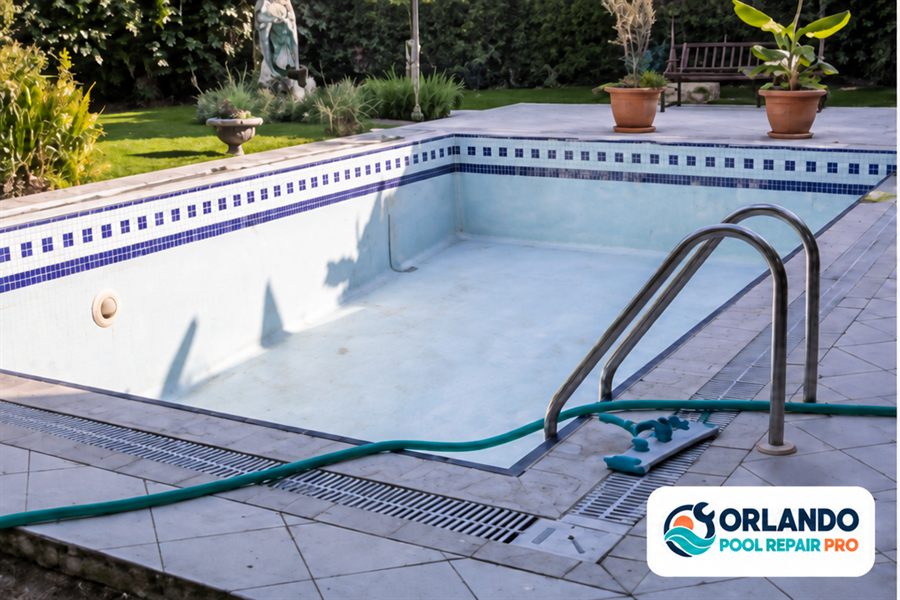
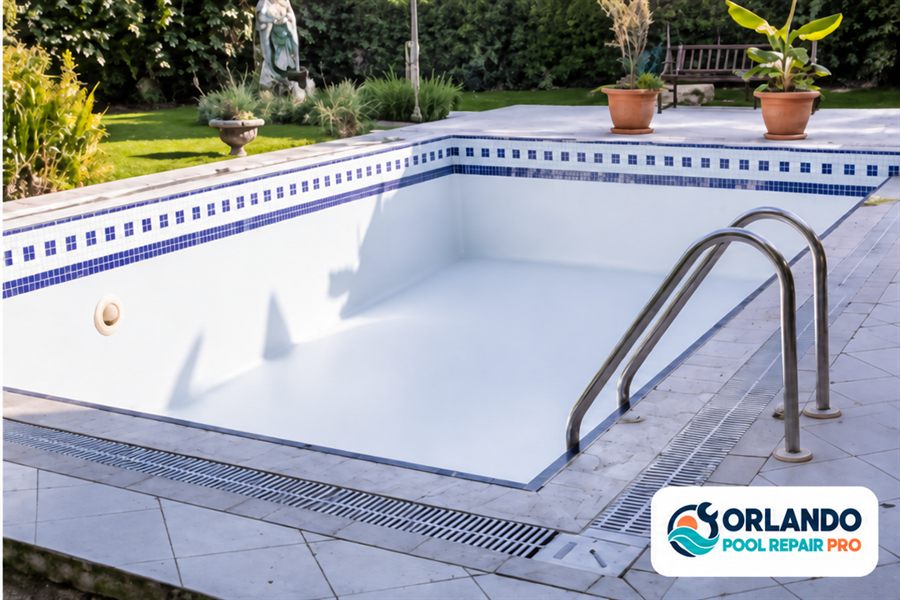
Surface wear should be assessed separately from equipment age. Find out which finish is present, when it was installed and whether the pool has recurring stains, rough areas, hollow spots or unexplained water loss. A pool attached to a 1990s house may already have been refinished more than once. Equally, a newer-looking interior can still need attention to a fitting or an underlying defect.
Manufacturer planning comparisons place ordinary plaster around five to ten years, quartz around seven to fifteen years, and well-installed, well-maintained pebble finishes beyond twenty years. These are condition-dependent comparisons, not a replacement deadline. Water balance, preparation and care affect the outcome. Discuss draining, filling and startup responsibilities in the proposal, and identify tile, coping or structural work separately. A finish coat should not be sold as a guaranteed answer to every leak.
A Kissimmee mailing address is not the whole jurisdiction check
The City of Kissimmee explains that some properties with a Kissimmee mailing address are outside city limits in unincorporated Osceola County. That distinction matters before work requiring review is directed to an agency. Provide the actual street address and describe the proposed equipment or construction change. A pump diagnosis, a component repair and a broader installation are not interchangeable descriptions of the scope.
Use the city's current inspection guidance as a starting point for confirming the property route. Keep existing records and any revised equipment information together. If an owner, manager and technician are all involved, one agreed scope helps each person understand what is being authorized. Any required review and access arrangements should be resolved before committing to a start date; the postal city alone does not settle those questions.
Make the visit useful and retain a clear repair record
Before the visit, write down the main symptom and when it appears. For a heater complaint, include the model and error code and say whether water is circulating normally. For a leak, record top-ups and photograph visible wet connections without opening electrical or pressurized components. If a safe bucket comparison has already been completed during a rain-free day, retain both measured water drops rather than just saying the pool went down.
After diagnosis, distinguish the findings from the authorized repair. A detection visit may lead to a separate plumbing or fitting proposal, while a small seal repair may resolve the immediate issue without a full pump change. Keep the invoice, equipment information and any aftercare directions for the next owner or manager. That record is particularly useful when the person reporting a later fault was not present for the original work.
Agree on authorization when ownership and occupancy differ
Kissimmee's mix of owner-occupied and rented housing makes it worth establishing the approval path at the start, rather than after diagnosis. Imagine a tenant reports water loss, a manager arranges access and the owner must approve any new equipment. Those are three different roles. Identify the person who can authorize inspection, the person who can approve a repair and the contact who knows the pool's normal routine. Keep the service address on the request so photographs, findings and invoices all refer to the same property.
A practical authorization can distinguish a diagnostic visit from permission to replace a motor or start resurfacing. Ask for the findings and proposed work to be sent to the approving contact before a larger commitment is made. If the person on site is unfamiliar with the system, the regular maintenance contact may be able to supply settings or earlier invoices. A homeowner living at the property can use the same approach with fewer people involved. The point is a clear decision, not extra paperwork: who receives the diagnosis, what work has been approved, who provides access and who will follow the care instructions afterward. This also helps when the issue returns and a different person is handling the request.
Sources for local pool planning