Separate Windermere town data from a Windermere mailing address
The Census estimates describe 1,359 housing units within Windermere town, including 1,333 detached units. Its 1989 median construction year has a published margin of error of five years. These statistics apply to that defined geography and its housing units. They should not be extended automatically to every home whose postal address says Windermere.
Nearby Horizon West is a separate Census community with a different housing history, including a 2014 median in the same period’s estimates. That contrast helps explain why a broad mailing label can create a misleading picture of local home ages. For your pool request, use the property address and the pool’s records. A house construction date, pool construction date, motor installation and last resurfacing can all be different. Understanding those separate dates gives the repair discussion a firmer basis than a claim that most local homes must be new.
Pool-property prevalence requires a town-matched record
A meaningful Windermere pool-property figure must identify whether it covers the town boundary or the wider postal area. It also needs a clear definition of the property class and pool flag being counted. Parcel records and Census housing units are different measures, so a pool-flagged parcel count should not be divided by an unrelated housing total to create an ownership percentage.
For an individual home, the useful next step is to identify the current pool and service contact. A property record may indicate that a pool is present without telling us whether its pump was recently changed or its finish is worn. It cannot establish the size of a motor or the type of heating installed. We use the address to establish the service property and relevant jurisdiction, then use equipment information and observations to discuss the work that the pool actually needs.
Pool dimensions and features matter more than a presumed Windermere average
The sources used here do not establish a measured average pool size for Windermere. A Sanford builder’s published Central Florida packages illustrate smaller footprints of 12 by 24 to 15 by 30 feet and larger examples in other packages. Those are design examples from a builder, not a survey of Windermere’s existing pools.
Your pool might have a shelf, curves, steps or an attached spa that makes a simple rectangle a poor description. Provide a builder’s plan or known volume if available. For comparison only, a rectangular 15-by-30-foot pool at an assumed average depth of 4.5 feet contains approximately 15,100 gallons. That calculation changes with depth and shape. For resurfacing, include photos of walls and transitions as well as the waterline, because the interior area being finished is more than the footprint seen in an overhead image.
Discuss the pump as part of the complete equipment installation
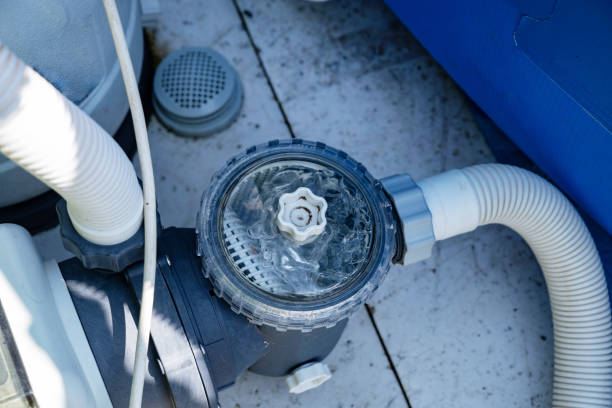
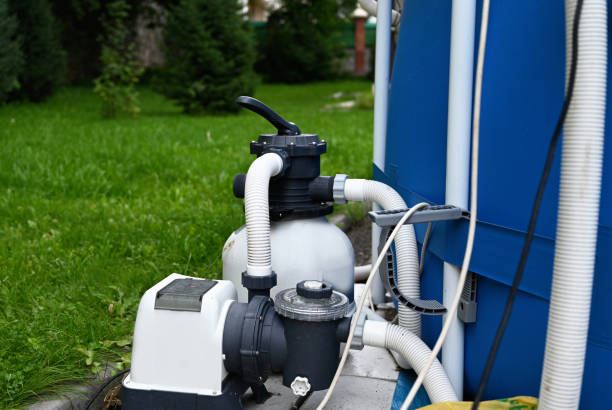
Pentair’s residential IntelliFlo3 range offers 1.5 and 3.0 total-horsepower examples. This identifies available equipment choices, not the motor most commonly installed in Windermere. The current pump, filter, heater, plumbing and controls need to be considered together before comparing a component repair with a new pump.
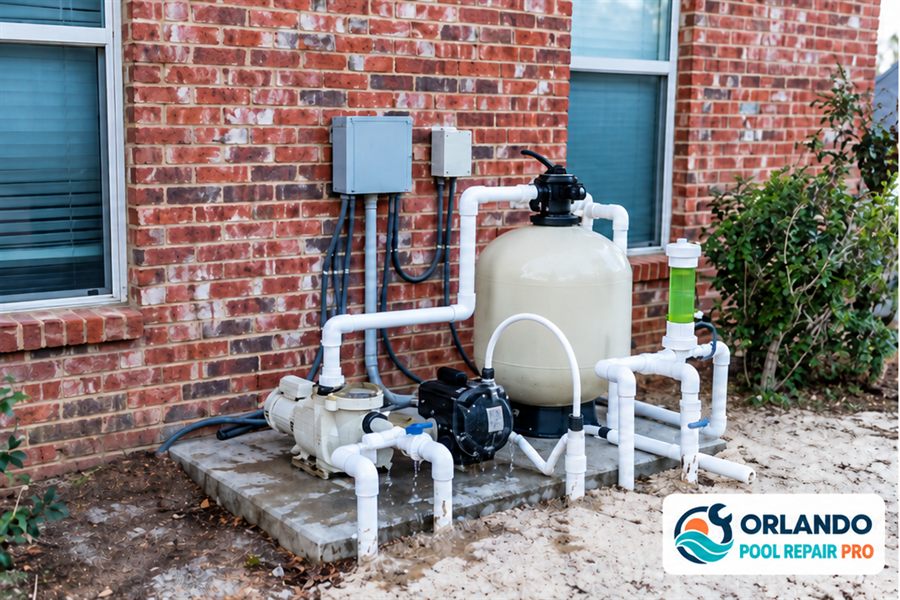
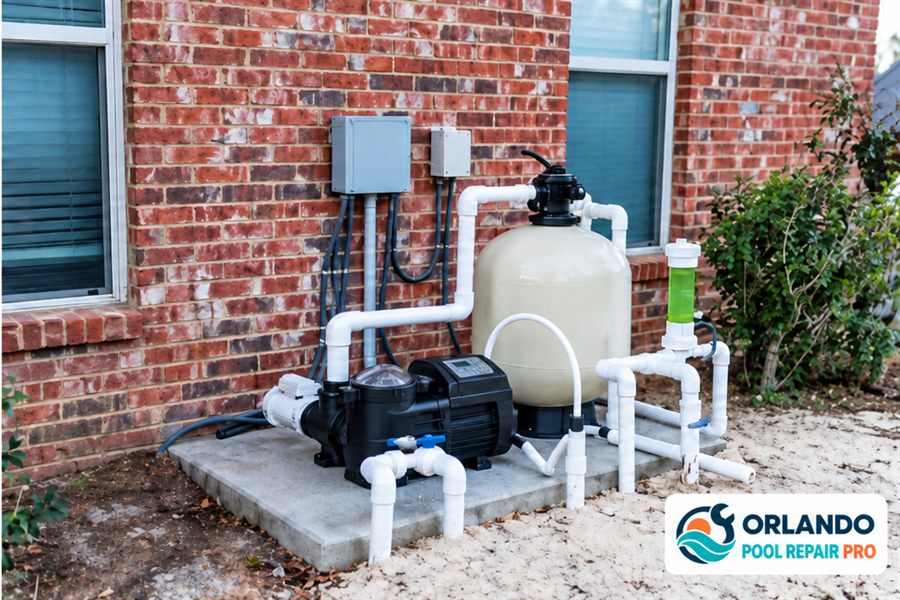
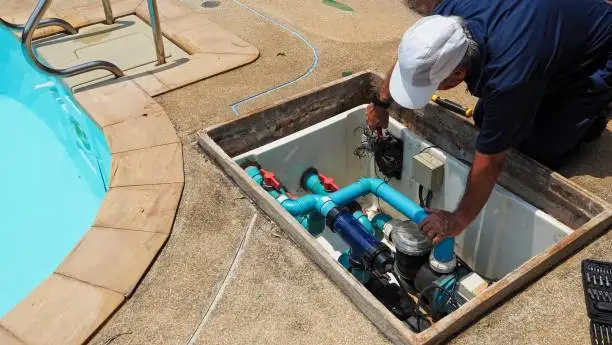
Show the layout around the equipment pad and identify any automation or separate feature equipment. Tell us which functions still work and what changed before a fault appeared. A larger horsepower number is not a substitute for a suitable system match. Similarly, replacing a pump does not explain a separate pool-level loss unless the cause has been identified. We want the proposal to show why the recommended equipment or repair fits this installation, rather than rely on a general expectation about the size of a pool at a Windermere address.
Use the previous work history to distinguish a small repair from a larger change
A recent seal repair, motor replacement and full pump installation are different entries in a service history. If you have the invoices, keep them available with the current model number. When a symptom returns, note whether it is exactly the same or a different problem, and whether the earlier work resolved it for a period of time.
For a visible leak, describe where water first appears and whether it changes when the equipment runs. For repeated shutdowns or a control message, write down the message rather than repeatedly restarting the system. Exterior photographs are useful without opening electrical or pressurized components. Those details help explain whether a focused repair is plausible, whether testing should come first or whether the condition warrants comparing replacement. They also keep an estimate from combining unrelated faults into an unexplained recommendation to replace everything.
Resurfacing is a finish decision, not a construction-year milestone
Reference intervals commonly distinguish plain plaster at about 5–10 years, quartz at about 7–15 years and well-maintained pebble beyond 20 years. They are material planning comparisons, not a deadline assigned to a Windermere house. The actual finish, workmanship, water care and present condition affect what should happen next.
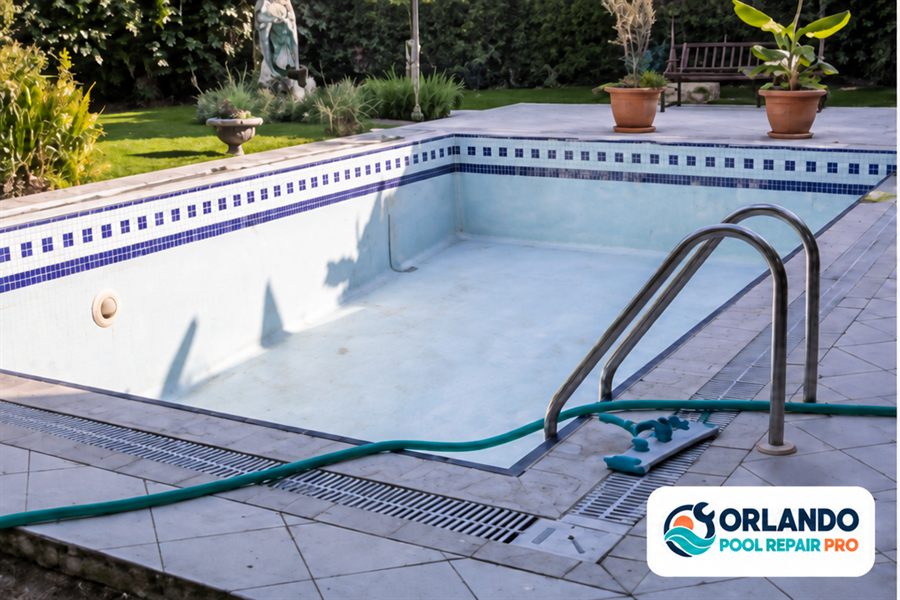
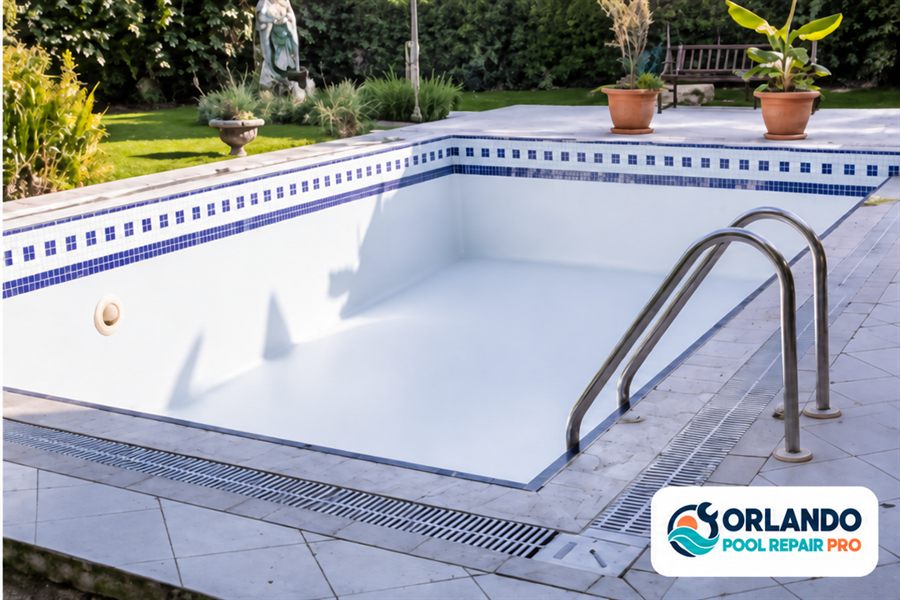
An older home may have a recent interior; a newer home may have a finish that already needs attention. Identify the last resurfacing date and material if you can, then show the floor, steps, walls and any patches or uncomfortable areas. Discuss tile, coping and fitting work as separate scope items when relevant. If the pool also loses water, have that assessed before treating a new finish as the answer. Confirm preparation, filling and startup care responsibilities along with the finish selection so the proposal covers the complete project.
Confirm the town boundary and prepare access for the visit
The Town of Windermere provides Building and Development Services resources for its jurisdiction. Confirm that the actual property is inside town limits before choosing that submission route; the postal city alone should not decide where a larger project is reviewed. The proposed work also needs to be clear, because a focused repair and a wider equipment or construction change can involve different information.
When requesting service, include the street address, the equipment concern and the person who can authorize work. Explain the access route to the pool and whether an owner or property contact will attend. For a resurfacing proposal, send clear views of the steps and worn interior along with any tile or coping changes you want included. These details help turn a broad request for pool repair into an estimate that addresses the property, the system and the result you are looking for.
Keep the town’s pool-property figure attached to the town boundary
The retrieved Windermere municipal records identify 832 pool-flagged properties among 1,195 single-family-classified parcels, approximately 69.6%. That is a substantial share within a specifically defined property group. It must remain attached to that town-based geography rather than be described as a figure for every address using Windermere as its postal city.
The same boundary discipline applies to the 1989 median housing construction year. A broader postal search may include communities with a different construction history, but that does not change what the town statistic measures. A hypothetical home built in 2018 at a Windermere mailing address would need its own jurisdiction and installation records checked. Its postal label would not prove that the town’s older housing estimate is wrong, and its house date would not automatically date the pool or establish the next resurfacing year.
For a service estimate, provide the exact address and distinguish the property record from the equipment history. State when the pool, present pump and latest finish were installed if those dates are known. The local pool-property share helps describe the town’s recorded single-family properties; the individual pool’s condition, symptoms and past work remain the basis for choosing a repair, replacement or interior-renewal scope.
Sources for local pool planning