Oviedo's detached-home pattern still includes different pool histories
The 2020-2024 Census estimates identify about 11,080 detached single-family housing units in Oviedo out of 14,191 total units. Around 7.4% are attached single-unit homes, and about 76.7% of occupied units are owner occupied. These figures describe housing forms and occupancy, not the number of pools. They help explain why both direct homeowner coordination and arrangements for attached or shared-property settings belong in the repair conversation.
The median year a housing structure was built is estimated at 1997. For an individual property, ask what happened after construction: whether the pool was added later, whether the motor has been changed and whether the interior has been refinished. An older home with maintained equipment can need a focused parts repair, while newer equipment can still develop an installation or operating fault. The equipment record is more useful than a blanket age-based recommendation.
What the recorded Oviedo pool figures actually describe
A county-sourced parcel snapshot retrieved on October 24, 2026 identified 4,831 records marked Pool=Yes among 12,262 unique parcels classified in the DOR01 single-family category within the Oviedo jurisdiction overlay. That is approximately 39.4% of that particular parcel group. It is useful evidence that pool service is relevant to many single-family properties, while retaining the definition of what was counted.
The number is not 39.4% of every housing unit, and it is not a count of every private, community or commercial swimming pool. Parcel classifications and Census housing units use different denominators. For an actual repair, identify whether the equipment serves a homeowner pool or a shared facility. A community pool's operator, circulation needs and access arrangements should not be assumed to match a single-family backyard because both happen to fall within Oviedo.
Use dimensions and depth to establish your pool's scale
Two pools with a similar view from the deck can have different volumes because of depth, benches, a shallow shelf or an attached spa. We have not established a surveyed average pool size for Oviedo. Ask for a measured estimate using your own dimensions when discussing equipment or resurfacing, rather than allowing an assumed town-wide standard to determine the proposal.
Sanford-based Southern Pool Designs publishes Central Florida package examples such as 12 by 24 feet and 15 by 30 feet. At an assumed average depth of 4.5 feet, simple rectangular versions would hold approximately 9,700 and 15,100 gallons respectively. Those calculations illustrate why dimensions matter; they are not local measured averages. A resurfacing estimate also accounts for walls, steps and the existing finish preparation, which are not captured by multiplying the pool's length and width alone.
A variable-speed choice is a system decision
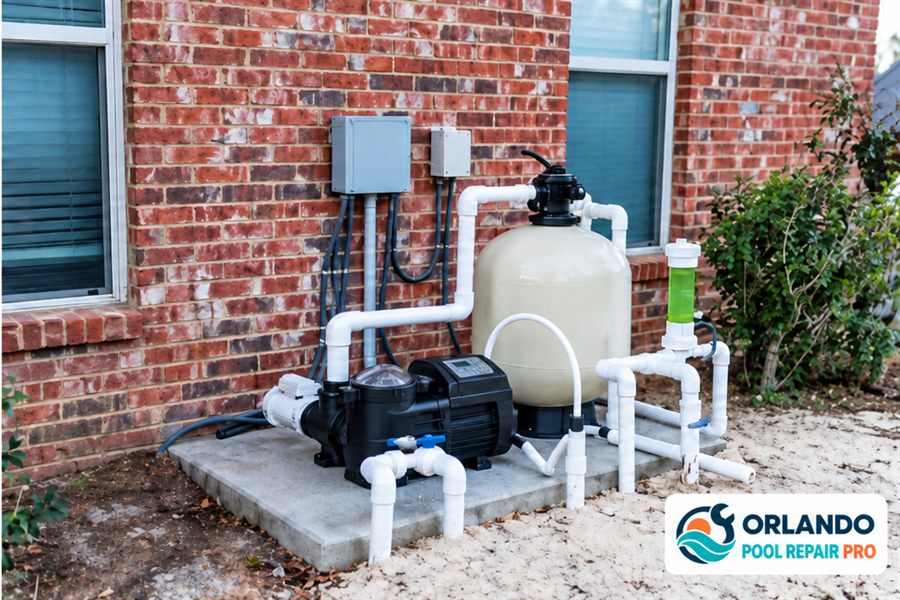
Motor power and speed controls should be selected for the circulation task. Pentair's IntelliFlo3 residential range includes 1.5 and 3.0 total-horsepower examples. That does not show which models are installed most often in Oviedo, nor does it mean the larger option is automatically preferable. The required flow, pipework, filter limits and heater needs determine whether a proposed setting and pump are suitable.
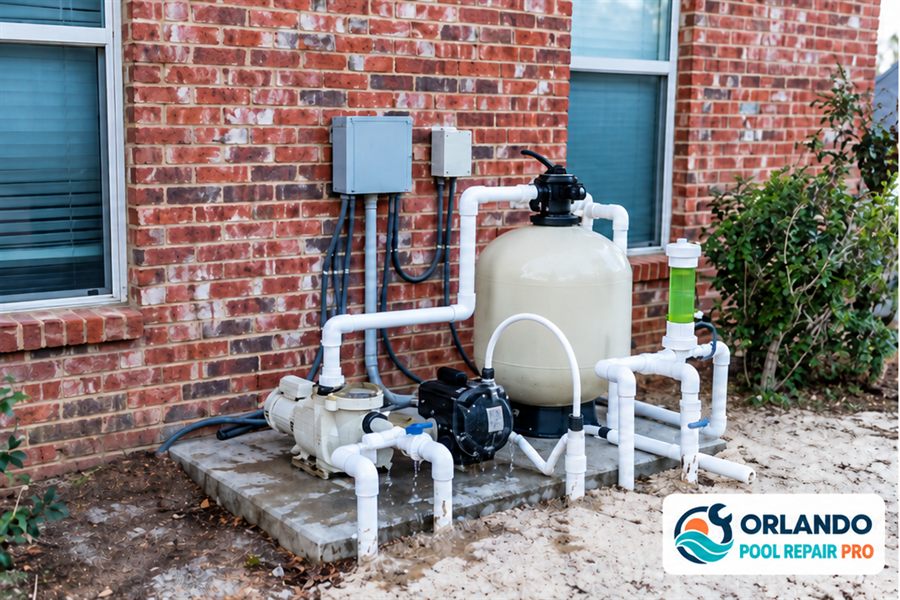
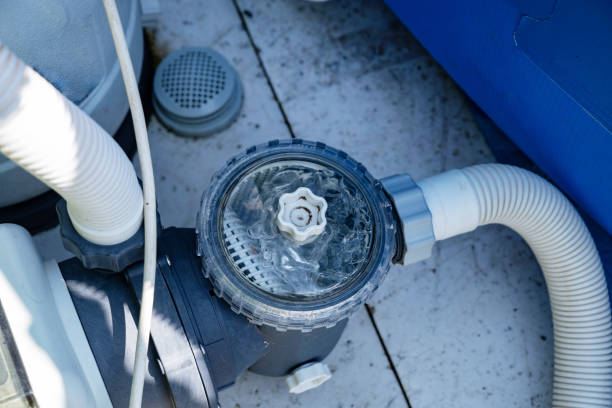
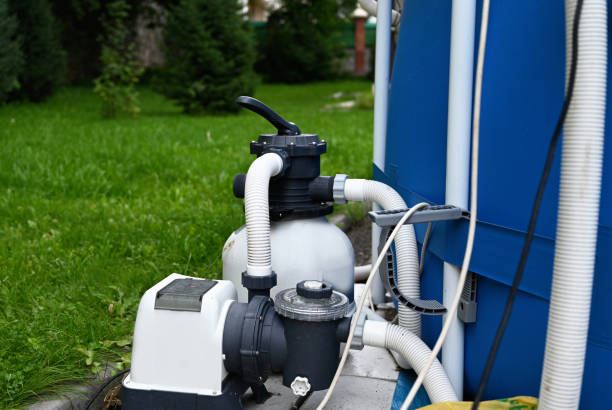
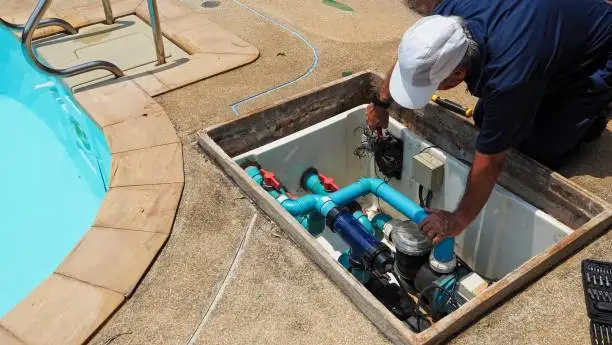
When reporting a fault, distinguish between a motor that will not start, one that becomes noisy and one that runs but moves little water. Leaking shaft seals, air entering at the lid or suction connections, restricted impellers and drive faults require different checks. A heater can also report a flow problem originating elsewhere in the system. Photograph the whole equipment arrangement as well as the nameplate so the assessment can consider how the parts work together.
Commercial equipment information has a specific local purpose
Oviedo's published commercial pool guidance includes manufacturer installation information and equipment-location details. For a commercial equipment change, keeping those documents available can support the applicable review. The guidance concerns a defined project process; it should not be interpreted as saying every small seal repair needs a complete pool application. Confirm the actual work with Building Services and the property's responsible person.
An operator can explain the existing settings, recent alarms and when circulation or heating changed. Bring that information into the initial conversation before proposing a new schedule or motor. A residential energy-saving routine should not simply be copied onto a public pool. The repair proposal should identify the equipment being changed, the intended system match, any review needed and how access or temporary closure will be handled.
Resurfacing depends on the finish, not the home's construction date
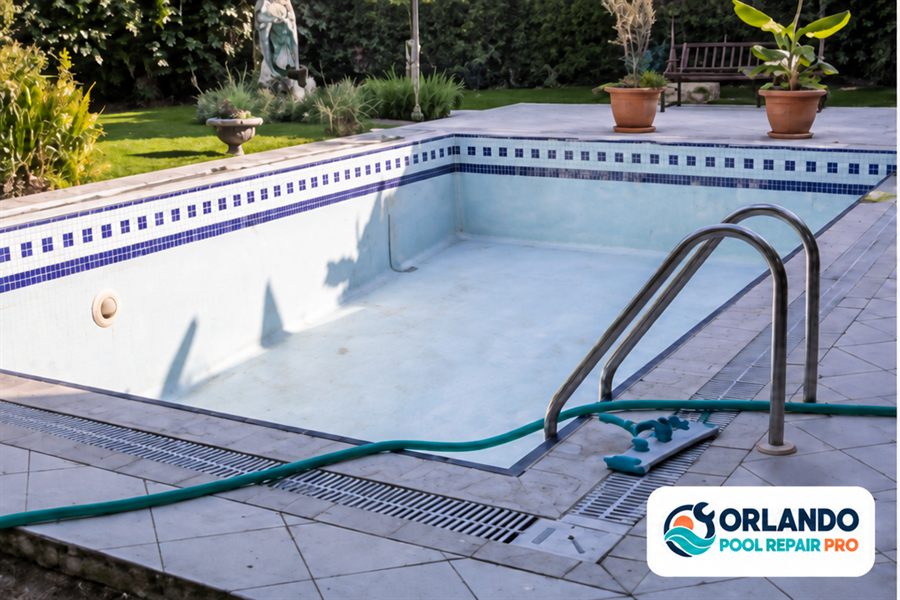
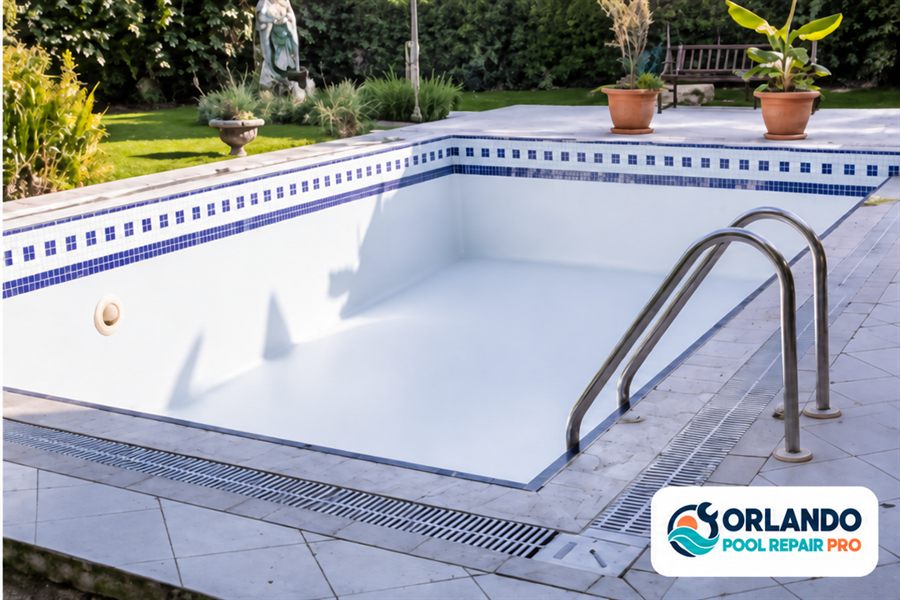
An Oviedo house built around the community's median year could have a pool with an original interior, a much later pool addition or a recent finish renovation. Start with the latest resurfacing date and material if known. Describe whether the concern is roughness, staining, loose material, a fitting defect or recurring water loss. Those observations help separate cosmetic wear from a problem that needs investigation before a new surface is applied.
Useful manufacturer comparisons are roughly five to ten years for standard plaster, seven to fifteen years for quartz and beyond twenty years for a maintained pebble finish. Actual service life depends on installation and water care. These figures are not warranties or automatic replacement dates. Compare finish feel, preparation and startup responsibilities in the written scope, and list separate tile, coping and underlying repairs so each estimate addresses the same work.
Build a useful repair file before and after the visit
Gather the pump, filter, heater and controller model details where accessible without opening unsafe components. Note which symptom came first and whether a recent cleaning, valve adjustment or repair preceded it. For unexplained water loss, record top-up dates and a safe evaporation comparison rather than relying on memory. For resurfacing, send wide views of the interior and closer images of the affected steps or patches.
After the inspection, keep the findings, authorized work and equipment settings together. If a gasket repair solves the leak, the record should make that clear without suggesting every other component was replaced. If further testing is needed, its purpose and scope should be explained before authorization. For an Oviedo shared pool, make sure the operator and approving contact receive the same repair and aftercare information.
Separate a backyard repair from a shared-pool operating decision
Oviedo's recorded private-pool parcel figures and its detached-home housing pattern do not make every service request a homeowner job. Consider two hypothetical calls: one owner has a leaking lid seal at a backyard pool; a community representative reports poor circulation at a shared facility. Both concern pumps, but the decision-making and information needed differ. The homeowner can describe the equipment and approve a defined parts repair. The shared facility needs the responsible operator involved, with the existing circulation arrangement and connected treatment equipment understood before operating changes are proposed.
For the second request, separate the estimate into diagnosis, proposed component work and any wider equipment or control change. That structure makes it easier to identify the manufacturer's information that Oviedo's commercial guidance may require for reviewed work. It also prevents a quote for a small repair from being mistaken for permission to alter the full system. For the backyard owner, ask the corresponding simple questions: what is leaking, which part will change and what check follows the repair? The useful distinction is the pool's actual role and scope. Neither a residential parcel label nor the motor's horsepower alone establishes how a shared pool should be operated or what a commercial proposal should include.
Sources for local pool planning