Use Winter Springs’ housing history without guessing the pool’s age
The 2020–2024 housing estimates include 16,020 Winter Springs units, with 10,951 detached and 1,772 attached single-family units. Housing built during 2010–2019 and 2020 or later totals 2,113 units in the same dataset. This makes the city’s housing context more varied than an assumption that every property is either a recent build or an untouched older home.
For a pool estimate, ask when the pool was constructed and when its key parts changed. The house may have retained its original plumbing while a pump, heater or control system was renewed. A resurfacing invoice can identify a newer interior at an otherwise established property. Even when dates are missing, existing model information and a description of past work are useful. We use those details to understand the present installation instead of making a replacement recommendation from the median construction year.
The local pool metric describes classified properties
Within the Winter Springs jurisdiction overlay, the retrieved parcel snapshot identifies 4,166 pool-flagged parcels among 12,760 parcels classified as single family, or about 32.6%. The figure is based on the parcel dataset’s classification and pool flag. It should not be read as the share of all housing units with pools, the number of separate swimming vessels or a repair-frequency statistic.
That local evidence establishes a defined group of pool properties without telling us what is at your equipment pad. Include the address, private or shared use and the current issue when contacting us. A private backyard system and a community pool can have different approval and operating arrangements even when both are within Winter Springs. For a shared pool, identify the responsible operator. The inspection and written scope must follow the actual installation, not an assumption drawn from the city’s aggregate pool-property count.
Dimensions and actual circulation needs belong in the same discussion
A useful size description includes depth and features, not simply the distance across the water. Regional pool-builder package examples include footprints between 12 by 24 and 15 by 30 feet, alongside larger designs. Those examples give a frame of reference; no measured average for Winter Springs pools has been established here.
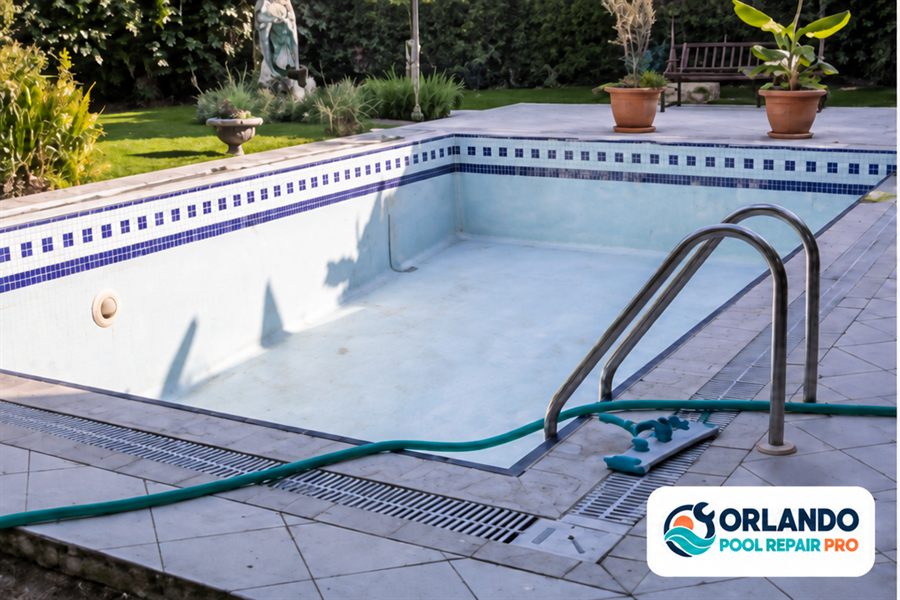
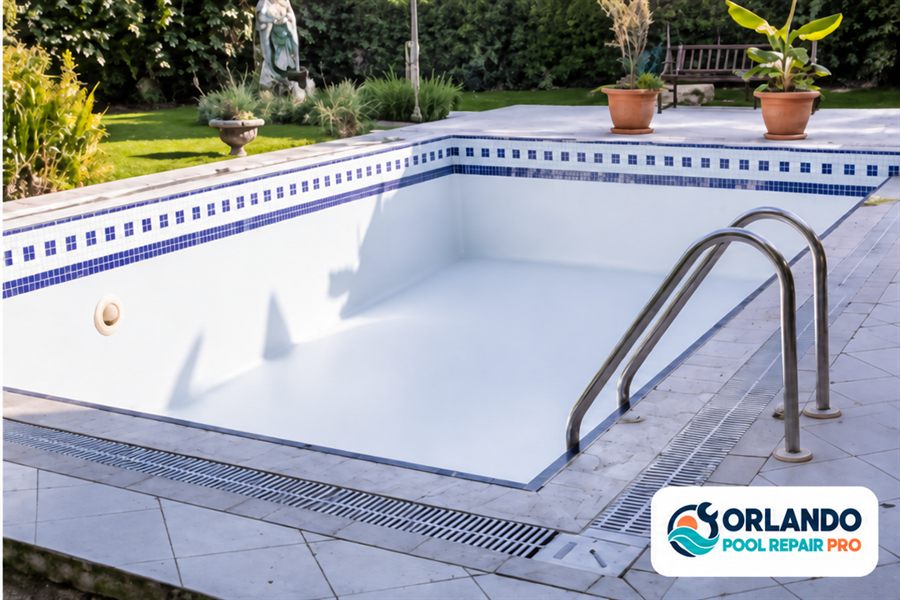
For illustration, a rectangular 12-by-24-foot pool with an assumed average depth of 4.5 feet would hold roughly 9,700 gallons. A different depth, a shallow shelf or a connected spa changes that calculation. If you have an original plan, include it rather than trying to estimate everything from memory. Photos showing steps, spa connections and the equipment layout can also help. When the request involves resurfacing, remember that the finished interior includes the walls and transitions as well as the area visible from above.
Review how replacement parts fit older and newer equipment
Residential variable-speed examples include Pentair IntelliFlo3 models in 1.5 and 3.0 total-horsepower versions. That range is not a Winter Springs motor census, nor does it mean one model is right for every pool. A proposal needs to consider the installed system and the work the pump is expected to support.
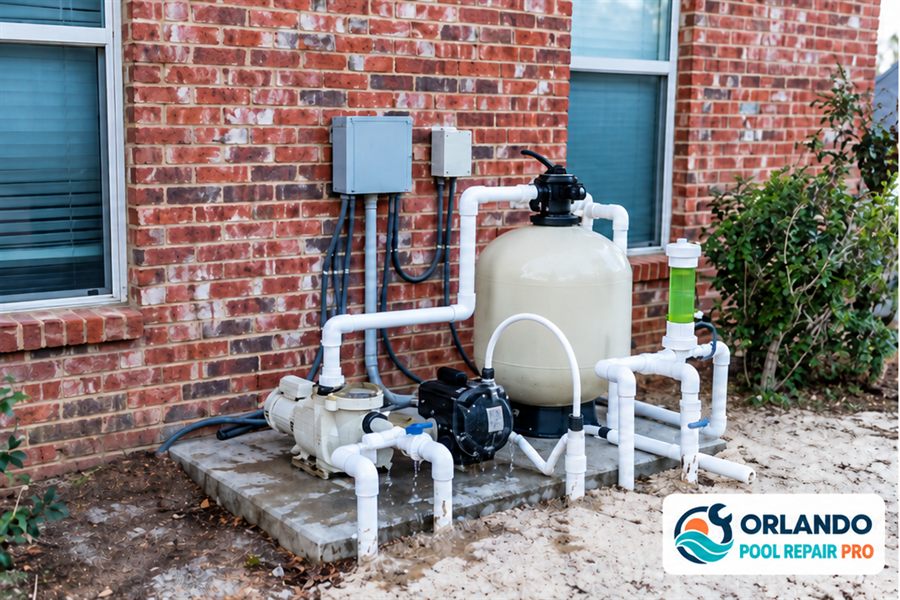
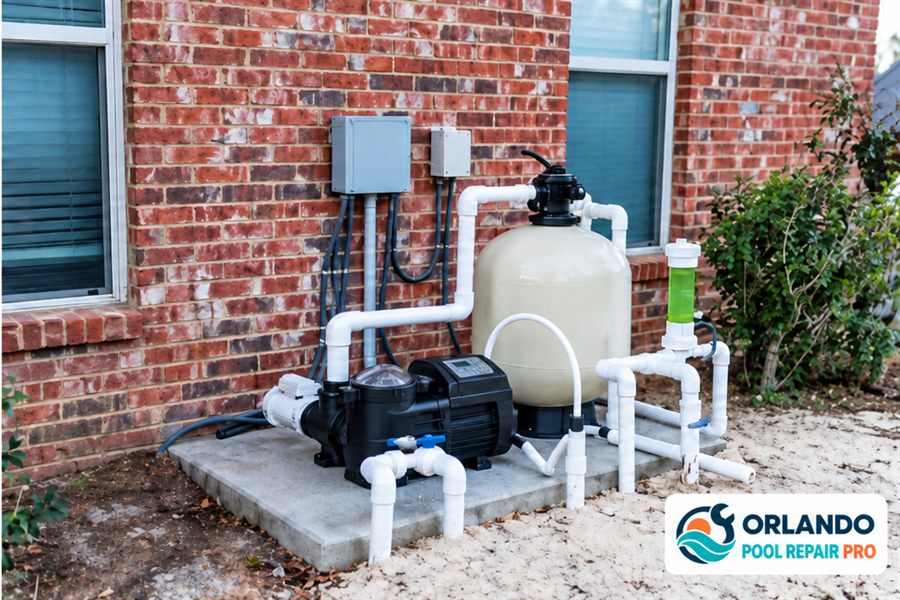
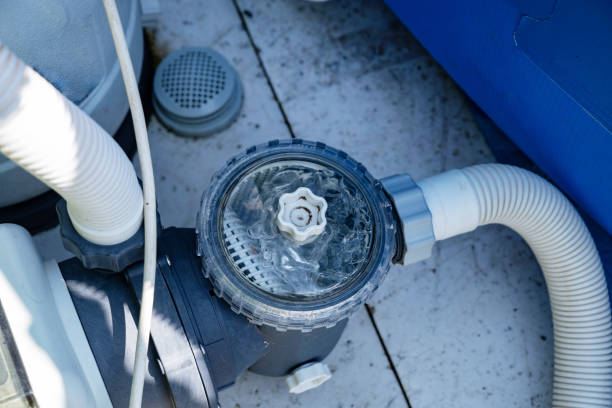
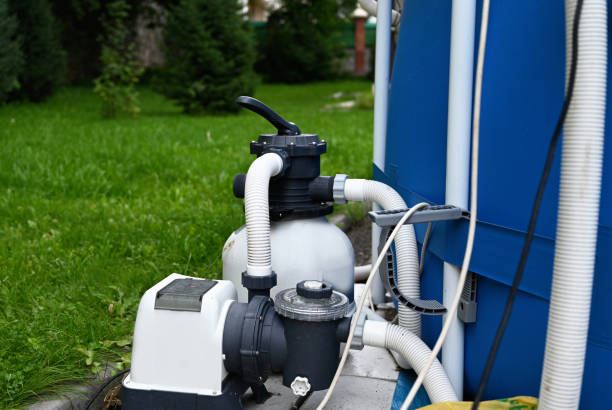
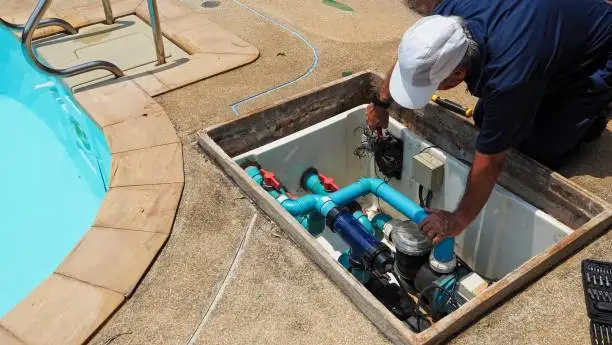
Let us know whether automation, a heater or other connected equipment is present. A photo showing the layout can reveal information that a close-up of one motor does not. If the fault began after a controller change, include that sequence; if it existed beforehand, say that as well. We compare the condition of the motor, pump and connected components before discussing a repair or full equipment change. For shared pools, any proposed change to operation must be coordinated with the person responsible for the facility.
Separate a leak, a flow problem and a repeated shutdown
A pump can have more than one symptom, but the symptoms should still be described separately. Note where water appears, whether the pool is losing level and whether a motor stops at a particular time. A simple log of what happened before and after the fault is more useful than repeatedly resetting equipment until it runs.
Keep earlier repair invoices if the issue has returned. They can help distinguish a repeat failure from a different part now needing attention. Photograph visible fittings and labels without opening electrical or pressurized equipment. We explain whether the first visit is for diagnosis, a clearly identified small repair or a larger proposal. When further testing is needed, such as investigating unexplained water loss, the findings should identify the next step instead of treating every symptom as proof that the entire pump must be replaced.
Renew the finish for its condition rather than the house’s birthday
Published planning comparisons put plain plaster near 5–10 years, quartz near 7–15 years and well-maintained pebble beyond 20 years. Actual performance varies with the material, installation and care. These figures do not establish a resurfacing deadline for a Winter Springs house or tell us the age of the current interior.
For a pool with past renovations, identify which finish was installed most recently and whether any areas have already been repaired. Show changes in texture, worn spots and the condition of the steps. List tile or coping work separately if you want those items included. If water is also disappearing, discuss that before expecting a new finish to resolve it. Agree on preparation, filling and startup responsibilities so the surface proposal addresses the complete handoff rather than only the application day.
Confirm the scope through Winter Springs’ project resources
Winter Springs’ Building and Permits resources provide its Civic Access route for applicable construction review. A proposed pump or heater change should describe any related electrical, plumbing, gas or mechanical work when the scope is checked. This does not mean every small component repair needs the same paperwork as a new installation.
Keep the model details, planned changes and any later revisions together. If another contractor has worked on the system, tell us what changed and retain the relevant records. For a managed pool, identify who approves the proposal and who coordinates access or downtime. These practical steps help the service visit and any required review refer to the same project. They also make it easier to explain which part of the estimate covers diagnosis, parts, installation or separate finish work.
Build a component timeline instead of giving the whole pool one age
Winter Springs’ 1989 median housing construction year, the 2026 parcel snapshot and the dates on an individual equipment invoice are three different time references. The pool flag identifies a classified property with a recorded pool; it does not establish when that pool was built. The city’s 32.6% flagged-parcel share likewise provides no installation date for its motors or finishes.
Consider a clearly hypothetical property: a house built in 1989, a finish renewed in 2016 and a pump replaced in 2019. The correct service history would record all three events separately. In 2026, the pump and finish would have different ages, and neither would inherit the house’s construction date. Even those component ages would not, on their own, prove that replacement or resurfacing is necessary.
A useful preparation sheet therefore has separate entries for the house, pool construction, present pump, heater and latest interior finish. Add the most recent repair and the symptom that prompted it. If a date is unknown, mark it unknown rather than infer it from a property listing. This gives the discussion an orderly starting point while allowing inspection, condition and the current fault to determine the proposed work.
A useful Winter Springs service record separates the house, pool shell, interior finish and equipment into their own timelines. Write down a confirmed date for each item and leave unknown dates blank. A replacement motor does not reset the age of its pump housing, and new tile does not necessarily mean the interior was resurfaced. Include the reason for each past repair if the invoice explains it. When a fault returns, this history helps show whether the same symptom continued or a different issue appeared. Tell us about any timer, valve or control changes made just before the trouble started. Ask the repair proposal to explain what can stay in place, why a part needs replacing and how the new component will work with the equipment you keep.
Sources for local pool planning