St. Cloud includes established equipment histories and newer housing
The Census estimates identify 22,807 housing units in St. Cloud, with an estimated median structure year of 2003. About 1,876 units were built in 2020 or later and 5,570 during 2010 through 2019. Together that is roughly 32.6% of the housing estimate. A description of the area as entirely recent construction would miss the broader range of building dates and later property changes.
Approximately 71.9% of units are detached single-family housing and 10.2% are attached single-unit homes. Around 72.5% of occupied units are owner occupied. For pool service, confirm the actual setting and who has the maintenance records. A home's construction date should prompt questions about additions and renovations, not establish that the original pump or interior is still present. The system's label, condition and replacement history provide a stronger basis for deciding what needs attention.
Housing statistics are not a St. Cloud pool inventory
We have not established a measured pool-ownership rate covering every St. Cloud housing unit. A detached-home percentage cannot be turned into a pool percentage, and a property with access to a shared pool is different from a parcel with its own private equipment. Explain whether the request concerns a household pool, an attached spa or a commercial or community facility.
For a pool serving several users, identify the operator and the person authorized to approve changes. For a private pool, explain who normally maintains it and whether the present owner has records from earlier work. These details affect access, decision-making and the information available for diagnosis. A generic neighborhood label is less useful than knowing which pump and heater are connected, how the pool is used and what changed before the fault appeared.
Use the full pool geometry when discussing size
A pool's length and width do not reveal its entire volume or finished surface area. No measured St. Cloud average pool size is asserted here. Regional builder package examples can be useful comparisons, but they are not a substitute for the service property's dimensions. Southern Pool Designs publishes Central Florida examples including 12-by-24-foot and 15-by-30-foot layouts, as well as larger package options.
At an assumed average depth of 4.5 feet, basic rectangular versions calculate to roughly 9,700 and 15,100 gallons respectively. Those are hypothetical calculations, not measurements of local pools. A spa, shallow shelf, sloped floor or curved wall changes the estimate. For resurfacing, ask how steps, walls and preparation are included. For equipment, use volume as one input alongside the required circulation and connected plumbing, rather than selecting a pump only from a rectangle's footprint.
A heater complaint needs flow and equipment information
Before discussing a heater repair, identify whether the installed unit is a gas heater or an electric heat pump. Provide the model and any displayed fault code. Say whether the pump is operating normally, whether the heater starts then stops, and whether the problem appeared after cleaning or another equipment change. These observations help determine whether the heater itself or its operating conditions need attention.
Do not assume a lack of heat proves the entire unit must be replaced. Flow, controls and internal components can create different symptoms. If the repair expands into gas, electrical or plumbing changes, the written scope should say so. For a shared pool, coordinate the operating plan with the responsible person before settings or equipment are changed. The practical comparison is between the confirmed fault, repairability and the condition of the remaining system.
Pump motor selection belongs to the complete system
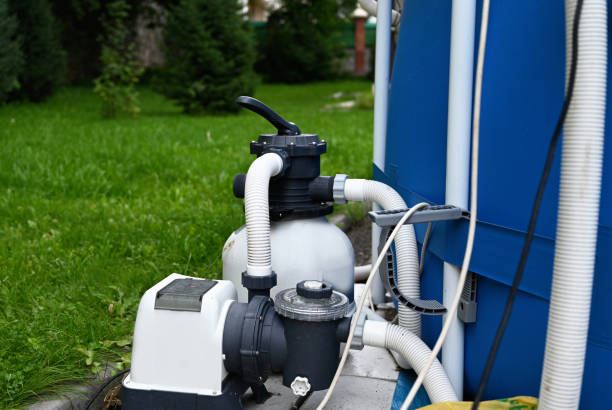
A suitable pump must work with the pipework, filter, heater and controls at the required flow. Residential product examples include the 1.5 and 3.0 total-horsepower options in Pentair's IntelliFlo3 range. We have not measured the market share of those or other motors in St. Cloud. Their existence does not make either rating a standard requirement for the area.
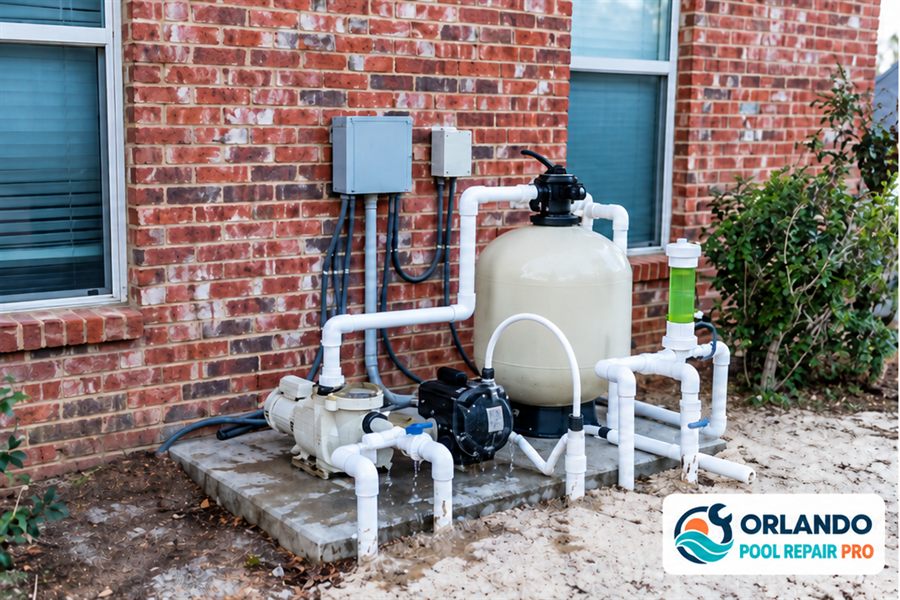
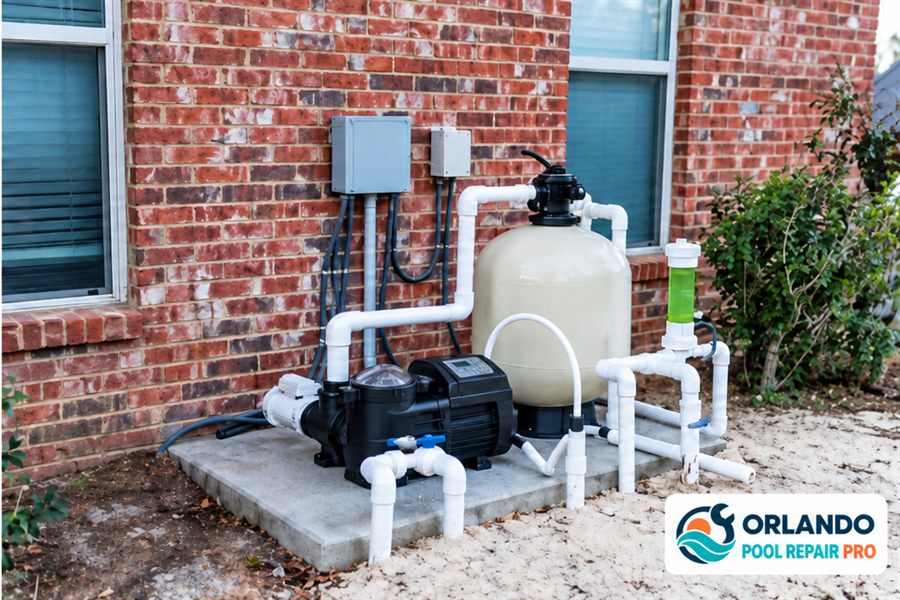
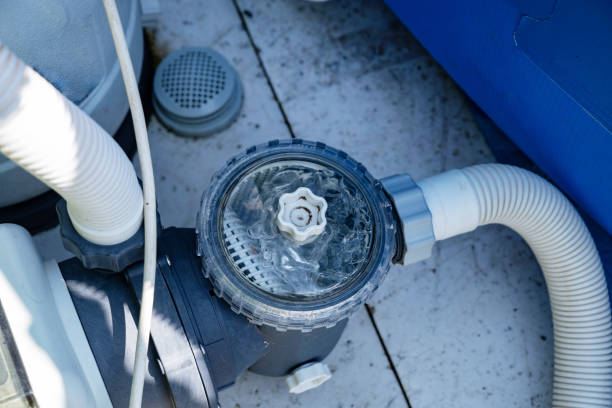
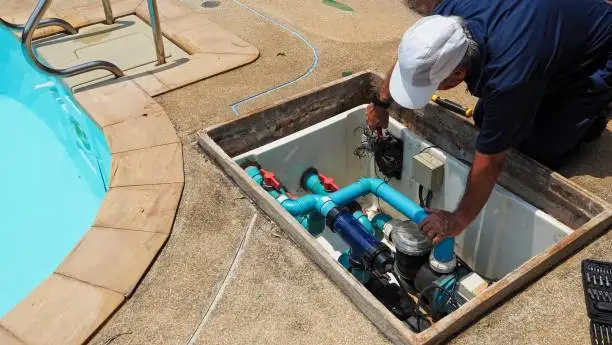
Describe startup problems, loss of prime, noise and shutdowns separately. A restricted impeller, suction-side air leak, worn seal or motor fault can call for different work. A performance curve and assessment of system resistance help evaluate an equipment change more usefully than choosing the largest motor. Include accessible nameplate photos and recent service records, and avoid opening electrical or pressurized components yourself. When the issue is recurring, the history of unsuccessful repairs is also relevant.
Separate finish renewal from unresolved defects
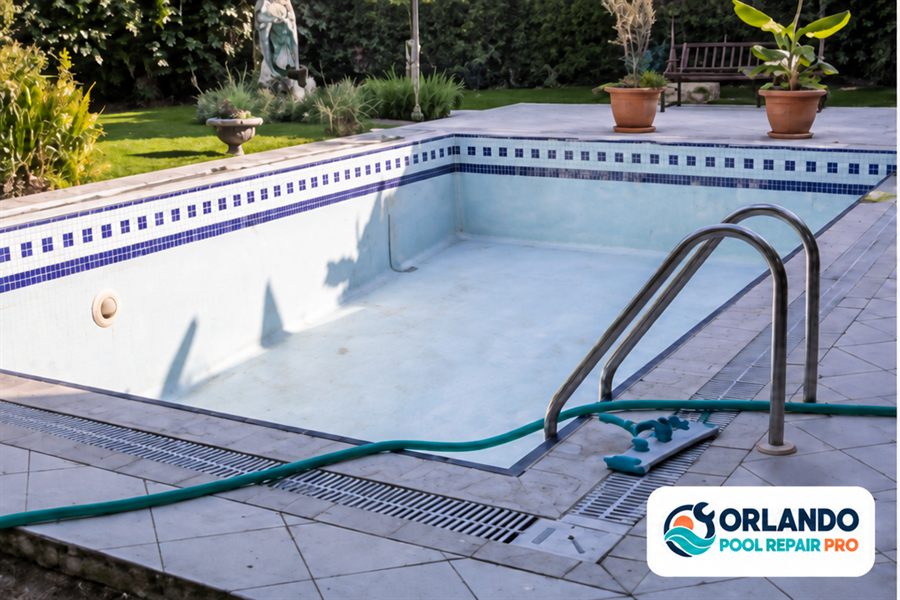
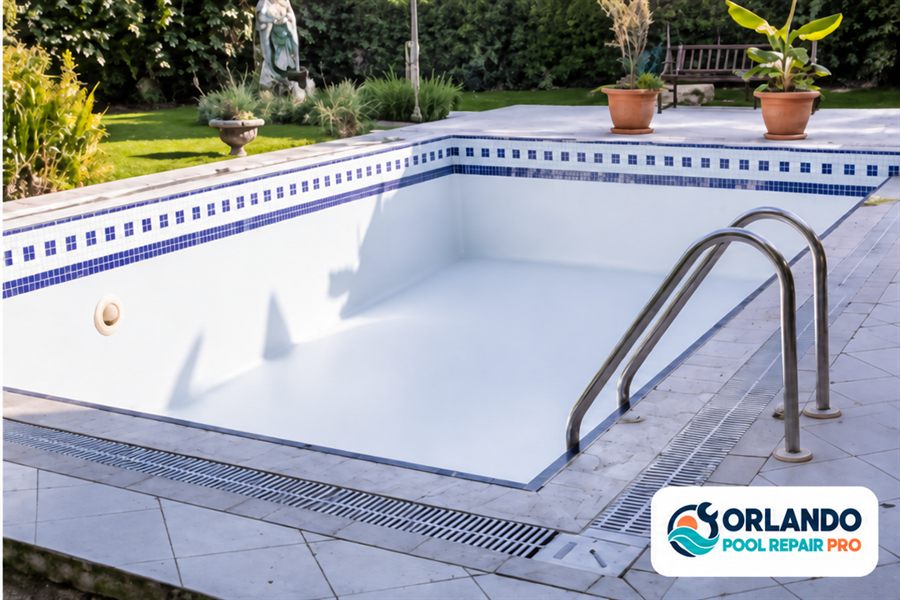
A St. Cloud home built in the early 2000s may have a much later pool, a recently replaced interior or components changed at different times. Ask when the present finish was applied and what material was used. Roughness and worn material need assessment, while a recurring leak, unstable area or problem at a fitting may require a separate investigation before resurfacing is agreed.
Manufacturer planning comparisons are about five to ten years for ordinary plaster, seven to fifteen years for quartz and more than twenty years for properly installed and maintained pebble finishes. They do not create a deadline for an individual pool. Chemistry, preparation and maintenance affect service life. A finish proposal should identify the preparation and separate repairs, along with who manages draining, filling and startup care. Compare that defined scope rather than assuming all resurfacing estimates include the same work.
St. Cloud's application library helps describe a larger scope
St. Cloud publishes separate pool and spa, electrical, plumbing and gas application materials. For work that needs review, use those resources to help identify which systems the proposal changes. A small component repair and a wider installation are different descriptions; the term pool repair alone does not tell the department enough about a larger project.
Keep model information, the proposed work and any supporting revisions together. Confirm the appropriate process for the actual address and scope rather than assuming every repair requires the same submission. Access and approval should also be arranged with the person responsible for the property. After the visit, retain the findings, invoice and care directions. A clear record makes later decisions about the heater, motor or finish easier, particularly when the property changes owners or someone else takes over pool maintenance.
Build a service history around one confirmed address
St. Cloud's mix of construction dates makes a short property-and-equipment history useful when records come from several owners. A house construction entry, a later pool document and a recent motor invoice may describe different events. Put the full service address on the repair request and check that any earlier records actually belong to that property. A model number identifies a product; an invoice or installation record can help explain when it entered this system. Neither should be confused with the year the house was built or a guarantee about the equipment's remaining life.
For example, a new owner might have a pump receipt but little information about an older heater. Send the available paperwork and explain what remains unknown, rather than assigning both components the same age. If the proposed work expands into electrical, plumbing or gas changes, describe that change alongside the existing equipment details. St. Cloud's separate application materials provide a route for checking the applicable scope when review is needed. Keep the final proposal and any revisions with the same address record afterward. That gives a future maintenance contact a coherent history of what was inspected, what was changed and what was left in place, without treating an incomplete folder as evidence that every component is original.
Sources for local pool planning