Ocoee’s detached-home share does not make every pool identical
The ACS estimate included 16,492 housing units in Ocoee, with 12,776 detached units and 931 attached single-unit structures. Among occupied units, about 73.2% were owner occupied. These measures describe housing and tenure, not the number of private swimming pools. A resident can have an individual backyard pool, use a shared facility or have no pool at all, regardless of the broad housing category.
The service request should identify that responsibility clearly. For an individual installation, explain which owner or authorized contact can approve repairs. For a shared pool, involve the operator or property manager before arranging tests that affect operation. The city’s housing mix makes private-property questions important, but it does not justify assuming a standard pool size, one pump brand or the same maintenance schedule at every Ocoee address. The equipment and use at the actual property determine the work.
Use Ocoee’s meter portal without confusing it with a pool diagnosis
Ocoee’s customer portal provides utility users with consumption information and alerts. It can help establish when unusual property water use began, particularly when top-ups are easy to overlook. Keep the relevant dates and compare them with irrigation, visitors, household changes and pool activity. The meter describes water passing through the account, rather than identifying which fitting or pipe may be responsible.
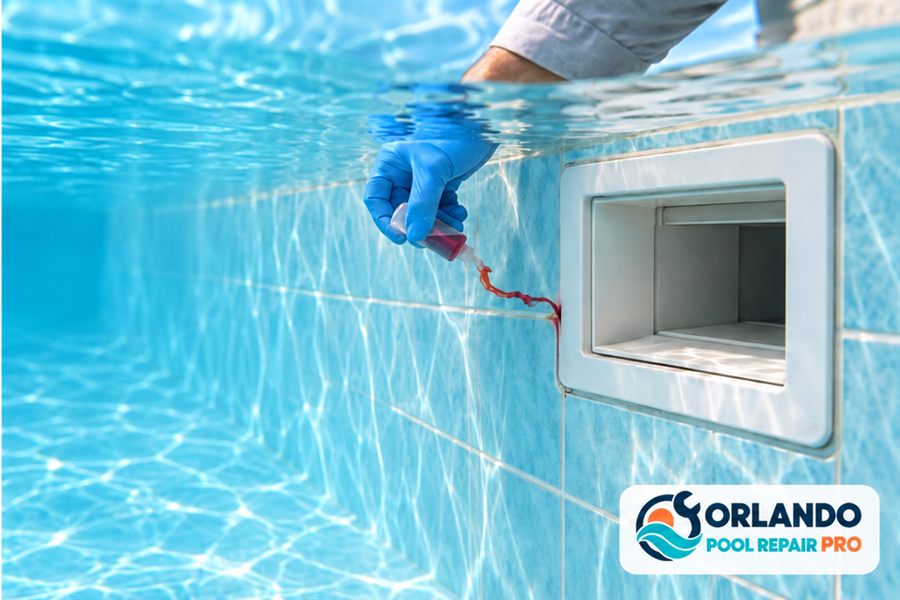
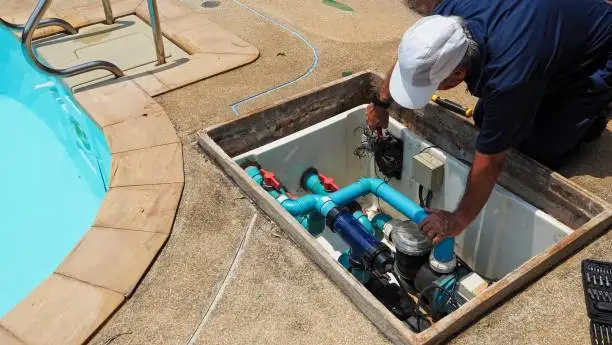
For the pool, a measured bucket comparison can help distinguish evaporation from additional loss during a rain-free test period. Note automatic filling so it does not conceal a change in level. If the pool repeatedly drops more than the comparison water, bring that result to the request. A visible equipment leak, a skimmer issue and a buried plumbing leak require different follow-up. Combining the consumption timeline with pool-specific observations gives the detection visit a more useful starting point than a high usage alert alone.
Describe pool ownership using recorded properties, not a housing shortcut
A reliable count of Ocoee pool properties needs a pool indicator in property records, a defined residential classification and the correct city boundary. The 77.5% detached-housing share is not a pool-ownership percentage. Nor should a sample of listings with attractive pool photographs be treated as a census of all homes. These are different datasets answering different questions.
For the homeowner, this means the estimate should return to the pool you actually own. Include any spa, water feature or separate circulation equipment, and explain whether it is the main swimming pool or another system showing the fault. A property record may document that a pool exists without identifying its current dimensions, motor or condition. Those details have to come from the installation and its history. We use local records as context while keeping the repair recommendation based on evidence at the service address.
A 2000 housing median leaves room for several generations of equipment
Ocoee’s median construction-year estimate is 2000, while about 27.6% of housing units were estimated to have been built in 2010 or later. The mix therefore includes different property ages, and individual pools can differ again. A pool may have been added later, a motor replaced recently or the interior resurfaced without a change to the house itself.
Before deciding that a whole equipment pad needs updating, identify the dates of those changes. A later pump may still work well alongside an older filter, provided the system is appropriately matched. A leaking connection can be a focused repair, while repeated shutdowns or damage to major components may make replacement worth comparing. For a finish concern, ask when the interior was renewed and which material was used. That timeline lets the proposal address the current pool rather than assign every component the home’s construction year.
Measure volume and the finished area separately
No measured Ocoee average pool size was established here. Southern Pool Designs’ published Central Florida examples include compact 12-by-24-foot pools and larger 15-by-30-foot or other designs, but package dimensions should not be presented as a local survey. A shallow shelf or connected spa can make two similarly sized-looking installations behave differently when volume and circulation are considered.
A rectangular 12-by-24-foot example with an assumed 4.5-foot average depth calculates to roughly 9,700 gallons using 7.48 gallons per cubic foot. That is an illustration, not a gallon figure to apply to your backyard. An irregular outline, slope or deep section changes the result. Resurfacing has a separate measurement question because the walls and steps also receive finish. Share plans, dimensions and photographs of the full interior so both equipment assessment and finish pricing can reflect the actual scope.
Choose motor capacity by fit and investigate the fault first
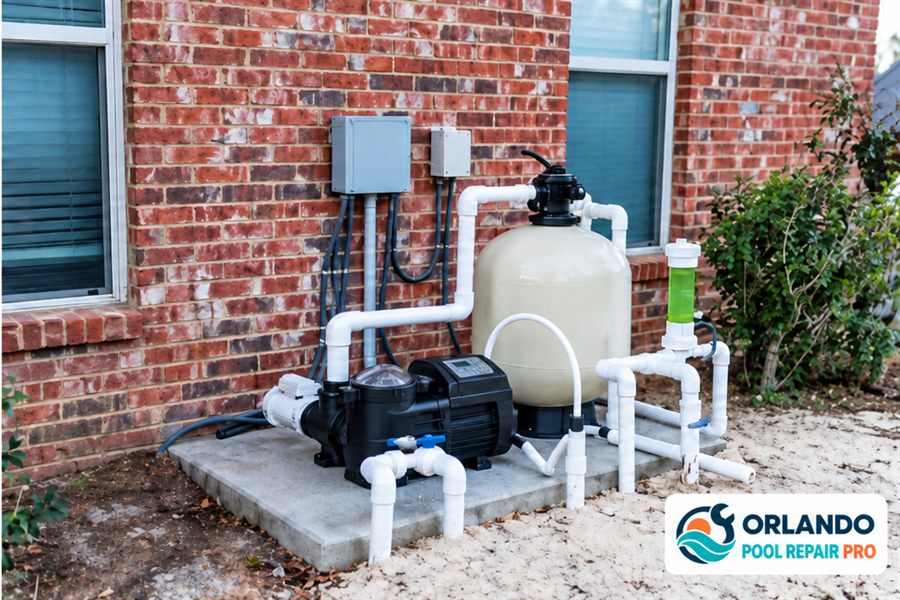
Available residential variable-speed pumps cover different capacities. Pentair lists IntelliFlo3 VSF options at 1.5 and 3.0 total horsepower; the SuperFlo VST example has a 2.2 total-horsepower rating. Those products illustrate options rather than identify the most common Ocoee motor. Their suitability depends on required flow and system resistance, compared with the performance curve and connected equipment.
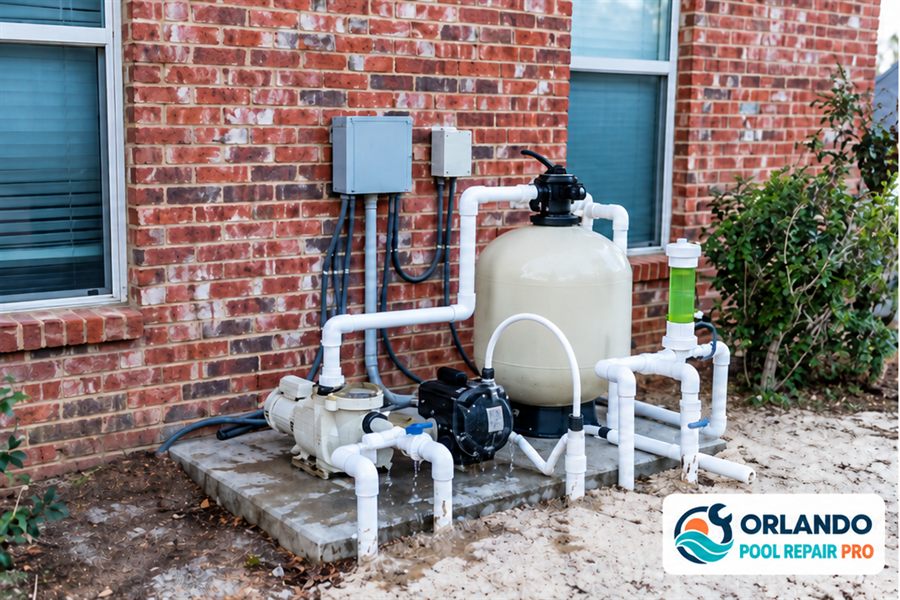
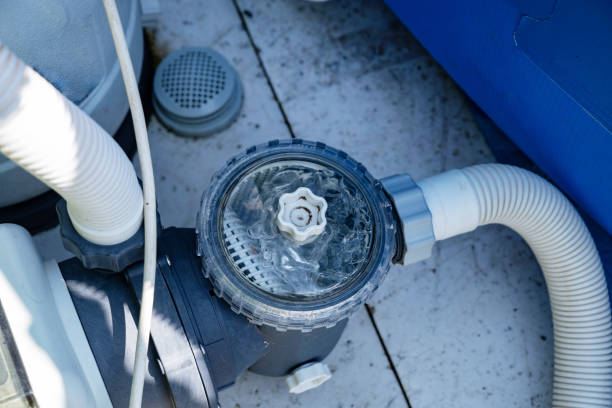
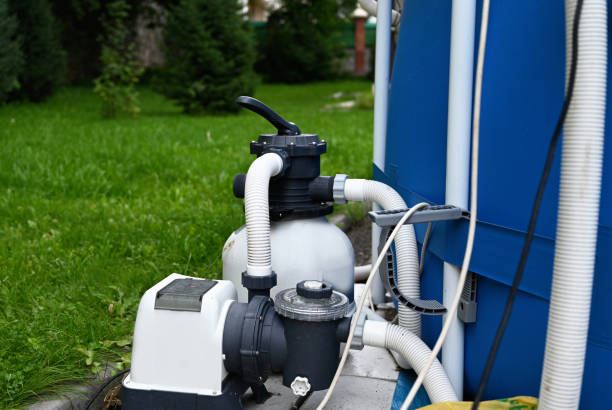
Describe the present behavior before selecting a replacement: a pump that will not start, one with little flow and one that leaks can require different diagnoses. A basket restriction, an impeller problem, a seal or an air leak can affect performance without proving the whole pump has failed. Heater and filter needs also remain part of the match. Keeping the existing nameplate and repair history available helps compare a parts repair with a suitable motor or pump replacement, rather than assuming the highest horsepower offers the best result.
Tie resurfacing to actual wear and a clear care plan
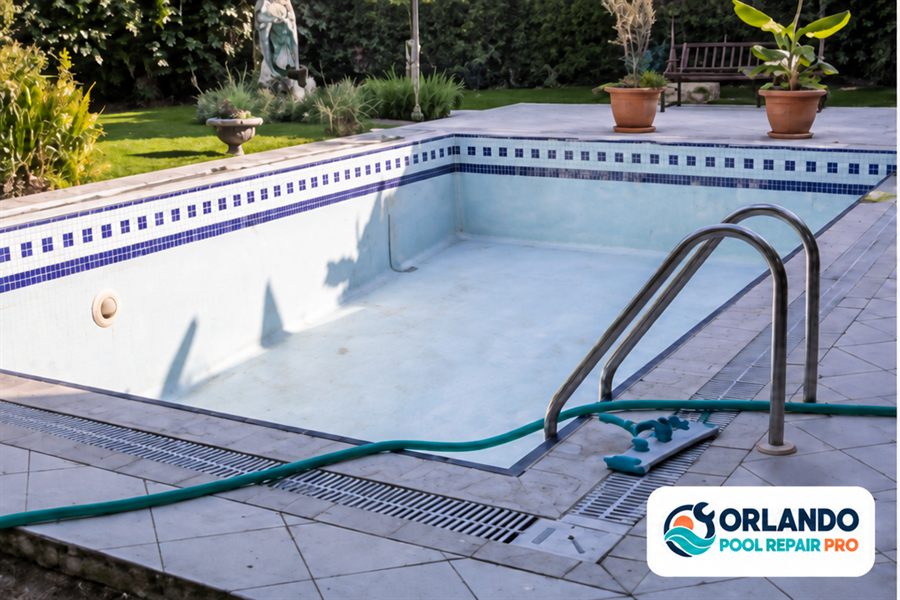
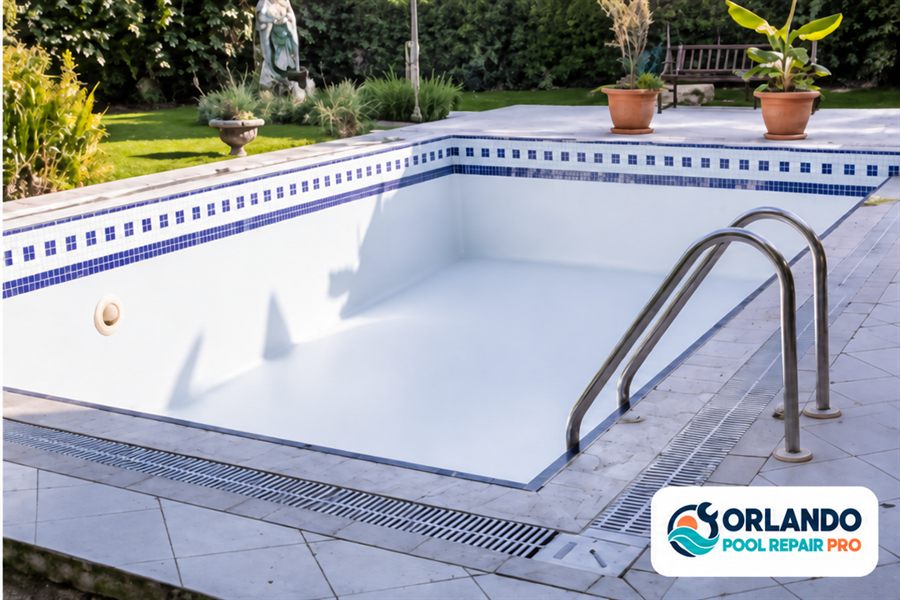
A finish should be assessed on its material, condition and service history. The home’s age cannot establish when the pool was last plastered. Ask whether the current interior is plain plaster, quartz or pebble and describe roughness, worn areas or previous repairs. If unexplained water loss is also present, the leak assessment should remain a separate part of the discussion.
PebbleTec’s published guidance compares plain plaster at around 5–10 years, quartz at roughly 7–15 years and properly installed, maintained pebble at more than 20 years. Water chemistry, care and installation can change those expectations. The proposal should explain preparation and the selected finish, then identify any tile, coping or fitting work separately. Agree who monitors filling and handles startup care. Ocoee owners reviewing water-use records can also keep the refill dates with that project paperwork, creating a clearer history for both utility questions and future pool service.
Follow a water-use alert through to a documented pool finding
Orange County’s Ocoee municipal parcel snapshot recorded 3,137 single-family-classified properties with a pool among 14,869, about 21.1%, retrieved October 24, 2026. That shows a defined group of pool properties; it does not mean every unexplained consumption alert in Ocoee comes from a swimming pool. The city’s meter portal records water use for the account, which can include the home and irrigation as well.
Save the alert date and the relevant usage information before changing several routines at once. For a hypothetical property where irrigation timing changed at the same time as pool top-ups, that timeline helps explain what needs checking. Pool measurements and visible equipment observations can then be compared with the account-level change instead of turning an alert into an assumed buried leak.
After detection, keep the findings and any separate repair invoice with that timeline. Ask which reported symptom the completed work addresses and what follow-up observation is appropriate for the agreed scope. An owner or property contact can then distinguish a completed repair from a recommendation for additional investigation. That record is useful even when the pool is only one contributor to the property’s water use. Retain it when sharing the history at a later visit.
Sources for local pool planning