Sanford housing records help frame the questions
Of Sanford’s estimated 24,875 occupied housing units, 52% were owner occupied in the Census figures. Those are citywide housing measures, rather than a description of every pool customer. They explain why the person making a service request may be an owner, tenant or property representative. Please identify who can authorize the work and who knows the equipment’s history; a request should not leave those roles unclear.
The 1994 median does not make a pool a 1994 installation. A pool might have been added later, and a motor, heater or finish might have been changed separately. For an established property, collect the most recent pump invoice, resurfacing record and any notes about earlier leaks. The useful question is which components are currently installed and whether the same fault has returned. That history can prevent an older house from being mistaken for an entirely original pool system.
What the Sanford pool-property figure actually counts
The retrieved parcel snapshot identifies 1,064 pool-flagged parcels among 16,250 parcels classified as single family within the Sanford jurisdiction overlay, approximately 6.5%. This is a property-record measure using a specific classification and boundary. It is not the percentage of all Census housing units with pools, a count of every physical pool or a measure of how often Sanford pools need repairs.
For your request, the practical distinction is private versus shared use. A private pool inspection can focus on the owner’s equipment and observations. A common-area pool also needs the responsible operator involved in questions about operation, circulation and access. The parcel figure provides local context without replacing a visit to the actual system. We will not infer pool size, equipment horsepower or the condition of the plaster from a property’s pool flag.
Describe the pool in feet and gallons, not a citywide average
No measured average pool volume for Sanford has been established by the sources used here. A Sanford builder’s published package examples include footprints from 12 by 24 feet to 15 by 30 feet, with larger examples in other packages. That provides a regional design reference, not an average for the city’s existing backyard pools.
Depth makes a large difference. A rectangular 12-by-24-foot pool at an assumed average depth of 4.5 feet contains roughly 9,700 gallons; a 15-by-30-foot rectangle at that depth holds about 15,100 gallons. These are calculated illustrations. Steps, shallow shelves, curves and an attached spa change the amount. If you have a builder’s plan or reliable volume record, send it with the estimate request. For resurfacing, the walls and steps also matter because interior finishing area is not simply the rectangle visible from above.
Choosing a motor means understanding the connected system
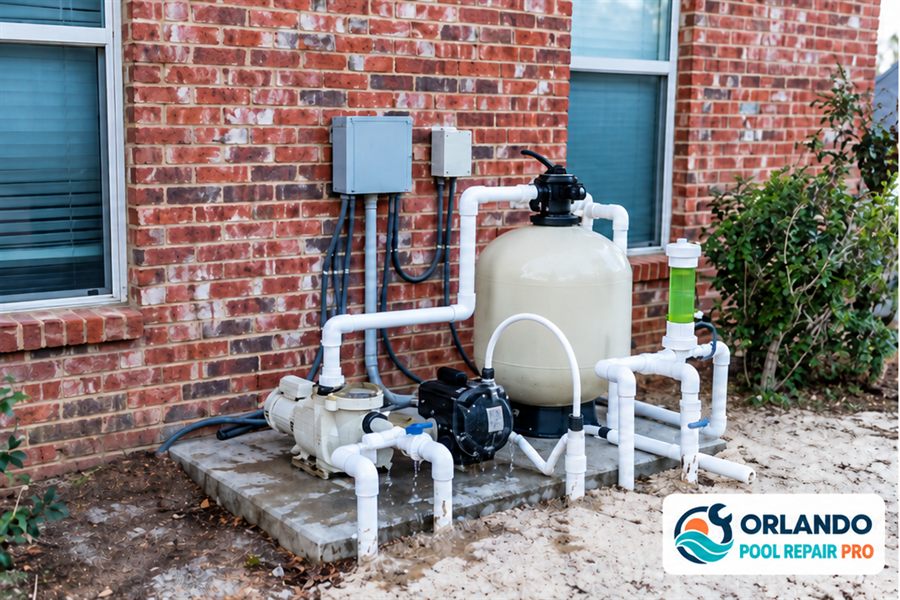
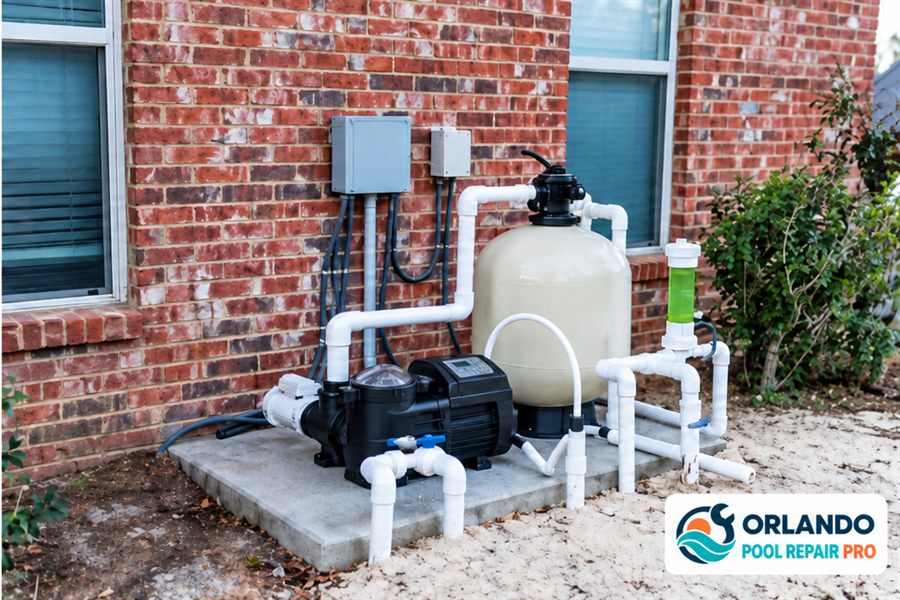
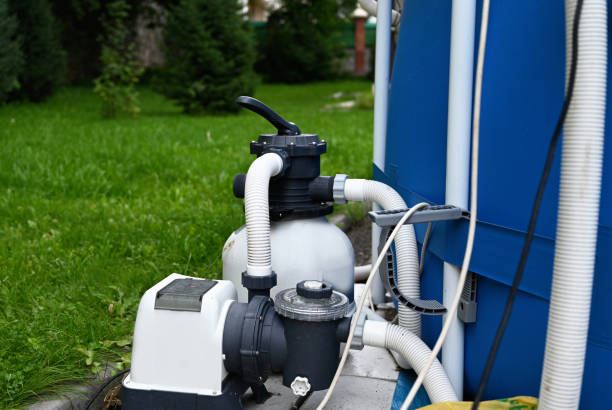
Manufacturer examples of residential variable-speed equipment include Pentair IntelliFlo3 pumps with 1.5 and 3.0 total-horsepower options. These examples do not tell us what most Sanford properties have installed. The existing nameplate, plumbing, filter, heater and any automation identify the system we need to assess.
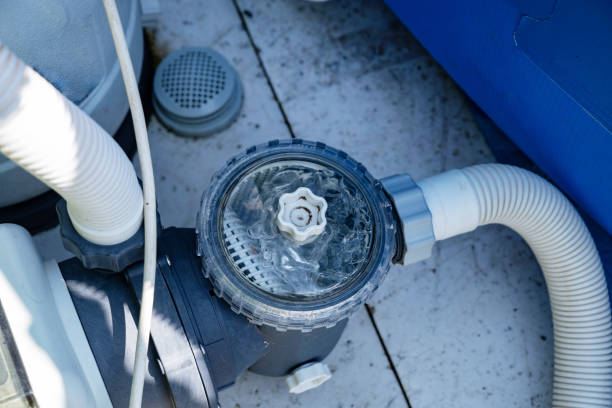
Tell us whether the problem is starting, maintaining prime, making noise or circulating water. If a controller shows a message, copy the wording rather than repeatedly resetting it. A replacement proposal should explain the intended equipment match and control arrangement, not just offer a bigger horsepower number. Likewise, a possible motor repair should be considered with the pump housing and other components in view. For a shared pool, operating requirements must be discussed with its responsible person rather than borrowed from a private backyard schedule.
A service history is more useful than replacing parts on a guess
A leaking connection, a seal problem and a motor fault may produce different evidence. Photograph visible wet areas and note whether the symptom appears only during operation. Do not remove covers from electrical equipment or open a pressurized filter to obtain those pictures. Ordinary exterior photos, the model number and a short timeline are enough to begin the conversation.
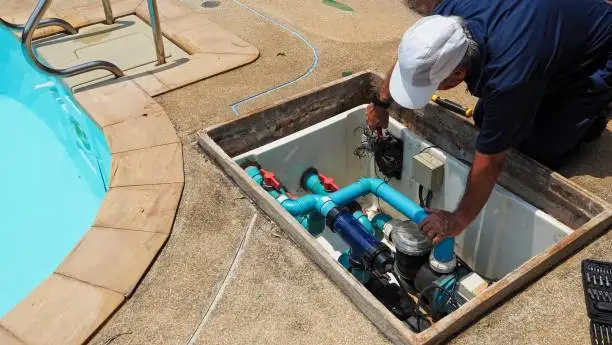
When a recently repaired pump fails again, keep the earlier invoice available. It can show which part changed and whether the current symptom is new or recurring. If water loss is also present, keep that observation separate from noise or heating trouble. One visit may identify an obvious connection leak, while another case needs testing before a repair can be scoped. Explaining those stages keeps a diagnostic visit from being confused with a promise that every possible fault will be fixed for one charge.
Plan Sanford resurfacing around the actual finish
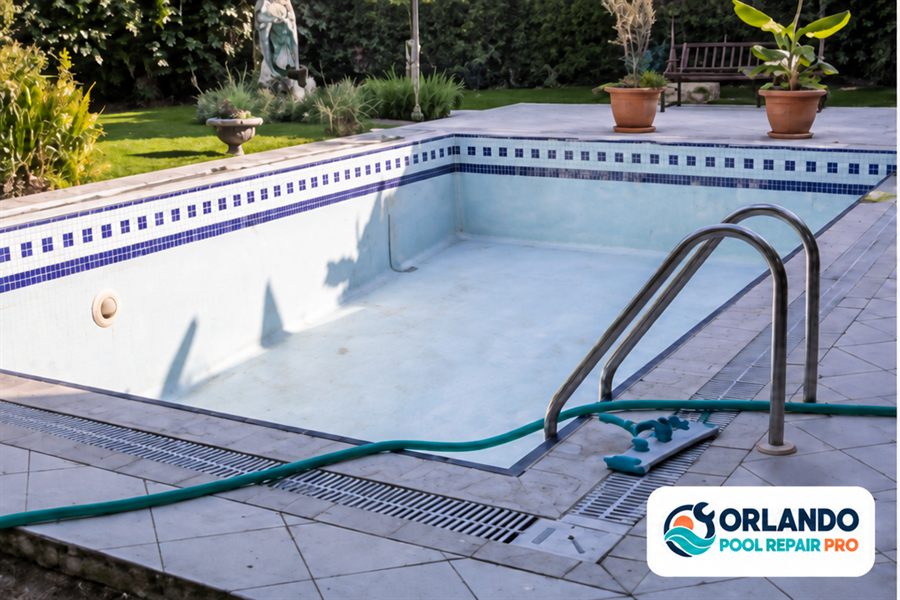
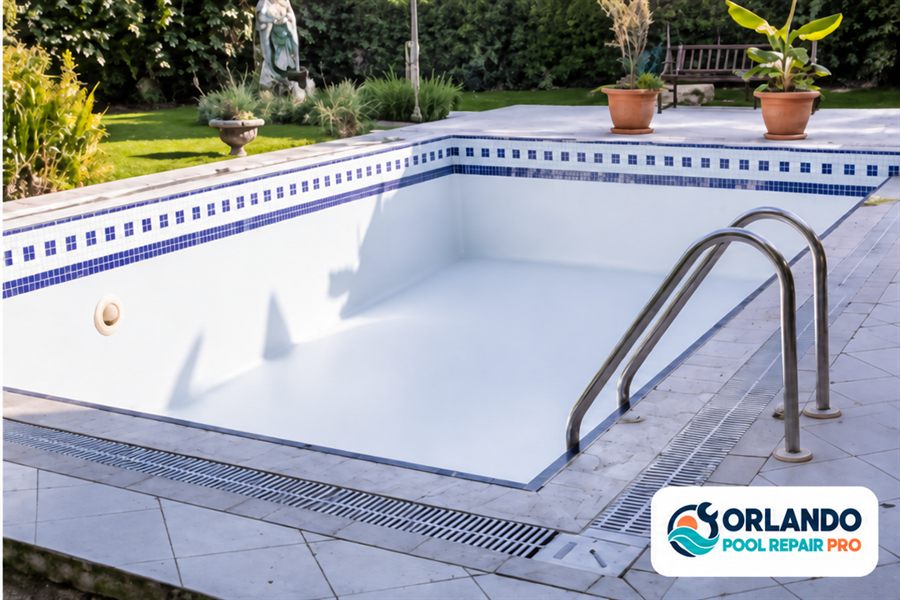
Published finish planning comparisons place plain plaster around 5–10 years, quartz around 7–15 years and a properly maintained pebble finish beyond 20 years. Those figures describe materials and care conditions, not a mandatory resurfacing date for Sanford houses. An interior should be assessed for its condition and previous finish work.
For a pool at a property with a 1990s construction history, ask whether the current surface is original, a later replaster or a different material altogether. Show the steps, floor and walls in your photos, and distinguish the worn interior from waterline tile or coping you may also want changed. An unresolved leak needs investigation rather than a cosmetic promise. The proposal should also identify preparation, the selected finish, filling responsibilities and startup care so that the work has a clear beginning and handoff.
Use Sanford’s water-use records to prepare for leak detection
Sanford utility customers can review available hourly water consumption information and usage alerts through the city’s water-meter resources. These records can help establish when unusual use began. They describe property water use, however, so a higher reading might involve irrigation or another use as well as the pool. Pair the information with a refill log and the pool’s own observations.
Record whether the level falls overnight, during the usual pump schedule or after another activity. A rain-free bucket comparison can help distinguish evaporation from additional pool loss. Include the measurement period, top-up dates and any visible wet equipment when requesting service. If a manager controls the property, arrange access and the person who can approve the findings. Bring the records you have; the purpose is a clearer starting point for testing, not a requirement to diagnose the leak yourself.
Separate Sanford’s property inventory from a builder’s portfolio
Sanford’s 6.5% pool-flag share and a pool builder’s published designs answer different questions. The parcel figure describes a defined set of single-family-classified properties in the municipal overlay. A builder’s portfolio illustrates the projects that business offers or chooses to show. Neither source establishes the average volume, motor size or finish condition of the Sanford pool needing service today.
This distinction matters when comparing estimates. A photograph of an attractive regional design may resemble your pool but leave out its depth, equipment arrangement and renovation history. An example package can be helpful when describing the layout you have; it should not become the assumed specification for a repair. Likewise, a lower city pool-property share does not make an individual pool’s problem less significant or indicate that its equipment is simpler.
For your own request, use the address, a plan or known gallon figure, and photos of the installed system. Identify any shared use or property-management arrangement. Then compare proposals against the same actual symptoms and requested work. That approach lets local records provide context while the service decision rests on information about your pool, rather than on an unmeasured Sanford average or the appearance of someone else’s new-build project.
Sources for local pool planning