Clermont's building years point to a mixed maintenance picture
The Census estimates identify 19,445 housing units in Clermont, with a median structure year of 2006. An estimated 1,104 were built in 2020 or later and 5,430 in 2010 through 2019, together about 33.6% of the total. That provides a more useful picture than describing every Clermont home as either new or old. Different construction periods can sit alongside later renovations, additions and replacement equipment.
Approximately 69.2% of units are detached single-family housing, while about 68.1% of occupied units are owner occupied. For pool work, establish who has the service history and who can authorize changes. The house's year does not date a pool addition, and a pump's label does not establish the installation date by itself. Keep any invoices and finish records so the recommendation can address what is actually present.
Pool presence must be checked at the service property
Pool-presence records are useful when their property group is kept clear. A municipal single-family parcel inventory is different from a count of every Clermont housing unit, and a property with access to a shared amenity is different from a parcel marked with a private pool. Identify whether the request concerns a homeowner pool, an attached spa or a shared facility, including any equipment that also runs water features.
A shared facility needs a responsible operator or property contact involved in planning the work. A private homeowner may instead need a clear explanation of a first-time equipment fault or the records left by a previous owner. Both benefit from documenting the symptoms before replacing parts. Note when the issue occurs, whether water is visibly escaping and whether the pump, heater and controls continue to operate as expected.
Size the conversation with real measurements
There is no measured Clermont average pool size established in this guide. Regional builder package dimensions can help illustrate possible scales, but they should not decide the size of your equipment or the area of a resurfacing quote. Southern Pool Designs publishes Central Florida examples including 12-by-24-foot, 15-by-30-foot and larger package dimensions. Their examples are choices offered by a builder, not a sample mean of local pools.
Volume changes with average depth as well as plan dimensions. A basic 12-by-24-foot rectangle averaging 4.5 feet deep calculates to roughly 9,700 gallons, while a 15-by-30-foot rectangle at that depth is about 15,100. A freeform pool, shelf or spa changes that calculation. For an interior finish estimate, walls, steps and preparation also matter, so ask what surface measurements and repair assumptions the proposal uses.
Clermont utility questions start with the bill's actual provider
Clermont's utility guidance notes that a property can receive service from the city, Lake County or a private utility. When a pool seems to be using more water, read the actual bill before assuming which organization can explain the charges or review a question. The city's name in the mailing address does not guarantee the account is supplied by the city.
Keep refill dates, relevant meter readings and the repair invoice together. If resurfacing requires a planned fill, document when it occurs and what the agreed work included. Different utilities apply their own policies, so a pool-service quote should not promise an adjustment. These records are also useful to the repair discussion: they help distinguish a planned refill from a continuing pattern of unexplained top-ups.
Separate a pump fault from a flow problem elsewhere
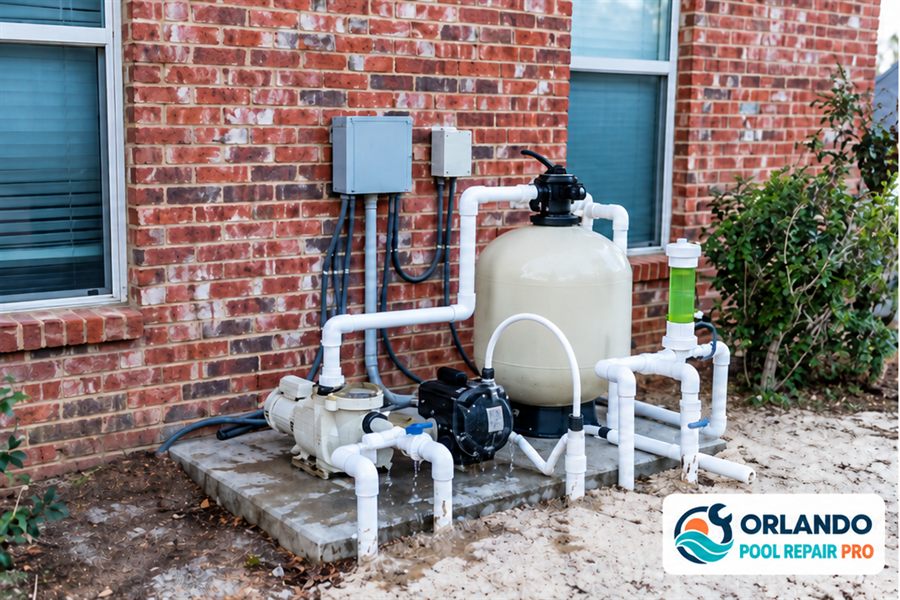
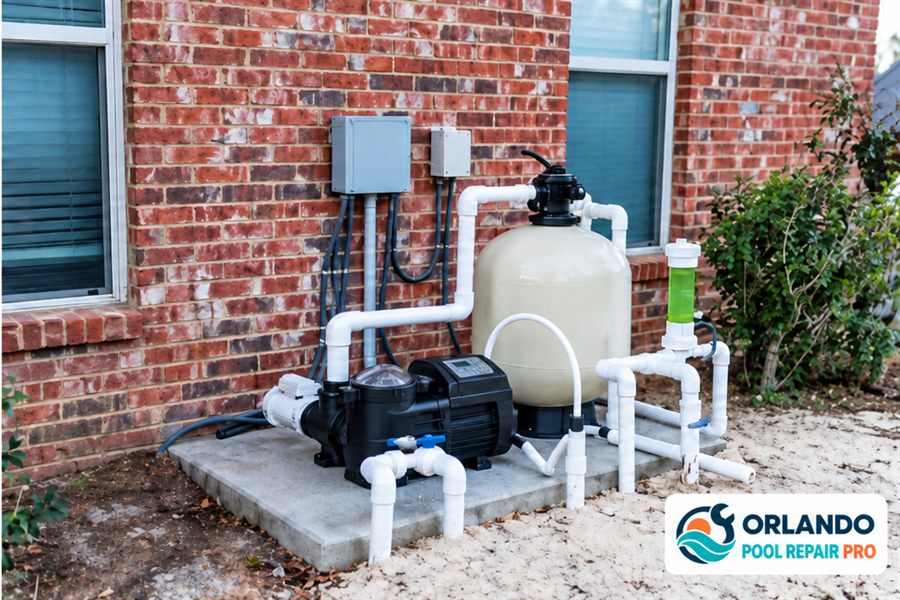
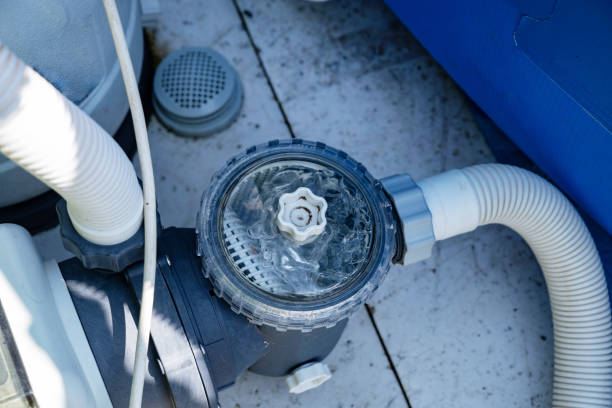
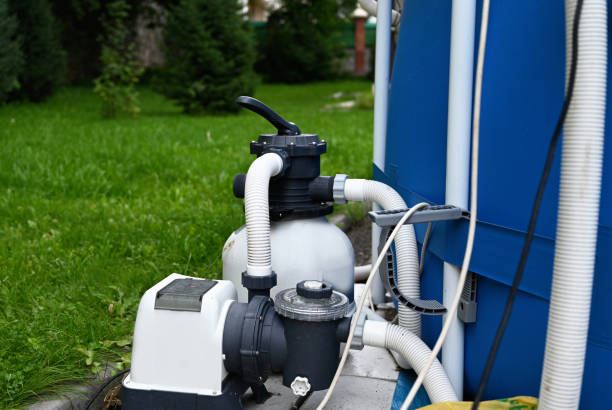
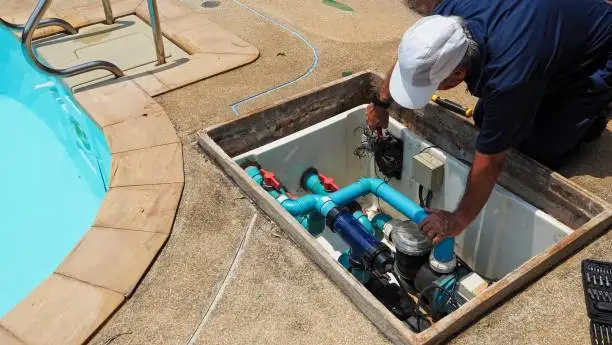
A motor can be running while circulation remains poor. A restricted basket or impeller, air entering the suction side, a filter issue or a valve position can affect the system without proving the whole pump has failed. Report whether the problem developed gradually, appeared after other work or happens only at a particular setting. If the motor becomes hot or repeatedly shuts down, have the cause assessed instead of repeatedly resetting it.
Residential manufacturer examples include Pentair IntelliFlo3 options at 1.5 and 3.0 total horsepower. We have not measured which motor sizes are most common in Clermont. Select a replacement using required flow, system resistance and the performance curve, then check the filter, heater, plumbing and controls. The largest horsepower is not a substitute for that assessment. A suitable repair may retain working equipment while addressing the actual failed part.
Compare resurfacing options against the pool's real finish history
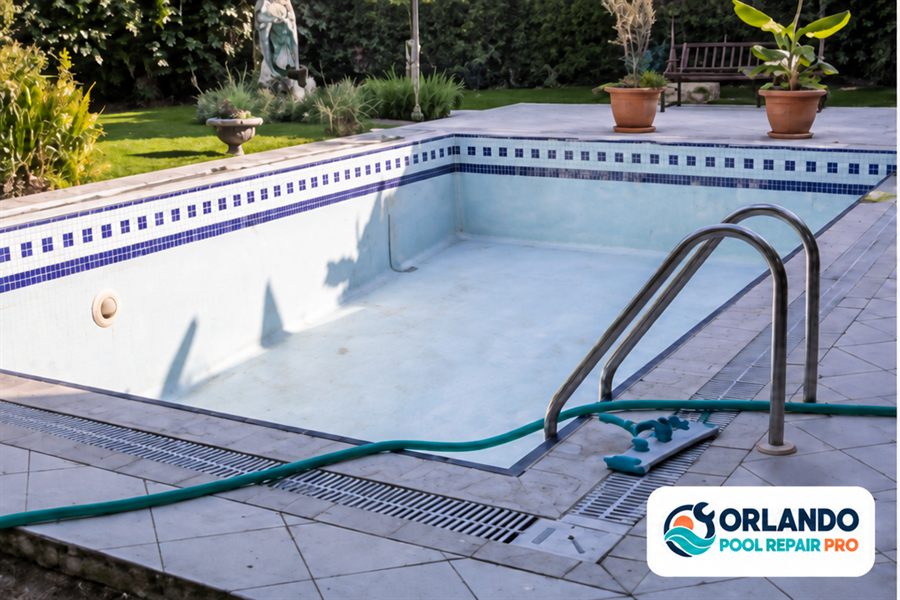
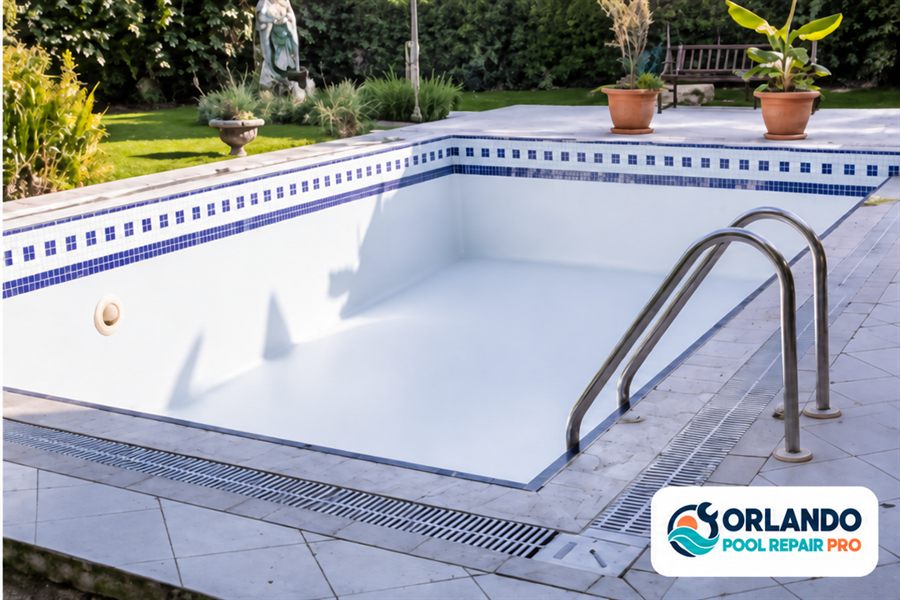
A Clermont home from the 2000s does not automatically have a pool interior from the same period. Ask whether the pool was built later or refinished, and identify the material if possible. Look for rough areas, loss of material, hollow-sounding patches and recurring stains. Water loss also needs its own investigation, because resurfacing cannot be assumed to correct a buried line or a leaking fitting.
Manufacturer planning comparisons put plain plaster around five to ten years, quartz around seven to fifteen, and a well-maintained pebble finish beyond twenty years. Actual condition and water balance determine whether attention is needed sooner or later. Compare the finish and preparation details, not just color or a headline total. Filling, brushing, circulation and startup care should be assigned clearly, with separate tile, coping or structural work identified before scheduling.
Measure water loss before arranging the next repair step
For a home pool with unexplained top-ups, a rain-free 24-hour bucket comparison can show whether the pool loses noticeably more than a container exposed to the same weather. Use removable marks, disable automatic filling for the check and avoid swimming or adding water during it. Record each drop from its own starting mark. Rain or a refill can spoil the comparison, and an unclear result may need repetition.
Send those observations with the equipment information and any visible wet-area photographs. Do not drain the pool to search for a leak or open electrical and pressure components to inspect them yourself. If the water is dropping rapidly or the pump risks running dry, ask for prompt help rather than extending a test. A useful detection visit ends with findings and a defined next scope, which may be separate from the cost of repairing what was found.
Keep the parcel record and water account separate
Clermont's municipal-tax-area inventory identified 2,637 pool-marked records among 16,543 single-family-classified parcels. That record can describe the property group, but it does not identify the water supplier for a particular service address. Clermont's own utility guidance explains why the distinction matters: city, county and private services can apply to different properties. Before asking about a water-use change, match the service address on the equipment request to the account and provider shown on the bill. Do not select a utility simply because its name resembles the mailing city.
Suppose an owner notices a larger bill shortly after a planned pool refill. Keep the fill date, work invoice and any meter readings together, then direct the billing question to the actual provider. If the pool continues needing water after that event, record the later top-ups separately; a one-time refill and ongoing loss need different explanations. The repair contact should know which concern is being investigated. Property records, invoices and meter information each serve a different purpose, so one should not stand in for all three. This approach gives the utility a clearer account question and gives the technician a clearer water-loss history without promising either a billing adjustment or a particular diagnosis.
Sources for local pool planning